
Have you tried detoxification products or programs, but still don’t feel much effect?
Do you experience persistent symptoms like fatigue, brain fog, or unexplained pain despite multiple “cleansing” attempts?
Are you wondering why your health issues keep returning despite your best efforts at detoxification?
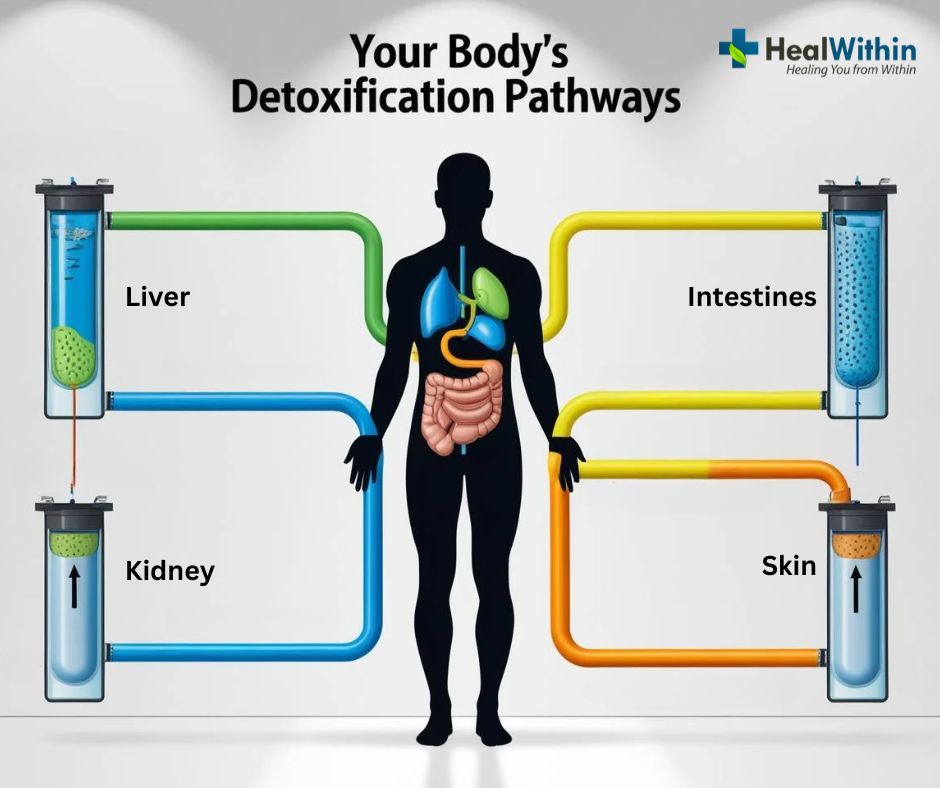
The missing piece of this puzzle may lie not in the detoxification methods themselves, but in the condition of your body’s natural detoxification pathways. When these critical systems become compromised or blocked, even the most expensive detox programs can’t produce lasting results. The unfortunate reality is that toxins continue to accumulate in your tissues when these pathways aren’t functioning optimally, creating the perfect foundation for chronic diseases to develop and persist.
What Are Our Body's Natural Detoxification Pathways?
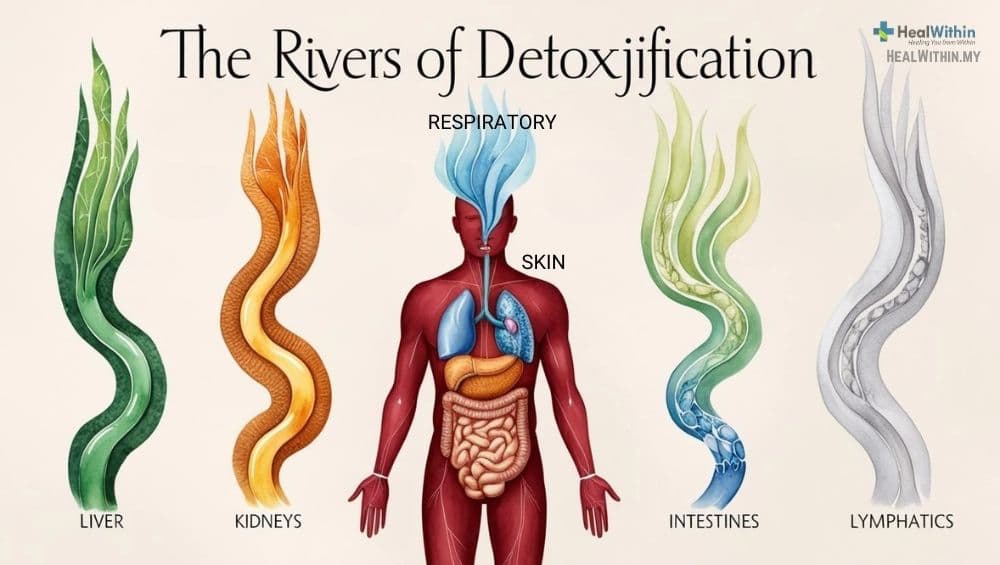
Before understanding how detoxification pathways falter, it’s essential to recognize the sophisticated systems your body already has in place to process and eliminate toxins. These natural pathways work in harmony when functioning properly, each playing a unique and vital role in maintaining your health.
THE LIVER: PRIMARY DETOXIFICATION PATHWAY
The liver stands as your body’s main detoxification center, processing toxins through two distinct phases.
- Phase I Detoxification: Converts fat-soluble toxins into more reactive forms through a process called oxidation, using specialized enzymes like cytochrome P450 to make toxins water-soluble for elimination.
- Conjugation Reactions: During Phase II, toxins are bound to molecules like glutathione, glycine, and sulfate, neutralizing their reactivity and preparing them for safe elimination through bile or urine.
- Bile Production: The liver creates bile that not only aids digestion but also carries toxins to the intestines for elimination, acting as a crucial toxin transport system.
KIDNEY DETOXIFICATION SYSTEM
Your kidneys serve as sophisticated filtration units that selectively remove waste while preserving essential nutrients.
- Glomerular Filtration: Blood passes through tiny filtering units called glomeruli that trap toxins while allowing vital nutrients to remain in circulation.
- Tubular Secretion: Additional toxins are actively secreted from blood into the kidney tubules, enhancing the elimination of harmful substances through urine.
- Concentration Mechanism: Kidneys concentrate toxins in urine, allowing for efficient elimination while conserving water when needed.
DIGESTIVE TRACT DETOXIFICATION SYSTEM
Your intestinal system acts as both a barrier and an elimination route for toxins.
- Gut Microbiome Processing: Beneficial bacteria help break down certain toxins into less harmful forms, providing a first line of defense against ingested harmful substances.
- Intestinal Barrier Function: A healthy intestinal lining prevents toxin reabsorption while allowing selective nutrient uptake, maintaining the critical boundary between your body and toxin-containing waste.
- Peristalsis and Elimination: Regular bowel movements physically remove toxins from the body, with dietary fiber helping to bind and escort toxins out through stool.
SKIN DETOXIFICATION SYSTEM
As your body’s largest organ, the skin plays a significant role in toxin elimination.
- Sweat Gland Excretion: Toxins like heavy metals and BPA are actively eliminated through sweat, making regular perspiration an important detoxification activity.
- Sebaceous Secretions: Oil-producing glands help remove fat-soluble toxins through sebum, particularly important for eliminating certain environmental pollutants.
- Dermal Metabolism: The skin contains detoxification enzymes similar to the liver, providing an additional site for toxin processing and elimination.
RESPIRATORY DETOXIFICATION SYSTEM
Your lungs provide a crucial exchange surface for gaseous waste products.
- Gas Exchange: Carbon dioxide and volatile compounds are efficiently released during exhalation, providing continuous detoxification with every breath.
- Mucociliary Clearance: Specialized cells produce mucus that traps airborne toxins while tiny hair-like cilia move this contaminated mucus toward the throat for elimination.
- Lung Lymphatics: An extensive lymphatic network helps remove toxins that penetrate deep into lung tissue, connecting pulmonary detoxification with the broader immune system.
LYMPH DETOXIFICATON SYSTEM
The lymphatic network functions as your body’s internal drainage system.
- Toxin Transport: Interstitial fluid containing cellular waste products is collected and transported to elimination organs, preventing toxin accumulation in tissues.
- Immune Surveillance: Specialized immune cells within lymph nodes identify and process toxins, activating targeted immune responses when harmful substances are detected.
- Fluid Pressure Balance: By maintaining proper fluid dynamics, the lymphatic system prevents toxin stagnation and supports optimal circulation of detoxifying agents.
Why Do Detoxification Pathways Falter?
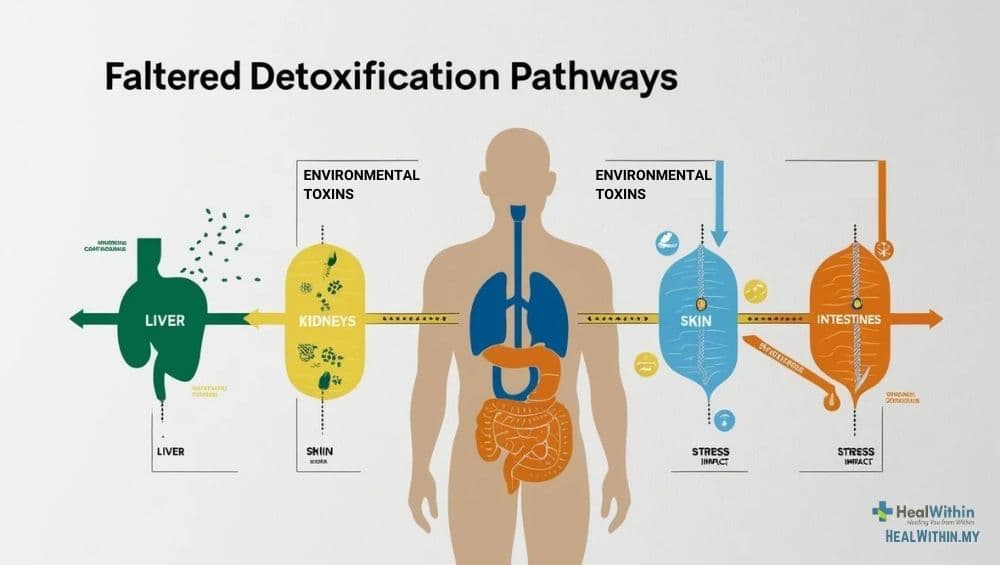
While our bodies have sophisticated detoxification systems, various factors can compromise their function. Understanding these challenges helps explain why toxins begin to accumulate despite our natural protective mechanisms.
ENVIRONMENTAL TOXIN OVERLOAD
Modern life exposes us to an unprecedented number of toxins that can overwhelm even healthy detoxification pathways.
- Chemical Proliferation: Over 80,000 synthetic chemicals are in commercial use, with approximately 1,000 new compounds introduced annually, far exceeding what our bodies evolved to handle.
- Bioaccumulation: Many modern toxins are fat-soluble and resistant to breakdown, allowing them to accumulate in tissues over time and create a progressively increasing toxic burden.
- Multiple Exposure Routes: Toxins enter through food, water, air, skin products, and household items, creating a constant bombardment that gives detoxification systems no opportunity to recover.
NUTRITIONAL DEFICIENCIES
Key nutrients are required for detoxification enzymes and processes to function properly.
- Enzyme Cofactors: Vitamins B6, B12, folate, and minerals like magnesium and zinc are essential for detoxification enzymes to function, with deficiencies directly reducing detoxification capacity.
- Antioxidant Depletion: Glutathione, vitamin C, and vitamin E are consumed during toxin processing, with inadequate dietary replacement leading to compromised detoxification efficiency.
- Protein Insufficiency: Amino acids like glycine, taurine, and cysteine are needed for Phase II conjugation reactions, with low protein intake limiting the body’s ability to neutralize toxins.
MENTAL AND EMOTIONAL STRESS
Psychological factors have profound physiological effects on detoxification capacity.
- Stress Hormone Disruption: Chronic stress elevates cortisol and adrenaline, which diverts energy away from detoxification processes and prioritizes immediate survival functions over toxin elimination.
- Sleep Disruption: Emotional distress compromises sleep quality, interfering with the critical nighttime detoxification processes that occur primarily during deep sleep phases.
- Nervous System Imbalance: Persistent stress triggers sympathetic dominance (“fight-or-flight”), restricting blood flow to detoxification organs and impairing their optimal function.
How Does Toxin Build-up Manifest in the Body?
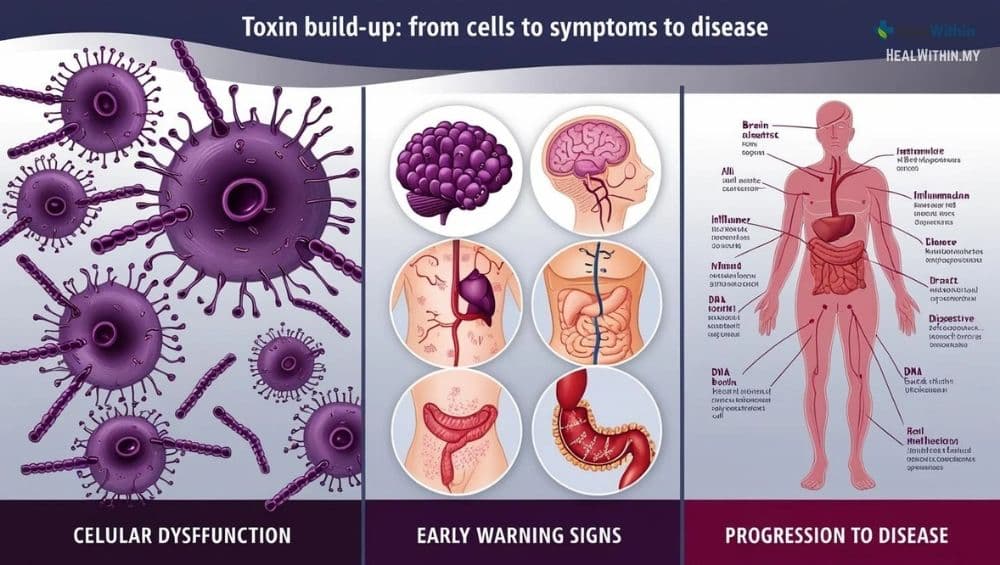
When detoxification pathways become compromised, toxins don’t simply remain dormant in the body. They interact with tissues and cellular systems, creating a cascade of effects that progressively deteriorate health and function.
CELLULAR DYSFUNCTION
Toxin accumulation disrupts the fundamental operations of cells throughout the body.
- Mitochondrial Damage: Toxins directly interfere with energy-producing organelles, reducing ATP production and creating cellular fatigue that can manifest as persistent low energy and exercise intolerance.
- Membrane Permeability Changes: Accumulated toxins alter cell membrane structure and function, disrupting nutrient intake, waste removal, and cell-to-cell communication essential for coordinated tissue function.
- DNA/RNA Disruption: Many toxins have genotoxic effects, causing direct damage to genetic material that can lead to cellular malfunction, premature aging, and even cancer development over time.
EARLY WARNING SIGNS
Before diagnosable disease develops, the body often signals its toxic burden through various symptoms.
- Neurological Manifestations: Brain fog, memory lapses, mood disorders, and headaches often appear as toxins affect nervous system function, particularly when fat-soluble neurotoxins accumulate in brain tissue.
- Skin Disruptions: Rashes, acne, premature wrinkles, and unusual skin odors frequently develop as the body attempts to eliminate toxins through its largest organ when other pathways are compromised.
- Digestive Disturbances: Bloating, irregular bowel movements, food sensitivities, and nutrient malabsorption commonly occur as toxins disrupt gut flora, irritate intestinal linings, and impair digestive enzyme function.
PROGRESSION TO DISEASE STATES
Continued toxin accumulation eventually triggers more serious pathological processes.
- Chronic Inflammation: Toxins activate inflammatory pathways that, when persistently triggered, create systemic inflammation—the common denominator in nearly all chronic diseases from arthritis to cardiovascular conditions.
- Immune Dysregulation: The immune system becomes increasingly disordered with toxin exposure, potentially becoming hyper-responsive (allergies, autoimmunity) or under-responsive (recurrent infections, cancer susceptibility).
- Endocrine Disruption: Many environmental toxins mimic or block hormone action, creating complex hormonal imbalances that can manifest as thyroid disorders, reproductive issues, metabolic syndrome, and diabetes.
Why Detoxification Pathways Need to Be Treated & Opened Before Any Detoxification Programs?
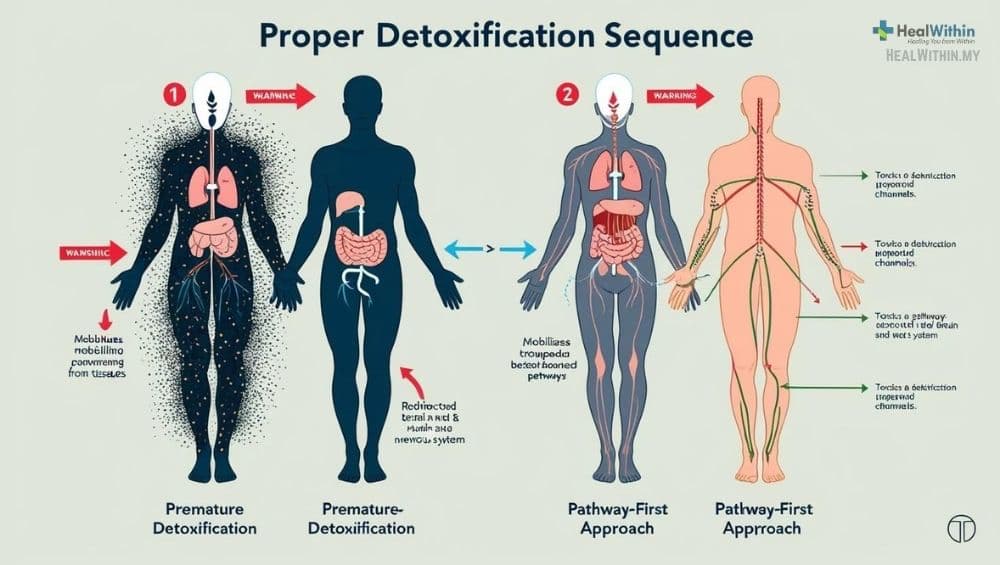
Many people jump directly into detoxification protocols without first ensuring their elimination pathways are functioning properly. This approach can create more harm than good, highlighting why pathway preparation must precede active detoxification.
THE DANGERS OF PREMATURE DETOXIFICATION
Attempting detoxification with blocked pathways creates significant risks and uncomfortable symptoms.
- Toxin Redistribution: When mobilized but not eliminated, toxins often relocate to more sensitive tissues like the brain and nervous system, potentially worsening symptoms rather than resolving them.
- Cellular Reabsorption: Toxins mobilized from storage tissues but not properly eliminated are often reabsorbed, creating a frustrating cycle of temporary improvement followed by symptom return.
- Incomplete Toxin Processing: Without proper pathway support, toxins may undergo partial processing that creates intermediary compounds sometimes more harmful than the original toxins themselves.
ORGAN SYSTEM PREPARATION
Each elimination pathway requires specific support before beginning active detoxification.
- Liver Pathway Priming: Supporting Phase I and II enzyme systems with targeted nutrients ensures toxins convert to their water-soluble forms and properly conjugate for safe elimination.
- Kidney Function Optimization: Hydration status, mineral balance, and kidney filtration capacity must be addressed before increasing the toxin load these organs must process.
- Intestinal Barrier Restoration: Repairing leaky gut conditions prevents reabsorption of toxins in the intestines, a common reason why many detoxification attempts fail to produce lasting results.
SEQUENTIAL HEALING APPROACH
A methodical, step-by-step process yields far better results than aggressive detoxification approaches.
- Elimination Before Mobilization: Ensuring toxins have a clear exit route before releasing them from storage tissues prevents the “stirring up toxins” phenomenon that causes many detox programs to fail.
- Graduated Intensity Progression: Gentle initial support followed by gradually increasing detoxification intensity allows the body to adapt and strengthen its capacity without overwhelming symptoms.
- Individualized Pathway Assessment: Different individuals have different pathway weaknesses, requiring personalized identification of blocked routes before designing an effective detoxification strategy.
How Does the Treatment in Heal Within Treat & Open Up the Detoxification Pathways?
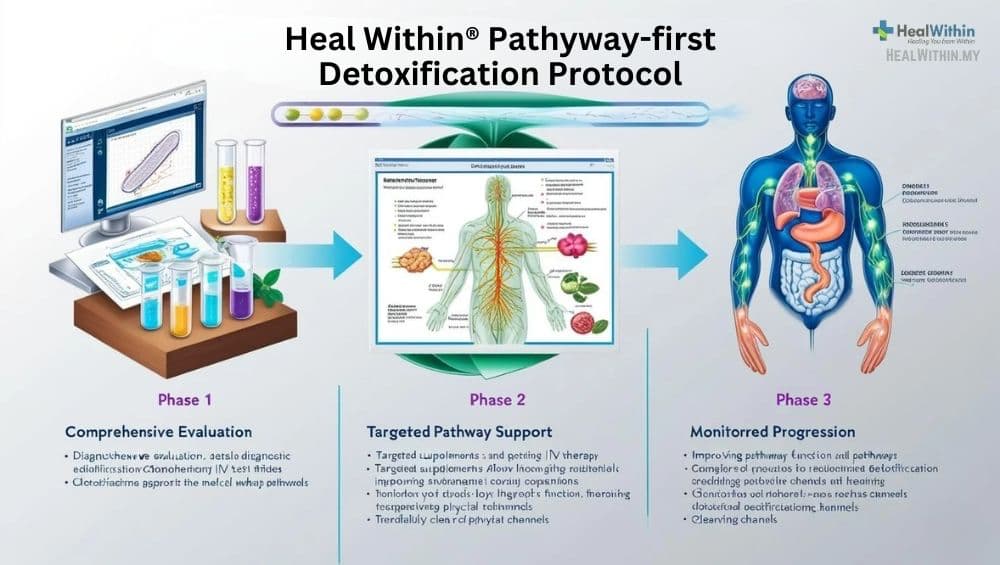
At Heal Within, we recognize that successful detoxification begins with methodically supporting and opening each elimination pathway. Our integrated approach ensures that toxins have clear exit routes before mobilization begins.
COMPREHENSIVE EVALUATION METHODS
We begin by thoroughly assessing the current state of your detoxification pathways.
- Functional Lab Testing: Through specialized testing of blood, urine, stool, and hair samples, we identify specific toxin burdens and pinpoint exactly which detoxification pathways require support.
- Detoxification Pathway Mapping: Our assessment creates a personalized map of your elimination systems, revealing blockages in liver conjugation, kidney filtration, lymphatic flow, or digestive elimination.
- Toxic Burden Assessment: We measure your current toxic load across multiple categories including heavy metals, environmental chemicals, biotoxins, and metabolic waste products to prioritize treatment.
TARGETED PATHWAY SUPPORT THERAPIES
Our treatment protocols specifically address each blocked detoxification route.
- Precision Nutrient Therapy: Tailored supplementation provides the exact cofactors, amino acids, and antioxidants your specific detoxification enzymes require to function optimally.
- Intravenous Nutritional Support: Specialized IV formulations bypass digestive limitations to deliver therapeutic levels of glutathione, vitamin C, and minerals directly to detoxification organs.
- Biophysical Treatments: Specific therapies including lymphatic drainage, castor oil packs, constitutional hydrotherapy, and targeted massage techniques physically open congested elimination channels.
MONITORED DETOXIFICATION PROGRESSION
We carefully sequence and supervise your detoxification process for optimal safety and results.
- Biomarker Tracking: Regular testing of detoxification enzyme activity and toxin levels confirms that pathways are opening and toxin elimination is occurring efficiently.
- Symptom Correlation Analysis: We track your clinical response against laboratory values, adjusting protocols to ensure comfort while maintaining steady detoxification progress.
- Phase-Appropriate Adjustments: As your detoxification capacity improves, we systematically modify your treatment plan to strengthen newly opened pathways while beginning to address deeper toxin deposits.
Summary and Conclusion
Understanding the critical role of detoxification pathways in health is the foundation for effectively addressing chronic disease. Here’s what we’ve covered:
- Your body has six major detoxification pathways: the liver, kidneys, digestive tract, skin, respiratory system, and lymphatic system – each with specialized functions for processing and eliminating toxins.
- These pathways can falter due to environmental toxin overload, nutritional deficiencies, and chronic mental/emotional stress, leading to toxin accumulation throughout the body.
- Toxin build-up manifests through cellular dysfunction, early warning signs like fatigue and brain fog, and eventually progresses to chronic inflammatory conditions and disease states.
- Attempting detoxification without first opening blocked elimination pathways can cause toxin redistribution, incomplete processing, and frustrating cycles of symptom recurrence.
- Proper detoxification requires a sequential approach that ensures toxins have clear exit routes before being mobilized from tissues.
At Heal Within, we understand that true healing requires addressing the root cause of your health challenges, not just managing symptoms. By systematically assessing and supporting your unique detoxification pathways before beginning the mobilization process, we create the conditions for your body to efficiently process and eliminate accumulated toxins. This methodical approach explains why our patients experience lasting improvements where other treatments or detoxification programs have failed.
If you’ve been struggling with chronic health issues that haven’t responded to conventional approaches, the state of your detoxification pathways may be the missing piece in your health puzzle.