

HEAL WITHIN® EDUCATION

The Glycation Problem: Why Normal Blood Sugar Readings Don’t Mean You’re Safe from Damage

Dr Lee Cheng Lok
MEDICAL DIRECTOR | Heal Within®
Dr Lee Cheng Lok
MEDICAL DIRECTOR
Heal Within®

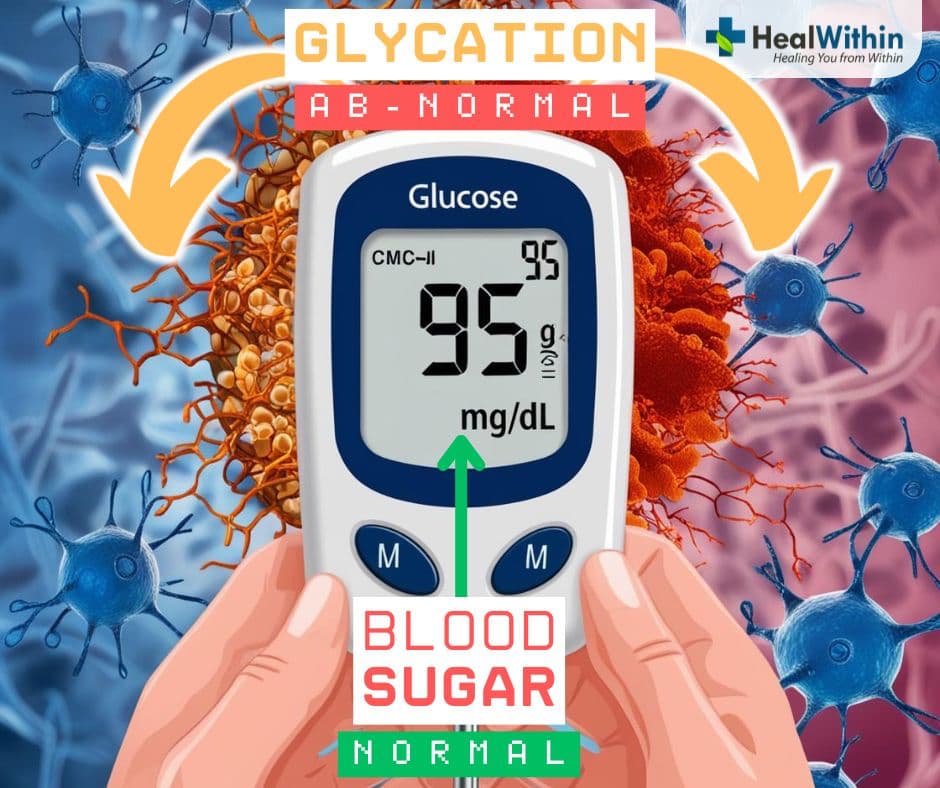
Do you feel unhealthy even with blood sugar readings that your doctor calls “normal”?

Are you wondering why complications still develop despite your test results falling within acceptable ranges?

Could the hidden process of glycation be damaging your body even though conventional tests show nothing wrong?

Many patients I see at Heal Within are shocked to discover that their so-called “normal” blood sugar readings have been masking a destructive process happening inside their bodies for years. This hidden damage, caused by a process called glycation, doesn’t show up on standard blood tests until significant harm has already occurred. Even more concerning is that glycation-related damage can occur even when your blood glucose readings appear to be within normal ranges.

Understanding this critical but often overlooked process is essential for anyone concerned about long-term health and preventing chronic disease. The truth about glycation may change everything you thought you knew about managing your blood sugar and overall health.

What is glycation and why should you be concerned about it?
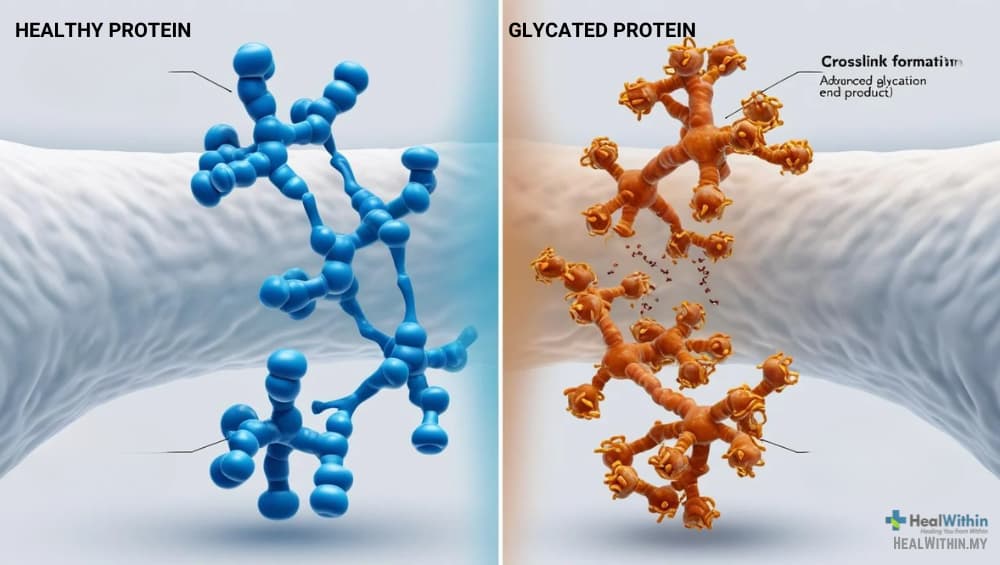
Glycation is a process happening in your body right now that could be silently damaging your tissues and organs without triggering any warning signs on standard medical tests. Simply put, it occurs when sugar molecules attach to proteins and fats without proper enzymatic control, creating harmful compounds.

THE SCIENCE OF GLYCATION

To understand why glycation is so dangerous, we need to look at what’s happening at the molecular level where sugar molecules are wreaking havoc on your body’s proteins:

  1. Sugar-Protein Bonding – When glucose and other sugar molecules in your bloodstream attach to proteins without enzyme regulation, they form harmful crosslinks that damage the protein’s structure and function, affecting virtually every tissue in your body.
  2. Advanced Glycation End Products (AGEs) – These dangerous compounds accumulate over time and trigger inflammatory responses, oxidative stress, and tissue damage. They’re aptly named, as they quite literally accelerate the aging process in your cells.
  3. Biological Disruption – Glycation interferes with normal cellular communication and function by altering protein structures, disrupting enzymes, and compromising cell membrane integrity, leading to widespread dysfunction.

BEYOND BLOOD GLUCOSE READINGS

The problem with conventional blood sugar testing is that it fails to capture the complete picture of what’s happening in your body throughout the day and over time:

  1. The Measurement Gap – Standard blood glucose tests only capture a moment in time, missing the dangerous glucose spikes that occur after meals which can drive glycation even when fasting numbers look normal.
  2. Glycation Threshold Variations – Everyone has different thresholds at which glycation begins to accelerate. Your “normal” reading might actually be well above the optimal level for your unique biochemistry.
  3. Silent Progression – Glycation damage accumulates slowly over years or decades before manifesting as diagnosable conditions, making it a stealthy contributor to chronic disease that standard tests simply don’t detect early enough.

THE ACCUMULATING DAMAGE

As glycation continues unchecked in your body, the damage compounds and spreads to multiple systems, affecting your health in numerous ways:

  1. Neurological Impact – Brain proteins are particularly vulnerable to glycation, with research showing connections to cognitive decline and neurodegenerative disorders even in people with “normal” blood sugar readings.
  2. Cellular Energy Crisis – Glycation damages mitochondria, your cellular power plants, reducing energy production and accelerating the aging process throughout your body, contributing to fatigue and reduced organ function.
  3. Collagen and Elastin Degradation – These structural proteins in skin, blood vessels, and organs become stiff and dysfunctional when glycated, leading to wrinkles, vascular rigidity, and organ dysfunction long before symptoms appear.

How does glycation contribute to chronic disease development?
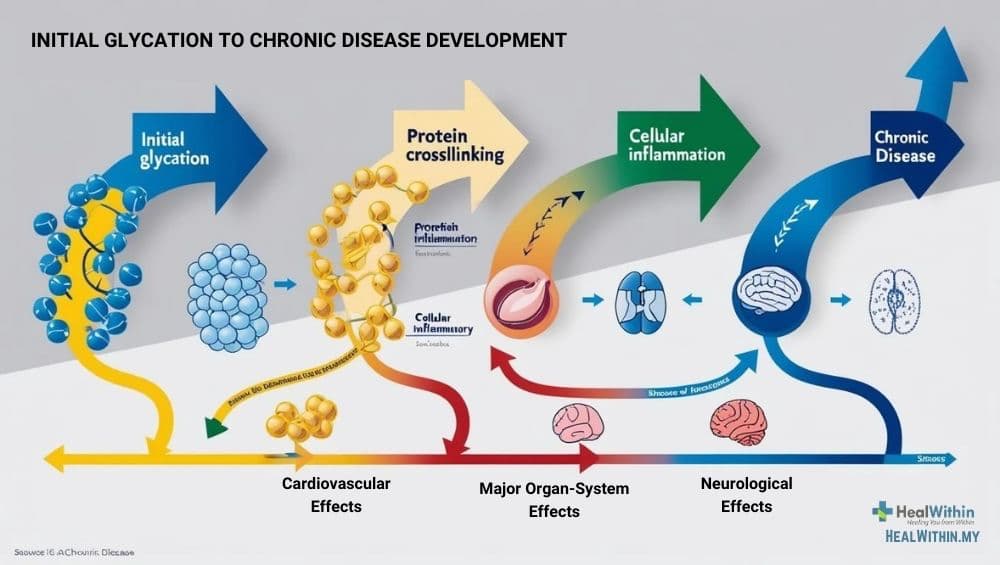
The relationship between glycation and chronic disease is both profound and pervasive. When excess sugar molecules bind to proteins throughout your body, they initiate a cascade of inflammatory and degenerative processes that can eventually manifest as diagnosed conditions.

CARDIOVASCULAR IMPACT

The cardiovascular system is particularly vulnerable to glycation damage, with blood vessels being primary targets for these destructive processes:

  1. Arterial Stiffening – Glycation crosslinks proteins in your arterial walls, reducing elasticity and increasing blood pressure. This stiffening process can occur even with blood sugar readings in the “normal” range but at the higher end.
  2. Endothelial Dysfunction – The delicate lining of your blood vessels becomes damaged by glycation, impairing nitric oxide production and leading to vasoconstriction, reduced blood flow, and increased risk of plaque formation.
  3. Cholesterol Oxidation – Glycated LDL cholesterol is more likely to become oxidized and contribute to atherosclerotic plaque. This means your cholesterol levels might be less important than how much of it is being damaged by glycation.

NEUROLOGICAL EFFECTS

Your brain is exceptionally vulnerable to glycation damage, with profound implications for cognitive health and neurological function:

  1. Blood-Brain Barrier Compromise – Glycation damages the protective blood-brain barrier, allowing toxins and inflammatory compounds to enter brain tissue and accelerate neurodegeneration.
  2. Protein Misfolding – Brain proteins affected by glycation are more prone to misfolding and aggregation, forming the plaques and tangles associated with Alzheimer’s disease and other forms of dementia.
  3. Neuronal Energy Depletion – Brain cells have extremely high energy requirements, and when glycation damages their mitochondria, cognitive function suffers as neurons struggle to maintain optimal operation.

ORGAN SYSTEM DEGRADATION

Beyond the brain and cardiovascular system, glycation affects virtually every organ in your body, compromising their function over time:

  1. Kidney Filtration Impairment – Glycation damages the delicate filtration structures in your kidneys, reducing their ability to cleanse your blood and eventually leading to chronic kidney disease, often before conventional tests show abnormalities.
  2. Liver Metabolic Dysfunction – As your liver’s proteins become glycated, detoxification pathways and metabolic functions become compromised, affecting everything from hormone processing to cholesterol synthesis.
  3. Pancreatic Burnout – Ironically, the very organ responsible for insulin production becomes damaged by glycation, creating a vicious cycle where insulin resistance leads to more glycation, which further impairs pancreatic function.

Why do standard blood sugar tests fail to identify glycation risks?
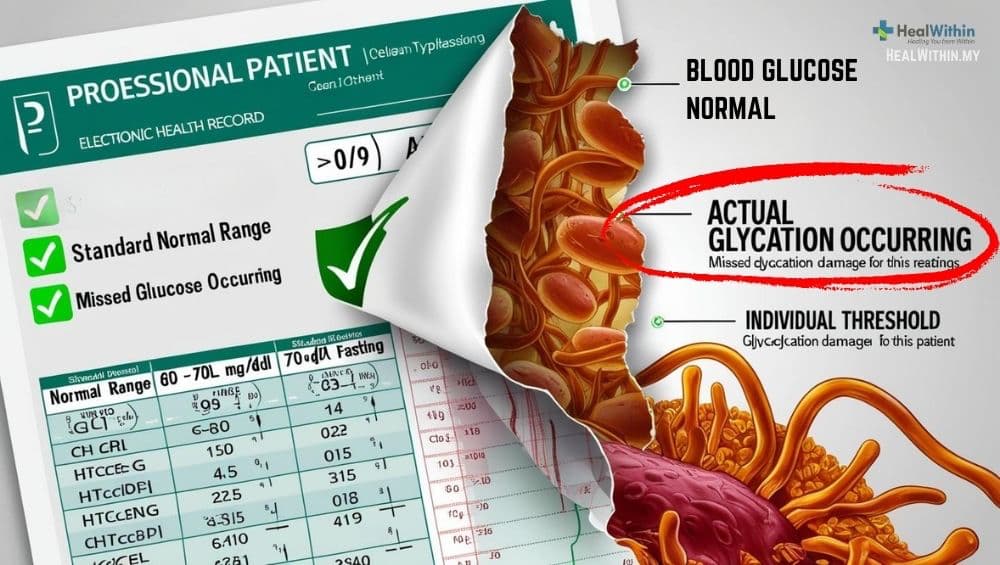
The conventional approach to blood sugar monitoring has significant blind spots when it comes to detecting glycation-related damage. These standard tests were designed to identify diabetes, not to optimize metabolic health or prevent glycation.

THE LIMITATIONS OF A1C TESTING

While the Hemoglobin A1C test is considered the gold standard for diabetes monitoring, it misses crucial information about your glycation status:

  1. Three-Month Averaging – A1C provides only an average of your blood glucose over approximately three months, completely missing dangerous glucose spikes that drive glycation but get “averaged out” in the final reading.
  2. Individual Hemoglobin Variations – Your hemoglobin lifespan might differ from the assumed 120 days used in A1C calculations, potentially giving falsely reassuring results if your red blood cells live longer than average.
  3. Glycation Sensitivity Differences – Some individuals experience accelerated tissue glycation at lower blood glucose levels than others, meaning your “normal” A1C might still be accompanied by significant glycation damage.

GLUCOSE TOLERANCE BLIND SPOTS

Fasting glucose and even standard glucose tolerance tests fail to capture the complete picture of your metabolic health:

  1. Post-Meal Glucose Excursions – The highest glycation damage often occurs during post-meal glucose spikes that can reach 180-200 mg/dL or higher, yet return to “normal” range before your next fasting glucose test.
  2. Reactive Hypoglycemia Masking – Some individuals experience high glucose spikes followed by reactive low blood sugar, creating average readings that appear normal while the damage from the spikes continues undetected.
  3. Testing Frequency Inadequacy – Even quarterly blood sugar testing misses the thousands of meals and daily glycemic fluctuations that occur between tests, providing a dangerously incomplete picture of your glycation risk.

NORMAL VS. OPTIMAL RANGES

The standard reference ranges used in conventional medicine often mislead patients about their true metabolic health:

  1. Statistical vs. Functional Norms – Laboratory “normal” ranges are based on statistical averages from the population, not optimal levels for preventing disease. Being “within normal range” may still put you at significant risk.
  2. Pre-Disease Continuum – Blood sugar damage exists on a continuum, with harmful effects beginning well before diagnostic thresholds for prediabetes or diabetes are reached, particularly in glycation-sensitive individuals.
  3. Individual Metabolic Uniqueness – Your personal carbohydrate tolerance, insulin sensitivity, and glycation susceptibility are unique to you, making population-based reference ranges potentially inappropriate for your specific biochemistry.

What foods and lifestyle factors accelerate glycation damage?
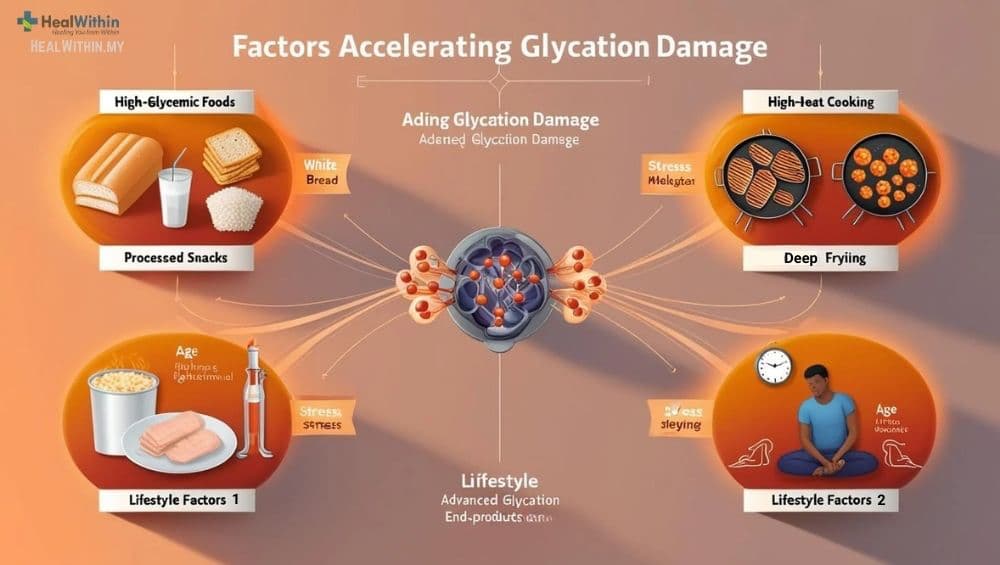
Your daily choices have a profound impact on the rate of glycation occurring in your body. Certain foods, cooking methods, and lifestyle patterns can dramatically accelerate this damaging process, even if your blood sugar readings remain within conventional “normal” ranges.

HIGH-GLYCEMIC FOODS

The foods you eat directly influence your glycation levels, with some being particularly problematic for accelerating AGE formation:

  1. Refined Carbohydrates – White bread, pasta, rice, and other refined grains cause rapid blood sugar spikes that drive glycation reactions throughout your body, creating far more damage than their whole food counterparts.
  2. Hidden Sugar Sources – Many supposedly “healthy” foods contain significant added sugars that trigger glycation—yogurts, granola bars, fruit juices, and even many gluten-free products are often sugar-laden glycation accelerators.
  3. Processed Food Chemicals – Beyond their sugar content, the preservatives, emulsifiers, and flavor enhancers in processed foods can amplify glycation reactions and AGE formation, creating a double burden on your tissues.

COOKING METHODS

How you prepare your food can significantly affect its AGE content and your body’s glycation burden:

  1. High-Heat Cooking – Grilling, broiling, and frying foods, especially at temperatures above 300°F (150°C), dramatically increases AGE formation through the Maillard reaction—the same browning process that makes food tasty also makes it more damaging.
  2. Dry-Heat Methods – Cooking without moisture (like roasting and baking) produces more AGEs than moist-heat methods like steaming, poaching, or slow-cooking, particularly with protein-rich foods like meats.
  3. Caramelization – The appetizing brown edges on roasted vegetables, the grill marks on meat, and the golden crust on baked goods are visual indicators of AGE formation that will contribute to your body’s glycation burden.

LIFESTYLE ACCELERATORS

Beyond diet, several lifestyle factors significantly increase glycation damage throughout your body:

  1. Chronic Stress Patterns – Persistent stress elevates cortisol and blood glucose levels, creating ideal conditions for accelerated glycation even without dietary sugar consumption.
  2. Sleep Disruption – Poor sleep quality or insufficient sleep duration impairs glucose metabolism, with just one night of poor sleep capable of inducing insulin resistance equivalent to six months of high-sugar diet.
  3. Sedentary Behavior – Lack of regular physical movement allows post-meal glucose to remain elevated longer, creating extended windows of glycation opportunity that wouldn’t occur with even modest post-meal activity.

How can you protect yourself from glycation damage?
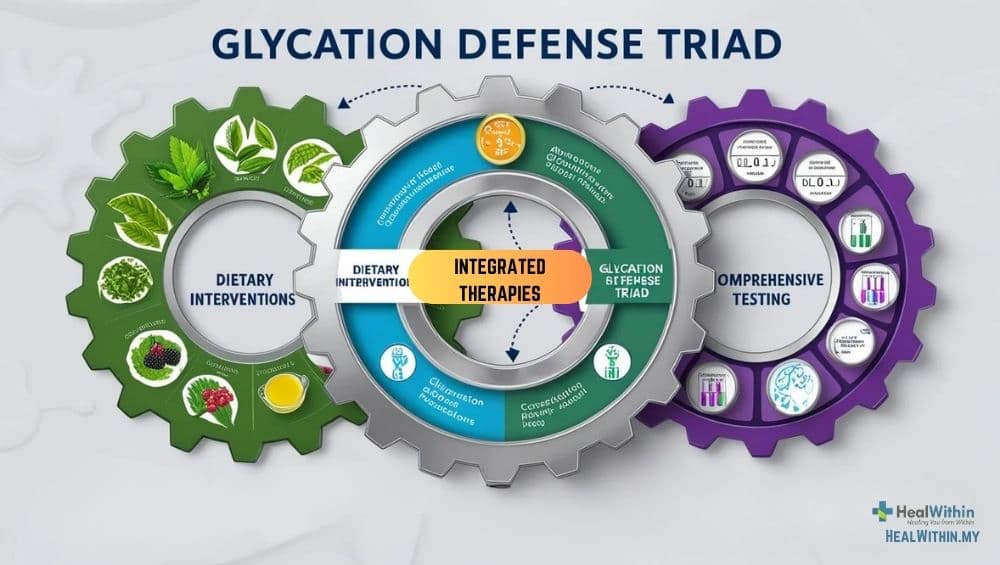
Protecting your body from glycation damage requires a comprehensive approach that goes beyond just watching your blood sugar. By implementing specific dietary, testing, and therapeutic strategies, you can significantly reduce your glycation burden and prevent the associated chronic diseases.

DIETARY INTERVENTIONS

The foods you choose to consume can either accelerate or help protect against glycation damage:

  1. Anti-Glycation Foods – Deeply colored berries, green tea, and herbs like rosemary and oregano contain compounds that actively inhibit the glycation process, helping to protect your proteins even when some glucose exposure occurs.
  2. Protective Nutrients – Specific nutrients including alpha-lipoic acid, carnosine, benfotiamine (B1), and pyridoxamine (B6) have been shown to intercept glycation reactions and protect tissues from AGE formation.
  3. Glycemic Load Management – Rather than focusing only on glycemic index, understanding the glycemic load of your meals allows you to balance carbohydrates with proteins, fats, and fiber to minimize glucose spikes that drive glycation.

COMPREHENSIVE TESTING APPROACHES

Moving beyond standard blood tests allows you to detect and address glycation before significant damage occurs:

  1. Advanced Glycation Markers – Tests for specific advanced glycation end products like carboxymethyl lysine (CML) or pentosidine can directly measure your current glycation burden, revealing problems conventional tests miss.
  2. Continuous Glucose Monitoring – Using a CGM device provides real-time feedback on how your blood sugar responds to different foods, meals, and activities, allowing you to identify and correct problematic glucose patterns.
  3. Inflammatory Biomarkers – Since glycation triggers inflammation, markers like high-sensitivity CRP, homocysteine, and specific interleukins can provide indirect evidence of active glycation damage requiring intervention.

THERAPEUTIC PROTOCOLS

At Heal Within, we use targeted interventions to address existing glycation damage and prevent further accumulation:

  1. Strategic Detoxification – Specific protocols to enhance your body’s natural ability to clear AGEs through optimized liver function, kidney filtration, and lymphatic circulation are essential for reducing your glycation burden.
  2. Tissue Regeneration Support – Providing key building blocks and cellular energy enhancers helps your body repair proteins damaged by glycation, particularly in high-priority tissues like blood vessels and nerve cells.
  3. Hormetic Stress Activation – Carefully controlled exposure to beneficial stressors like specific temperature variations, intermittent fasting, and strategic exercise activates cellular protection mechanisms that resist glycation damage.

Summary and Conclusion

The invisible damage caused by glycation represents one of the most underappreciated factors in chronic disease development, yet it remains largely unaddressed by conventional medicine. Here are the key points to remember:

  • Hidden Tissue Damage – Glycation occurs even with “normal” blood sugar readings, damaging proteins throughout your body long before diagnostic tests show abnormalities.
  • Testing Limitations – Standard glucose and A1C tests miss dangerous post-meal spikes and individual variations that drive glycation damage.
  • Daily Influences – Your food choices, cooking methods, and lifestyle factors like stress and sleep directly impact your glycation burden.
  • Protective Strategies – Anti-glycation foods, comprehensive testing, and therapeutic interventions can significantly reduce your risk of glycation-related diseases.

Understanding and addressing glycation is essential for anyone serious about preventing chronic disease and maintaining optimal health.

At Heal Within, we recognize glycation as a critical root cause that conventional medicine often overlooks. By taking action now to reduce your glycation burden—through appropriate diet modifications, lifestyle changes, advanced testing, and targeted therapies—you can protect your tissues from this silent damage and potentially avoid the chronic diseases that might otherwise be in your future.

Your body has remarkable healing capacity when given the right conditions; addressing glycation might be the missing piece in your journey toward true health.


Featured Cases

Was this article helpful?

Subscribe to Heal Within® Education and get all future educational lessons and articles sent to your email as soon as they’re published.

Just enter your best email-id and hit subscribe!

And then, Share the knowledge with your friends

TREATMENT EXECUTION PROCESS

PHASE 1: DIAGNOSIS

Integrated & Holistic Diagnosis

Objective for Diagnosis:

Our treatment plan is tailored to each patient based on each patient’s body condition. The primary objective for diagnosis is to determine each patient’s current body condition and by this to then tailor the most effective & efficient treatment plan for each patient.

Data Collected for Diagnosis:

  1. The patient’s medical history: Genesis & progression of diseases, medications  & other treatments used in the past, allergies, diet patterns, sleep habits, exercise habits, supplements used, etc.
  1. Vitality Factors: The patient’s current levels in energy, body & limb mobility, digestion & bowel movement, mental & emotional state, sleep, sexual function, skin complexion, and immunity.
  1. Symptoms: Symptoms are primarily aches, pains & discomforts experienced by the patient, and external-physical-body changes seen in the patient.
  1. Conditions in major organs: Specific abnormal conditions (if any) in the stomach, spleen, gut, colon, liver, gallbladder, heart, lungs, brain, nerves, blood vessels & blood, lymph vessels & lymph, bones & joints, and muscles.
  1. Causes to abnormal conditions in organs: (1) Toxins – organic / inorganic / heavy-metals (2) Acids of food-fermentation from gut (3) Infectious agents – bacteria / viruses (4) Metabolic acids above homeostatic-threshold (5) Lack of essential nutrients; (6) Lack of oxygen (7) Hormonal imbalances (8) High sugar level (9) Low white blood cells levels (10) EMF disturbances from external environment.
  1. Existence of 10 Primary Abnormalities: (1) Gut disbiosys from a toxic-diet; (2) Heavy metals dental fillings; (3) Bad external environment at home or work; (4) Nutrition-deficient diet; (5) Lack of muscular-skeletal motion resulting into poor blood circulation; (6) Lack of muscular-skeletal motion resulting into poor lymph circulation; (7) Abnormal brain & nerve regulation; (8) Mitochondrial dysfunction; (9) Sympathetic overdrive from a chronic stressed state of mind; (10) Genetic organ disorders.

Diagnosis Procedure:

(what happens in the centre during phase 1 diagnosis.)

To determine the above 5 things, the designated medical doctor gathers a complete detailed record of the patient’s medical history, and then conducts a series of specialised medical tests. Then, based on the results of the medical history analysis & medical tests, he tailors the most effective treatment plan.

Part 1: Medical data gathering:

Here, the dedicated nurse conducts a very comprehensive verbal introspection with the patient to record the patient’s medical history, vitality factors, and symptoms; which includes – patient’s past diseases, past medications, present diseases, present medications, allergies, diet patterns, sleep habits, exercise habits, supplements used, etc.

Part 2: Diagnostic tests:

Preliminary tests:

  1. Live Blood Analysis
  2. Dry Blood Analysis
  3. 12 Internal Organs Scan by Digital Meridian Analysis
  4. Body Composition Analysis
  5. Pulse Rate Analysis
  6. Urine Dipstick
  7. Saliva Test
  8. Free Radical Urine Test
  9. Dental Evaluation & Oral Examination

Advanced tests: 

  1. Total Blood Chemistry Test
  2. Heart Variability Test
  3. Toxicology Test
  4. Nutritional Status Test
  5. Hormonal Profile Test
  6. Stool Test
  7. ECG Test
  8. Ultrasound Test
  9. Other specific advanced tests (done through 3rd party service providers)
Part 3: Detailed analysis of test results:
In this part, the doctor will analyse all patient’s medical history, vitality factors, symptoms gathered in part 1 together with all results of tests done in part 2.
Part 4: Treatment plan tailoring & explanation:
In this part, the doctor consults the patient, explains the patient’s condition per his analysis done in part 3, and then tailors the treatment plan.
Part 5: Treatment plan execution schedule:

In this last part, the dedicated nurse helps schedule the treatment execution (dates/time on which each therapy of the treatment needs to be administered) and coaches the patient on the details.

The dedicated nurse is available to the patient for questions & doubts anytime during the entire treatment duration.

* Images for illustration purpose only. Procedures shown in images do not necessarily represent all procedures in this phase. Please refer to the written text for accurate representation of contents in this phase.

TREATMENT EXECUTION PROCESS

PHASE 2: TREATMENT

Integrated & Holistic Treatment

Objectives for Treatment:

While the purpose of treatment could seem obvious, it is necessary to recall the objective purpose of the treatment, which are the 3 Primary Objectives (already written & explained earlier in the web-page). To help you recall, following are the 3 Primary Objectives of the treatment in Heal Within®:

  1. Treat all unhealthy conditions in diseased organs (ex. clear plaque from heart arteries, shrink & dissolve cancer-tumours, dissolve & flush-out crystallised stones from kidneys, etc.)
  1. Treat the root causes to the unhealthy conditions in diseased-organs (ex. treat the root causes to plaque formation in heart arteries, cancer-tumours in liver, stones in kidneys, etc.)
  1. Optimise the condition & function of all organs, so to prevent recurrences of past diseases, and prevent occurrence of any other potential chronic disease in the future.

Doing the above 3 necessary steps is the only way to achieve holistic healing, recurrence prevention, and optimal health & high quality of life long-term.

Contents in Treatment:

The contents in treatment is basically the therapies that the designated doctor tailors & plans for the patient at the end of ‘Phase 1 – Diagnosis. Notwithstanding, the patient’s progress is continuously monitored during the execution of the treatment plan, and if necessary doctor adjusts the treatment plan based on the patient’s progress.

Following are the list of some of the therapies administered during the treatment execution, for to achieve each of the 3 Primary Objectives.

For Objective 1: Treat all Unhealthy Conditions in Diseased Organs
  1. Chelation therapy
  2. Detoxification therapy
  3.  Far-infra-red therapy
  4. Hydrogen therapy
  5. Green vegetable blend therapy
  1. EECP Therapy
  2. Hyperbaric therapy
  3. Autohemo therapy
  4. IV Nutrition therapy
  5. Herbal therapy
For Objective 2: Treat Root Causes to Unhealthy Conditions
  1. Oral nutrition therapy
  2. IV Nutrition therapy
  3.  Wholesome food therapy
  4. Detoxification therapy
  5. Chelation therapy
  6. Far-infra-red therapy
  7. Hydrogen therapy
  1. Autohemo
  2. Herbal therapy
  3. EECP Therapy
  4. Hyperbaric therapy
  5. Photodynamic therapy
  6. Bio-identical hormone therapy
  7. Physio-therapy
For Objective 3: Optimise Condition & Function of All Organs
  1. Oral nutrition therapy
  2. Wholesome food therapy
  3.  Bio-identical hormone therapy
  4. Pleuri-potent-cell therapy
  5. Blood irradiation therapy
  1. Herbal therapy
  2. EECP therapy
  3. Hyperbaric therapy
  4. Physio-therapy

NOTE: All these therapies are not administered to every patient; instead, the designated doctor choose the necessary therapies from among these based on each patient’s condition.

** The details of each of these therapies are explained within the section titled “Treatment Objectives & Key Results”, above in the main web-page.

* Images for illustration purpose only. Procedures shown in images do not necessarily represent all procedures in this phase. Please refer to the written text for accurate representation of contents in this phase.

TREATMENT PRINCIPLES

10 PILLARS
OF HEALTH

Dr Lee calls them 10 Pillars because
these are the foundations for good health.

Dr Lee calls them 10 Pillars because these are the foundations for good health.

FOUNDATIONAL PRINCIPLE FOR HEALTH & DISEASE:

Listed below are the 10 Pillars of health. Good health is natural effect/consequence of a normal state in all these 10 Pillars of Health; and, Disease is a natural effect/consequence of an abnormal state in any one or more of these 10 Pillars of Health.

NORMAL 10 PILLARS OF HEALTH ➨ GOOD HEALTH

When all 10 Pillars of Health* are in their normal state, it results in healthy condition & function in all organs, and thereby results in good health. (i.e. Good health & vitality is a consequential effect of all 10 Pillars of Health being in their normal state.)

10 Pillars of Health in their Normal State means thus: (1) Wholesome food diet, full spectrum nutrition, clean & healthy gut; (2) Minimal internal toxicity, non-toxic external environment; (3) Normal blood & lymph circulation and oxygenation; (4) Normal brain & nerve regulation; (5) Normal hormonal levels; (6) Healthy base-cell* levels; (7) Normal mitochondrial function; (8) Normal genetics & epigenetics; (9) Normal state of mind & emotions; (10) Normal physical activity & lifestyle.

The following graphics illustrate this principle:

10 Pillars of Health in their Normal State

For example, when all 10 Pillars are in their normal states, it results in:

  • The gut being in its healthy condition, and thereby consequentially results in one experiencing good health and not experiencing any associated disease symptoms such as gastric stomach pain, acid reflux, bloating, indigestion, IBS, etc.
  • The liver being in its healthy condition, and thereby consequentially results in one experiencing good health and not experiencing any associated disease symptoms such as abdominal pain, swollen abdomen and legs, tiredness or mental confusion, etc.
  • The heart being in its healthy condition, and thereby consequentially results in one experiencing good health and not experiencing any associated disease symptoms such as chest pain, breathlessness, tiredness, etc.


And healthy conditions in all other organs too, and thereby cumulatively results in one experiencing good health & good vitality.

ABNORMAL 10 PILLARS OF HEALTH ➨ DISEASE

When any one or more of the 10 Pillars of Health* are in an abnormal state, it results in an unhealthy condition & function in one or more organs, and thereby results in disease symptoms, aches, pains, discomforts, and lowered vitality. (i.e. All diseases & lowered vitality are just consequential effects of any one or more of the 10 Pillars of Health being in an abnormal state.)

10 Pillars of Health in an Abnormal State means thus: (1) Bad food diet, lack of essential nutrition, bad gut environment (2) Too much internal toxicity, & highly toxic external environment; (3) Poor blood & lymph circulation and oxygenation; (4) Abnormal brain & nerve regulation; (5) Hormonal imbalances; (6) Low base-cell* levels; (7) Abnormal mitochondrial function; (8) Abnormal genetics & epigenetics; (9) Stressed state of mind & emotions; (10) Poor physical activity & lifestyle.

The following graphics illustrate this principle:

10 Pillars of Health in an Abnormal State

For example, when any one or more of the 10 Pillars are in an abnormal state, it results in:

  • Unhealthy Gut condition such as disbiosys, acidosis, etc., and thereby results in symptoms of gastric stomach pain, acid reflux, bloating, indigestion, IBS, etc.
  • Unhealthy Liver condition such as fatty liver, liver cirrhosis, etc. and thereby results in symptoms of abdominal pain, swollen abdomen and legs, tiredness, mental confusion, etc.
  • Unhealthy Heart condition such as coronary artery atherosclerosis, and thereby results in symptoms of chest pain, breathlessness, tiredness, etc.
  • Unhealthy Lung condition such as
    bronchitis, and thereby results in symptoms of cough with phlegm, breathlessness, tiredness, chest discomfort etc.


And unhealthy conditions in other organs too, and thereby cumulatively results in one experiencing disease symptoms, aches, pains, discomforts, and lowered vitality.

OPTIMAL 10 PILLARS OF HEALTH ➨ OPTIMAL HEALTH

When all the 10 Pillars of Health* are in their optimal state, it results in all organs being in their optimal condition and functioning at their optimal levels, optimal immunity, and thereby results in preventing recurrences of past diseases, preventing occurrences of any potential future diseases, optimal vitality, and ultimately into optimal health & high quality of life long-term. (i.e. Disease-free life, optimal health, optimal vitality, and high quality of life long-term are just consequential effects of all the 10 Pillars of Health being in their optimal state.)

10 Pillars of Health in their Optimal State means thus: (1) Optimally wholesome food diet, full spectrum nutrition, clean & healthy gut; (2) Optimally minimal internal toxicity, non-toxic external environment; (3) Optimal blood & lymph circulation and oxygenation; (4) Optimal brain & nerve regulation; (5) Optimal hormonal levels; (6) Optimal base-cell* levels; (7) Optimal mitochondrial function; (8) Optimal genetics & epigenetics; (9) Optimally healthy state of mind & emotions; (10) Optimal physical activity & lifestyle.

The following graphics illustrate this principle:

10 Pillars of Health in their Optimal State

For example, when all 10 Pillars are optimised, it results in:

  • Optimising the condition in the Gut, and thereby consequentially results in preventing recurrences of any unhealthy condition in the Gut and thereby preventing recurrences of symptoms such as gastric stomach pain, acid reflux, bloating, indigestion, IBS, etc.
  • Optimising the condition in the Liver, and thereby consequentially results in preventing recurrences of any unhealthy condition in the Liver and thereby preventing recurrences of symptoms such as abdominal pain, swollen abdomen and legs, tiredness or mental confusion, etc.
  • Optimising the condition in the Heart, and thereby consequentially results in preventing recurrences of any unhealthy condition in the Heart and thereby preventing recurrences of symptoms such as chest pain, breathlessness, tiredness, etc.
  • Optimising the condition in the Lungs, and thereby consequentially results in preventing recurrences of any unhealthy condition in the Lungs and thereby preventing recurrences of  symptoms such as cough with phlegm, breathlessness, tiredness, chest discomfort etc.
TREATMENT EXECUTION PROCESS

PHASE 3: MAINTENANCE

Integrated & Holistic Wellness

Objectives for Maintenance:

The last thing a patient would want after regaining his health (after his/her treatment in Heal Within®), is to experience a recurrence of that disease or an occurrence of another chronic disease in the future; which would certainly be the case if the patient goes back to the same lifestyle patterns that caused the environment around organ-cells to turn unhealthy and thereby resulted in disease.

Therefore, the objectives of this Phase 3 Maintenance are:

  1. Help the patient maintain a healthy lifestyle, by helping them adhere to a healthy lifestyle plan.

  2. Periodically monitor the patient’s condition by medical tests to make sure he/she is still healthy and immune against any chronic disease.

So to cumulatively help the patient experience optimal health & high quality of life long-term.

Contents in Maintenance:

1: Healthy lifestyle plan

Here, doctor tailors a healthy lifestyle plan for the patient to adhere to. This plan comprises of the following:

  1. Wholesome food
  2. List of foods to eat, and which to avoid
  3. Full spectrum nutrition
  4. Probiotics
  5. Bio-id hormones (if needed)
  1. Cardiovascular exercise
  2. Muscular-skeletal development exercise
  3. Periodic detoxification
  4. Mediation & mind-emotional control
  5. Rest

All the necessary products (nutrition, probiotics, etc.) are provided, and a dedicated nurse is assigned to the patient who can be reached by the patient for any needed support.

2: Periodic medical tests for on-going monitoring

The patient’s health condition is monitored on-going at periodic intervals to make sure that the patients is continuously healthy & immune against any potential chronic disease; thereby helping the patient experience optimal health & high quality of life long-term. Following are the tests used for on-going monitoring:

  1. Live Blood Analysis
  2. Dry Blood Analysis
  3. 12 Internal Organs Scan by Digital Meridian Analysis
  4. Heart Variability Test
  5. ECG Test
  1. Body Composition Analysis
  2. Urine Dipstick
  3. Saliva Test
  4. Free Radical Urine Test
  5. Dental Evaluation & Oral Examination

* Images for illustration purpose only. Procedures shown in images do not necessarily represent all procedures in this phase. Please refer to the written text for accurate representation of contents in this phase.

FOUNDATIONAL PRINCIPLES
FOR DISEASE & TREATMENT

Dr Lee's Foundational Principles for understanding
how diseases happen, and how to treat any disease.

Dr Lee's Foundational Principles for understanding how disease happens, and how to treat any disease.

PRINCIPLES FOR DISEASE

DISEASE PRINCIPLE 1

An unhealthy condition in any one or more of the major organs is the cause to all disease symptoms, aches, pains, & lowered vitality.

(i.e. All disease symptoms, aches, pains, & lowered vitality, are just consequential effects of any one or more of the major organs being in an unhealthy condition.)

When all the major organs in an individual are in a healthy condition, the entire body system works well and one feels totally healthy and has no disease symptoms, no aches, no pains, and has vitality.

And on the other hand, when any one or more of the internal major organs transforms from a healthy condition to an unhealthy condition, it directly results into one experiencing disease symptoms, aches, pains, discomforts, and lowered vitality.

The various unhealthy conditions that the major organs can have are: mucus accumulation, acidosis, disbiosys, infection, hypertrophy, hypotrophy, inflammation, fat saturation, crystallisation (stones), plaque formation & accumulation, blood clots, fibrosis, cirrhosis, cancer, degeneration, rupture/trauma, and organ-failure. When a major organ has any one or more of these unhealthy conditions, it directly results in symptoms – aches, pains & lowered vitality.

The following graphic illustrates this principle:

Examples:

  • Gut disbiosys/acidosis is a unhealthy condition in the gut, which results in symptoms of gastric stomach pain, acid reflux, bloating, indigestion, IBS, etc.

  • Fatty liver is an unhealthy condition in the liver, which results in symptoms of abdominal pain, swollen abdomen and legs, tiredness, mental confusion, etc.

  • Heart atherosclerosis is an unhealthy condition in the heart in which plaque accumulates and blocks the heart arteries, which results in symptoms of chest pain, breathlessness, tiredness, etc.

  • Bronchitis is an unhealthy condition in the lungs, which results in symptoms of cough with phlegm, breathlessness, tiredness, chest discomfort etc.

DISEASE PRINCIPLE 2

An abnormal state in one or more of the 10 Pillars of Health*, is the Root Cause to all unhealthy conditions in major organs.

(i.e. all unhealthy conditions in major organs are just consequential effects of an abnormal state in any one or more of the 10 Pillars of Health*.)

The major organs do to change to an unhealthy condition magically; something else abnormal needs to happen in the body first, which then causes the major organs to change into an abnormal condition. Those abnormalities that happen first are within a set of ten foundational factors that Dr Lee calls 10 Pillars of Health.

Dr Lee calls these factors 10 Pillars of Health because these are the ten foundational factors that govern the condition & function of all major organs, and thereby the foundational factors that govern the overall health of the individual.

Here are the 10 Pillars of Health:

When any one or more of these 10 Pillars of Health* are in an abnormal state, it directly results in unhealthy conditions in one or more of the major organs, and then consequentially results in disease symptoms, aches, pains, discomforts, & lowered vitality.

Specifically that means, the root causes to abnormal conditions in all major organs, is any one or more of these: (1) Bad food diet, lack of essential nutrition, bad gut environment (2) Too much internal toxicity, & highly toxic external environment; (3) Poor blood & lymph circulation and oxygenation; (4) Abnormal brain & nerve regulation; (5) Hormonal imbalances; (6) Low base-cell* levels; (7) Abnormal mitochondrial function; (8) Abnormal genetics & epigenetics; (9) Stressed state of mind & emotions; (10) Poor physical activity & lifestyle. When you have any one or more of these 10 Pillars in an abnormal state per described here, the natural consequence is good health.

The following graphics illustrate this principle:

10 Pillars of Health in an Abnormal State

For example, when any one or more of the 10 Pillars are in an abnormal state, it results in:

  • Unhealthy Gut condition of disbiosys/acidosis, and thereby results in symptoms of gastric stomach pain, acid reflux, bloating, indigestion, IBS, etc.

  • Unhealthy Liver condition of fatty liver, and thereby results in symptoms of abdominal pain, swollen abdomen and legs, tiredness, mental confusion, etc.

  • Unhealthy Heart condition of atherosclerosis, and thereby results in symptoms of chest pain, breathlessness, tiredness, etc.

  • Unhealthy Lung condition of
    bronchitis, and thereby results in symptoms of cough with phlegm, breathlessness, tiredness, chest discomfort etc.

PRINCIPLES FOR TREATMENT

TREATMENT PRINCIPLE 1

Restoring all major organs to their healthy condition, results in resolving all symptoms, aches, pains, & lowered vitality.

(i.e. Normal health & vitality is just a consequential effect of all major organs being restored to their healthy condition.)

As explained above under ‘Principles for Disease’, when any one or more of the major organs transforms from a healthy to an unhealthy condition, it directly results in symptoms – aches, pains, & lowered vitality.

And on the other hand, when all the major organs in an individual are in a healthy condition, the entire body system works well and one feels totally healthy and has no symptoms – no aches, no pains, & vitality.

Therefore in the context of effectively treating diseases, all diseases can be effectively treated, simply by restoring all unhealthy major organs from an unhealthy condition to their healthy condition, which then results in resolving all disease symptoms, aches, pains, & discomforts, & and restoring vitality.

The following graphic illustrates this principle:

Examples:

  • When the Gut is normalised from disbiosys/acidosis, i.e. restored from an unhealthy disbiosys/acidosis condition to its healthy condition, it results in resolving symptoms of gastric stomach pain, acid reflux, bloating, indigestion, IBS, etc.
  • When the Liver is normalised from fatty-liver, i.e. restored from an unhealthy fatty-liver condition to its healthy condition, it results in resolving symptoms of abdominal pain, swollen abdomen and legs, tiredness, mental confusion, etc.
  • When the Heart is normalised from atherosclerosis, i.e. restored from an unhealthy atherosclerosis condition to its normal condition, it results in resolving symptoms of chest pain, breathlessness, tiredness, etc.
  • When the Lungs are normalised from bronchitis, i.e. restored from an unhealthy bronchitis condition to its healthy condition, it results in resolving symptoms of cough with phlegm, breathlessness, tiredness, chest discomfort etc.

TREATMENT PRINCIPLE 2

Normalising all 10 Pillars of Health*, results in restoring all major organs to their healthy condition.

(i.e. normal conditions in all major organs is a consequential effect of normal states in all the 10 Pillars of Health*.)

As explained above under ‘Principles for Disease’, when any one or more of the 10 Pillars of Health transforms from its normal state to an abnormal state, it directly results in a transformation of one or more major organs from their healthy condition to an unhealthy condition.

And on the other hand, when all the 10 Pillars of Health are normalised, it directly results into a restoration of all major organs from any unhealthy condition to their healthy condition.

Therefore in the context of effectively treating diseases, all diseases can be effectively treated simply by restoring all 10 Pillars of Health to their normal states, which then results in all major organs being restored to their healthy condition, and consequentially results in resolving all disease symptoms, aches, pains, & discomforts, and restoring vitality.

Normalising all 10 Pillars of Health specifically means thus: (1) Wholesome food diet, full spectrum nutrition, clean & healthy gut; (2) Minimal internal toxicity, non-toxic external environment; (3) Normal blood & lymph circulation and oxygenation; (4) Normal brain & nerve regulation; (5) Normal hormonal levels; (6) Healthy base-cell* levels; (7) Normal mitochondrial function; (8) Normal genetics & epigenetics; (9) Normal state of mind & emotions; (10) Normal physical activity & lifestyle. When you have all 10 Pillars normalised per this manner, the natural consequence is good health.

The following graphics illustrate this principle:

10 Pillars of Health in their Normal State

For example, when all 10 Pillars are normalised, it results in:

  • Normalising the Gut from disbiosys/acidosis, i.e. the gut is restored from an unhealthy disbiosys/acidosis condition to its healthy condition, and thereby consequentially results in resolving symptoms of gastric stomach pain, acid reflux, bloating, indigestion, IBS, etc.
  • Normalising the Liver from fatty-liver, i.e. the liver is restored from an unhealthy fatty-liver condition to its healthy condition, and thereby consequentially results in resolving symptoms of abdominal pain, swollen abdomen and legs, tiredness or mental confusion, etc.
  • Normalising the Heart from atherosclerosis, i.e. the heart is restored from an unhealthy atherosclerosis condition to its normal condition, and thereby consequentially results in resolving symptoms of chest pain, breathlessness, tiredness, etc.
  • Normalising the Lungs from bronchitis, i.e. the lungs are restored from an unhealthy bronchitis condition to its healthy condition, and thereby consequentially results in resolving symptoms of cough with phlegm, breathlessness, tiredness, chest discomfort etc.

PRINCIPLE FOR RECURRENCE PREVENTION & OPTIMAL HEALTH

Optimising all 10 Pillars of Health*, results in optimising the condition & function in all major organs, and thereby results in preventing recurrence of past diseases and occurrences of any other chronic disease in the future, ultimately resulting in long-term optimal health & high quality of life.

As explained above, good health is natural effect of normal states in all the 10 Pillars of Health*; and, disease is a natural effect of an abnormal state in any one or more of these 10 Pillars of Health*.

And now to logically add to that principle, optimal health & long-term wellbeing (no recurrences of past diseases, and no occurrences of other diseases) is a natural effect of improving all 10 Pillars of Health* to their optimal state.

When all the 10 Pillars of Health* are optimised, then all major organs further improve to their optimal condition & function, and thereby recurrences of past diseases and occurrences of other diseases are prevented, and one can experience on-going optimal health, long-term wellbeing, and a high quality of life.

The following graphics illustrate this principle:

10 Pillars of Health in their Optimal State

For example, when all 10 Pillars are optimised, it results in:

  • Optimising the condition in the Gut, and thereby consequentially results in preventing recurrences of any unhealthy condition in the Gut and thereby preventing recurrences of symptoms of gastric stomach pain, acid reflux, bloating, indigestion, IBS, etc.
  • Optimising the condition in the Liver, and thereby consequentially results in preventing recurrences of any unhealthy condition in the Liver and thereby preventing recurrences of symptoms of abdominal pain, swollen abdomen and legs, tiredness or mental confusion, etc.
  • Optimising the condition in the Heart, and thereby consequentially results in preventing preventing recurrences of any unhealthy condition in the Heart and thereby preventing recurrences of symptoms of chest pain, breathlessness, tiredness, etc.
  • Optimising the condition in the Lungs, and thereby consequentially results in preventing recurrences of any unhealthy condition in the Lungs and thereby preventing recurrences of  symptoms of cough with phlegm, breathlessness, tiredness, chest discomfort etc.

CONCLUSIVE PRINCIPLES

CONCLUSIVE PRINCIPLE 1

Therefore, diseases can effectively treated only by doing these three necessary steps:
RESTORE MAJOR ORGANS TO HEALTHY CONDITION

Treat the causes to the patient’s disease symptoms, aches, pains, discomforts, & lowered vitality (Unhealthy conditions in major organs are the cause to disease symptoms, aches, pains, & lowered vitality).

Treat the causes to the patient’s disease symptoms, aches, pains, discomforts, & lowered vitality (Unhealthy conditions in major organs are the cause to disease symptoms, aches, pains, & lowered vitality).

NORMALISE ALL 10 PILLARS OF HEALTH

Treat the root causes to the unhealthy conditions in the patient’s major organs, and thereby induce holistic healing (Abnormal states in 10 Pillars of Health are the root cause to unhealthy conditions in major organs).

Treat the root causes to the unhealthy conditions in the patient’s major organs, and thereby induce holistic healing (Abnormal states in 10 Pillars of Health are the root cause to unhealthy conditions in major organs).

OPTIMISE ALL 10 PILLARS OF HEALTH

Optimise the condition & function of the patient’s every major organ, optimise immunity, and thereby prevent disease recurrences, and induce optimal health & high quality of life.

Optimise the condition & function of the patient’s every major organ, optimise immunity, and thereby prevent disease recurrences, and induce optimal health & high quality of life.

Doing the above 3 necessary steps is the only way to achieve holistic healing, recurrence prevention, and long-term wellbeing.

CONCLUSIVE PRINCIPLE 2

Therefore, Integrated & Holistic Treatment is the only way toward holistic healing, recurrence prevention, and long-term wellbeing.

As established above under ‘Conclusive Principle 1’, effective treatment of any disease can only be achieved by these 3 necessary steps: (1) Normalise the condition of the diseased major organ, (2) Normalise all 10 Pillars of Health*, and thereby treat the Root Causes to any unhealthy condition in all major organs, and (3) Optimise the condition & function in all major organs by optimising all the 10 Pillars of Health*.

No one therapy or treatment modality can help complete all three necessary steps; an integration (combination) of various therapies is necessary for this.

Therefore Integrated & Holistic Treatment is necessary, and is the only way toward effective treatment of any disease.

The following graphic illustrates this conclusive principle:

Integrated & Holistic Treatment
is the strategic integration of multiple therapies
for achieving holistic healing, recurrence prevention
and long-term optimal-health & well-being.