

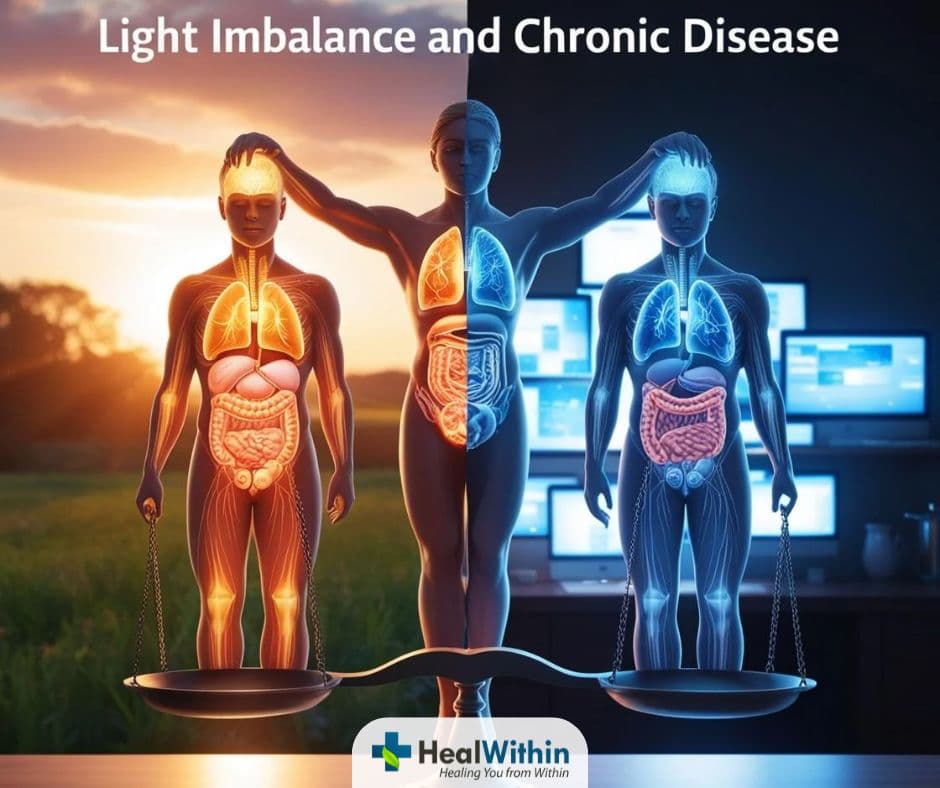
Did you know morning sunlight affects far more than just vitamin D production in your body?
Are you aware that morning sunlight has specific effects on brain chemistry that no supplement or medication can replace?
Has anyone explained that morning sunlight exposure is as essential to your health as proper nutrition and exercise?
Have you considered that our modern avoidance of morning sunlight might be contributing to the epidemic of chronic disease?
In my years of treating chronic disease patients, I’ve observed a concerning pattern: most people spend their mornings indoors shielded from natural sunlight, while simultaneously bombarding their eyes with artificial blue light from screens late into the night. This modern light imbalance isn’t just a minor lifestyle issue—it’s a fundamental disruption of our biological programming that silently contributes to numerous chronic health conditions.
The human body operates according to precise light-based rhythms. When we violate this natural pattern, we trigger a cascade of biochemical imbalances that affect everything from hormone production and cellular energy to inflammation levels and detoxification processes. Left unchecked, these imbalances gradually manifest as the chronic diseases that have become so prevalent in our society today.
Why Is Morning Sunlight So Essential For Your Health?
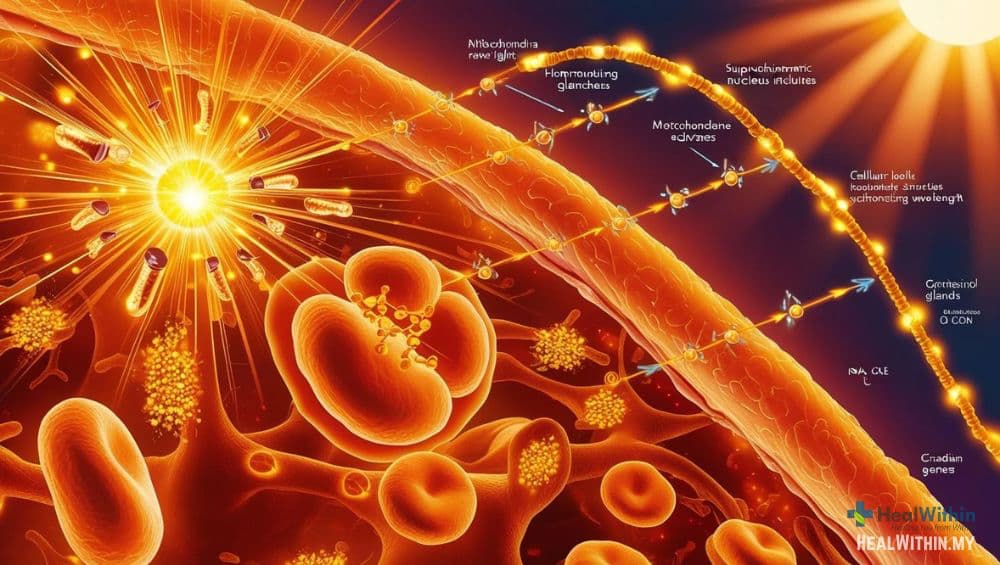
Most of us have been told that sunlight is important primarily for vitamin D production, but this vastly underestimates its critical role in human health. Morning sunlight exposure is not optional for optimal health—it’s a fundamental requirement for proper biological function.
THE CIRCADIAN RHYTHM CONNECTION
- Master biological clock synchronization: Morning sunlight exposure directly signals your brain’s suprachiasmatic nucleus to set your 24-hour biological clock, ensuring all bodily functions occur at the right time.
- Cortisol awakening response: Natural morning light triggers the healthy spike in cortisol that properly energizes you for the day and sets up the gradual decline needed for restful sleep later.
- Gene expression timing: Over 40% of your genes follow circadian patterns that depend on proper light signals, affecting everything from metabolism to immune function and tissue repair.
CELLULAR ENERGY PRODUCTION
- Mitochondrial activation: Morning sunlight, particularly its infrared and red light wavelengths, directly stimulates cytochrome c oxidase in your mitochondria, enhancing ATP production efficiency.
- Metabolic rate regulation: Proper morning light exposure helps optimize thyroid function and brown adipose tissue activation, supporting healthy metabolic rate throughout the day.
- Electron transport chain efficiency: The near-infrared light in morning sunlight enhances the electron transport chain function, increasing cellular energy production without increased oxidative stress.
HORMONAL BALANCE
- Melatonin production preparation: Counter-intuitively, proper morning sunlight exposure is essential for robust melatonin production at night, supporting restorative sleep.
- Leptin and ghrelin regulation: These hunger hormones require proper morning light signals to maintain healthy appetite regulation and prevent unnecessary cravings.
- Sex hormone optimization: Morning sunlight exposure supports healthy testosterone and estrogen balance through multiple pathways, including optimized pituitary function.
WATER STRUCTURING AND CELLULAR HYDRATION
- Cellular water organization: Morning sunlight’s infrared wavelengths help structure water molecules in your cells, creating exclusion zone (EZ) water that powers cellular functions.
- Cell membrane voltage: Properly structured water from sunlight exposure maintains optimal cell membrane voltage, essential for nutrient transport and waste removal.
- Intercellular communication: Light-structured water facilitates improved intercellular signaling, allowing for more coordinated tissue and organ function throughout your body.
QUANTUM BIOLOGY EFFECTS
- DHA activation in retinal cells: Morning sunlight activates DHA-rich cell membranes in your retina, triggering a cascade of quantum electron effects throughout your body.
- Biophoton regulation: Morning light exposure helps regulate your body’s own light emission (biophotons), which serves as an internal communication system between cells.
- Seasonal adaptation signaling: The specific spectrum of morning light provides your body critical information about the season, triggering appropriate metabolic and immune adaptations.
How Does Artificial Blue Light Affect Your Body When Overexposed?
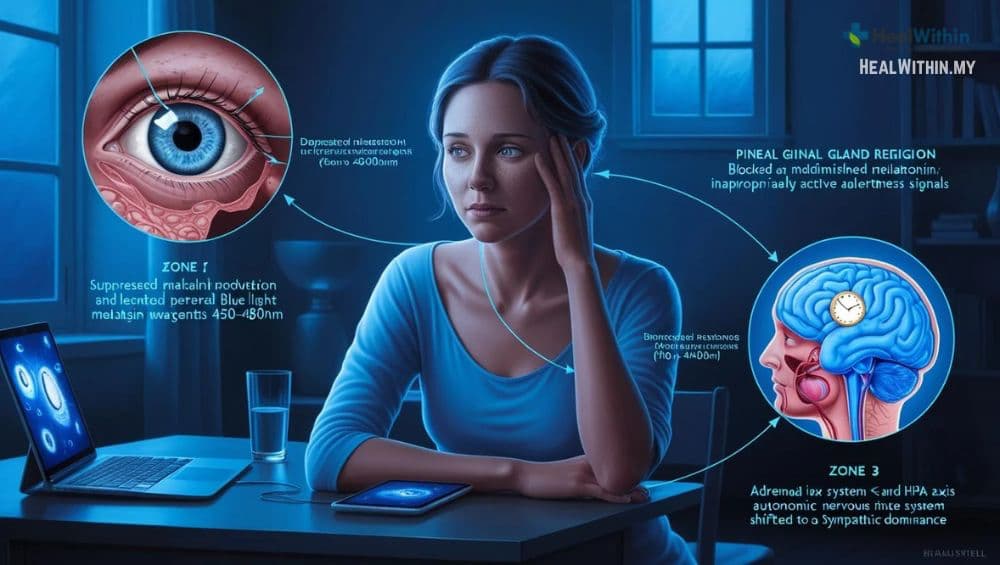
In today’s digital world, we’re constantly surrounded by sources of artificial blue light—smartphones, computers, tablets, LED lighting, and televisions. While blue light itself isn’t inherently harmful, the timing, intensity, and duration of exposure can create significant biological disruptions.
Note: Overexposure is subjective and varies between individuals based on their unique capacity threshold to counter the negative effects of blue light. Factors such as age, nutritional status, and existing health conditions can all influence how much exposure becomes problematic for you specifically.
MELATONIN SUPPRESSION
- Disrupted sleep onset: Artificial blue light exposure in the evening blocks melatonin production for up to 3 hours, making it difficult to fall asleep even when you feel physically tired.
- Reduced sleep quality: Even after falling asleep, prior blue light exposure continues to affect sleep architecture, reducing restorative deep sleep and REM sleep phases.
- Shifted circadian timing: Consistent evening blue light exposure gradually shifts your entire circadian rhythm later, creating a perpetual state of biological jet lag even without changing time zones.
RETINAL HEALTH IMPACTS
- Photoreceptor stress: Excessive blue light creates oxidative stress in retinal cells, particularly affecting the densely packed macular region where detailed vision is processed.
- Decreased macular pigment density: Chronic blue light exposure can deplete protective macular pigments like lutein and zeaxanthin faster than they can be replenished from diet.
- Accelerated age-related degeneration: The cumulative effects of blue light exposure can contribute to premature aging of retinal tissues, potentially accelerating conditions like macular degeneration.
STRESS RESPONSE ACTIVATION
- Inappropriate alertness signaling: Evening blue light tricks your brain into maintaining daytime alertness patterns, triggering stress hormones when your body should be winding down.
- Autonomic nervous system imbalance: Chronic evening blue light exposure shifts dominance toward the sympathetic (“fight-or-flight”) nervous system at the expense of restorative parasympathetic function.
- HPA axis dysregulation: Over time, inappropriate blue light exposure contributes to dysfunction in the hypothalamic-pituitary-adrenal axis, undermining stress resilience and hormone balance.
What Imbalances Develop From Sunlight Under-exposure and Artificial Blue Light Over-exposure?
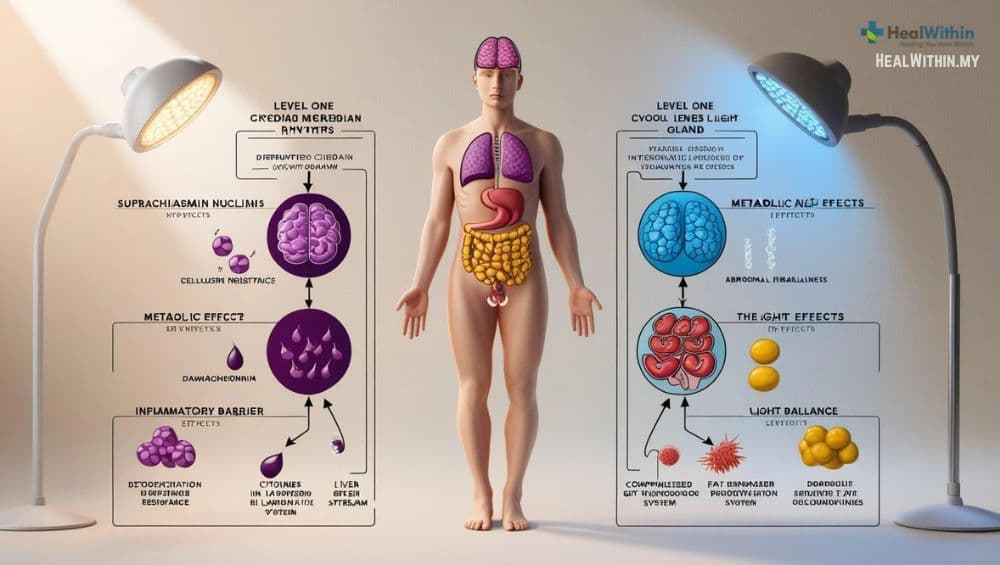
When your body experiences chronic deficiency of natural morning sunlight while simultaneously being bombarded with artificial blue light at inappropriate times, several fundamental biological imbalances begin to develop. These imbalances may seem subtle at first but compound over time.
METABOLIC DISRUPTION
- Insulin resistance development: The combination of insufficient morning light and excess evening blue light disrupts insulin signaling pathways, gradually reducing your cells’ ability to respond to insulin.
- Disrupted mitochondrial function: Without proper light signals, mitochondria become less efficient at producing energy and more prone to creating excessive free radicals, damaging cellular components.
- Altered lipid metabolism: Light imbalance affects how your body processes fats, potentially leading to increased triglycerides, altered cholesterol ratios, and abnormal fat storage patterns.
INFLAMMATORY RESPONSES
- Chronic low-grade inflammation: Improper light exposure patterns trigger increased production of pro-inflammatory cytokines throughout the body, creating a persistent inflammatory state.
- Compromised gut barrier function: Light-cycle disruption impacts intestinal permeability, potentially allowing more inflammatory molecules to enter circulation from the digestive tract.
- Autoimmune triggering: The combination of increased inflammation and disrupted circadian rhythms can contribute to immune dysregulation, potentially triggering or worsening autoimmune responses.
DETOXIFICATION IMPAIRMENT
- Reduced glutathione production: Proper light patterns are necessary for optimal glutathione synthesis, your body’s master antioxidant and key detoxification molecule.
- Compromised liver detoxification: Circadian disruption impairs Phase I and Phase II liver detoxification pathways, reducing your ability to clear both environmental toxins and internal metabolic waste.
- Impaired lymphatic function: The lymphatic system’s cleaning cycles depend on proper circadian signaling, with disruption leading to reduced waste clearance from tissues.
HORMONAL DYSREGULATION
- Thyroid function impairment: Light pattern imbalances affect the hypothalamic-pituitary-thyroid axis, potentially leading to reduced T3 conversion and cellular hypothyroidism despite “normal” lab values.
- Cortisol rhythm flattening: Instead of the healthy morning peak and evening trough, cortisol patterns become blunted or inverted, compromising energy, immunity, and stress response.
- Sex hormone imbalances: Disrupted light patterns affect the production and metabolism of testosterone, estrogen, and progesterone, contributing to various hormonal symptoms.
NEUROTRANSMITTER IMBALANCE
- Serotonin deficiency: Morning sunlight exposure is crucial for healthy serotonin production, with deficiency affecting mood, appetite regulation, and cognitive function.
- Dopamine dysregulation: Improper light patterns can create abnormal dopamine signaling, affecting motivation, pleasure response, and potentially contributing to addictive behaviors.
- GABA/glutamate imbalance: The calming neurotransmitter GABA and stimulating glutamate become imbalanced with disrupted light exposure, affecting anxiety levels and neurological health.
Which Chronic Diseases Are Linked To These Light-Induced Imbalances?
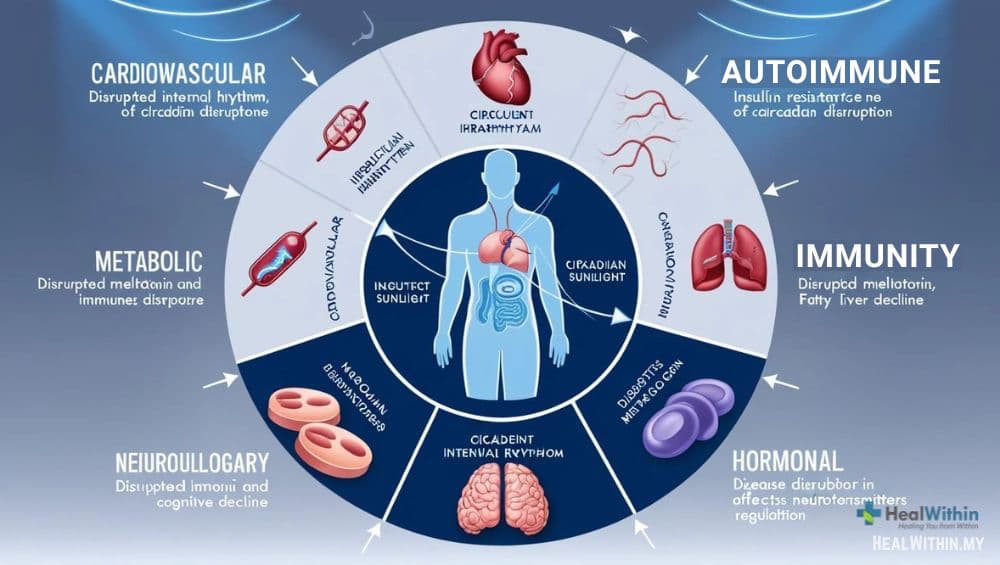
The biological imbalances created by improper light exposure patterns don’t exist in isolation—they gradually manifest as recognizable chronic diseases. Understanding these connections helps reveal why addressing light exposure is often a crucial missing element in treatment protocols.
CARDIOVASCULAR CONCERNS
- Hypertension development: Disrupted circadian rhythms affect blood pressure regulation mechanisms, potentially leading to chronic elevation even without other risk factors.
- Atherosclerosis progression: Light-induced inflammatory processes accelerate plaque formation in arterial walls, while simultaneously reducing the body’s natural repair mechanisms.
- Heart rhythm abnormalities: The heart’s electrical conduction system follows circadian patterns, with disruption potentially contributing to arrhythmias and heart rate variability issues.
METABOLIC DISORDERS
- Type 2 diabetes pathogenesis: Improper light exposure creates the perfect storm for diabetes development through insulin resistance, inflammation, and disrupted glucose metabolism.
- Non-alcoholic fatty liver disease: The liver’s metabolic functions are highly circadian-dependent, with disruption contributing to abnormal fat accumulation even without excess alcohol consumption.
- Obesity resistance to intervention: Weight management becomes increasingly difficult when light-induced hormonal imbalances affect hunger, satiety, and fat storage signals.
NEUROLOGICAL CONDITIONS
- Cognitive decline acceleration: The brain’s cleaning and repair processes occur primarily during proper sleep cycles, which are compromised by incorrect light exposure patterns.
- Mood disorder susceptibility: Depression, anxiety, and bipolar disorder all show strong connections to circadian disruption and insufficient natural light exposure.
- Neurodegenerative disease risk: Conditions like Alzheimer’s and Parkinson’s diseases show significant associations with long-term circadian disruption and insufficient natural light exposure.
AUTOIMMUNE MANIFESTATIONS
- Increased autoimmune triggering: Improper light exposure contributes to the “perfect storm” of genetic predisposition, environmental triggers, and intestinal permeability that often precedes autoimmune diagnosis.
- Thyroid autoimmunity: Hashimoto’s thyroiditis and Graves’ disease both show associations with disrupted light patterns and their effects on immune regulation.
- Inflammatory bowel conditions: Crohn’s disease and ulcerative colitis are influenced by light-dependent circadian rhythms that govern intestinal barrier function and immune activity.
HORMONAL DISORDERS
- Hypothalamic-pituitary dysfunction: This master control center for hormonal function is exquisitely sensitive to light signals, with disruption potentially affecting multiple downstream hormonal systems.
- Adrenal fatigue progression: While controversial in conventional medicine, the syndrome of depleted stress resilience shows strong connections to chronic light-pattern disruption.
- Reproductive hormone disorders: Conditions like PCOS, endometriosis, and low testosterone show associations with circadian disruption and insufficient sunlight exposure.
How Can You Restore Healthy Light Balance In Your Daily Life?
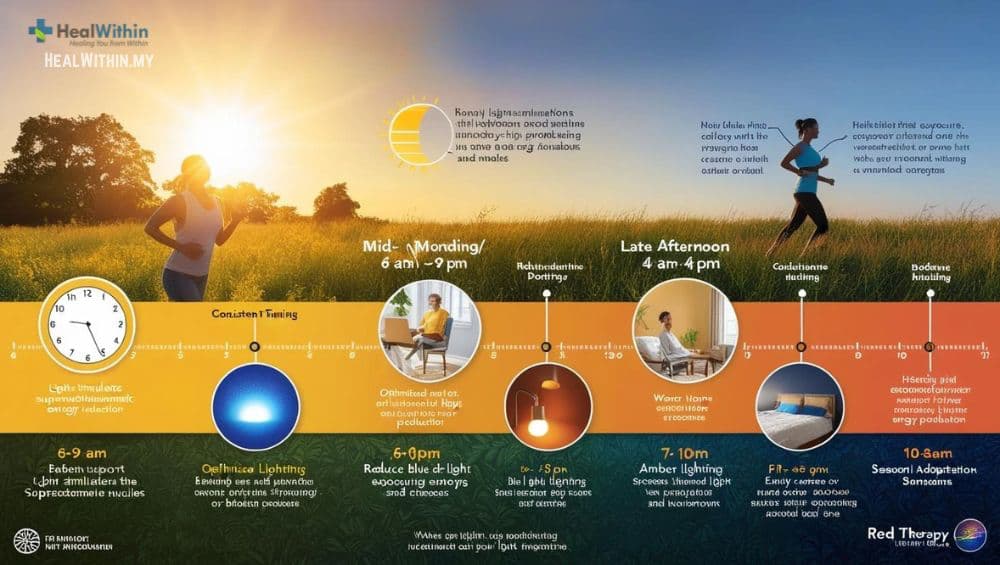
Addressing the light imbalances that contribute to chronic disease doesn’t require complicated technologies or expensive interventions. With strategic adjustments to your daily routine, you can realign your light exposure patterns with your body’s biological needs.
MORNING LIGHT STRATEGIES
- Early outdoor exposure: Aim for 15-30 minutes of direct morning sunlight exposure within an hour of waking, ideally without glasses or contacts which filter beneficial wavelengths.
- Consistent timing pattern: Maintaining consistent timing of morning light exposure helps strengthen circadian entrainment, with even cloudy day exposure being far better than none.
- Strategic morning positioning: If possible, position yourself to allow morning light to enter your eyes from a side angle (not looking directly at the sun), maximizing beneficial wavelengths while minimizing risk.
EVENING BLUE LIGHT MANAGEMENT
- Technology curfew implementation: Establish a firm cutoff time for screens at least 2-3 hours before bedtime, allowing your natural melatonin production to begin on schedule.
- Blue-blocking technology: When evening screen use is unavoidable, utilize blue-blocking glasses or screen filters that specifically target the most disruptive wavelengths (especially 450-480nm).
- Strategic evening lighting: Replace standard LED and fluorescent lights with amber or red-spectrum options in areas where you spend evening time, particularly bedrooms and bathrooms.
COMPREHENSIVE LIGHT HYGIENE PLAN
- Daytime light optimization: Maximize natural light exposure throughout the day by working near windows, taking outdoor breaks, and reducing unnecessary artificial lighting when natural light is available.
- Seasonal adaptation strategies: Adjust wake times, light exposure timing, and blue-light protection based on seasonal changes in natural daylight patterns for your geographic location.
- Travel adaptation protocols: When crossing time zones, use strategic light exposure and avoidance to help your circadian system adapt more quickly to the new location.
NUTRITIONAL SUPPORT FOR LIGHT SENSITIVITY
- Retinal protective nutrients: Increase consumption of lutein, zeaxanthin, and astaxanthin from foods like egg yolks, leafy greens, and wild salmon to support retinal health and light processing.
- DHA optimization: Ensure adequate intake of this critical omega-3 fatty acid that comprises retinal cell membranes and is essential for proper light signal transduction.
- Antioxidant enhancement: Support your body’s protection against light-induced oxidative stress with comprehensive antioxidant intake from colorful vegetables, berries, and herbs.
LIGHT-BASED THERAPIES
- Red light therapy incorporation: Consider adding specific red and near-infrared light therapy devices to supplement natural light, particularly during seasons with limited sun exposure.
- Sauna light benefits: Infra-red saunas provide beneficial infrared exposure that complements natural sunlight, supporting many of the same biological pathways.
- Cold exposure synergy: Combining strategic light exposure with cold therapy (like cold showers or ice baths) can amplify the metabolic and mitochondrial benefits of both practices.
Summary and Conclusion
The relationship between light exposure patterns and chronic disease development is not merely theoretical—it represents one of the most overlooked aspects of modern health. Let me summarize the key points we’ve explored:
- Morning sunlight deficiency disrupts fundamental biological processes through effects on circadian rhythms, cellular energy production, water structuring, and quantum biological functions that regulate your entire physiology.
- Artificial blue light overexposure creates significant biological stress by suppressing melatonin, damaging retinal health, and activating inappropriate stress responses throughout your body.
- The combination of these light imbalances triggers systemic disruption affecting metabolism, inflammation, detoxification, hormonal regulation, and neurotransmitter balance.
- These imbalances gradually manifest as recognized chronic diseases including cardiovascular conditions, metabolic disorders, neurological conditions, autoimmune manifestations, and hormonal dysfunctions.
- Strategic light management represents a powerful intervention that can be implemented through morning light exposure, evening blue light reduction, comprehensive light hygiene planning, nutritional support, and targeted light-based therapies.
The modern health crisis cannot be fully addressed without recognizing how far we’ve strayed from our biological light requirements. Our bodies have specific mechanisms to interpret and respond to natural light patterns—signals that regulate everything from cellular energy production to hormone synthesis.
By deliberately restructuring your relationship with both natural and artificial light, you can address one of the most fundamental root causes driving chronic disease development. This often-overlooked factor may be the missing piece in your health journey, providing benefits that no medication or supplement alone can replicate.