

HEAL WITHIN® EDUCATION

What does “Treating Underlying Root Causes” to Chronic Diseases Really Mean

Dr Lee Cheng Lok
MEDICAL DIRECTOR | Heal Within®
Dr Lee Cheng Lok
MEDICAL DIRECTOR
Heal Within®

Why do so many of you tell me that even after understanding the importance of root cause treatment, you still feel uncertain about what this actually means in practice?

Why do patients often ask me to explain again how treating root causes differs from what they’ve experienced with other doctors—even those who claim to look for “causes” of disease?

The confusion is understandable. After all, conventional medicine does investigate causes—they run extensive tests, look for genetic markers, identify infections, and analyze biochemical pathways. Alternative practitioners also speak of finding “the real cause” behind your symptoms. Yet despite all this investigation into causes, patients continue to experience recurring symptoms, incomplete healing, and the frustrating cycle of managing rather than eliminating their chronic diseases.

The critical difference lies not in whether we look for causes, but in how deeply we investigate and how comprehensively we address what we find. When I speak of treating underlying root causes, I’m referring to identifying and eliminating the fundamental physiological imbalances that create the internal environment where chronic diseases develop and perpetuate. This goes far beyond the surface-level causes that most medical approaches address, requiring us to understand your body as an interconnected system where true healing can only occur when we address multiple root causes simultaneously.

What Does "Underlying Root Causes" to Diseases Really Mean?
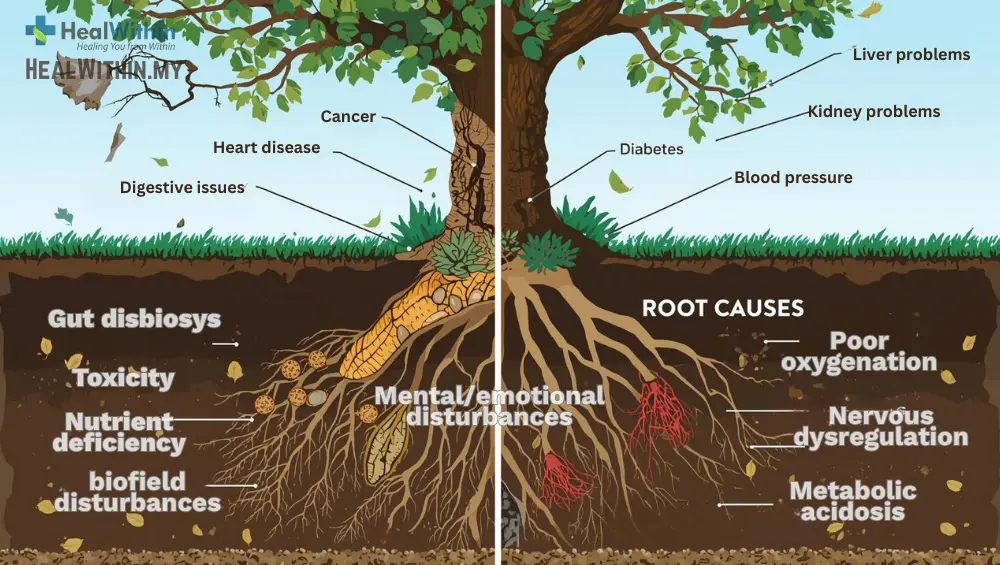
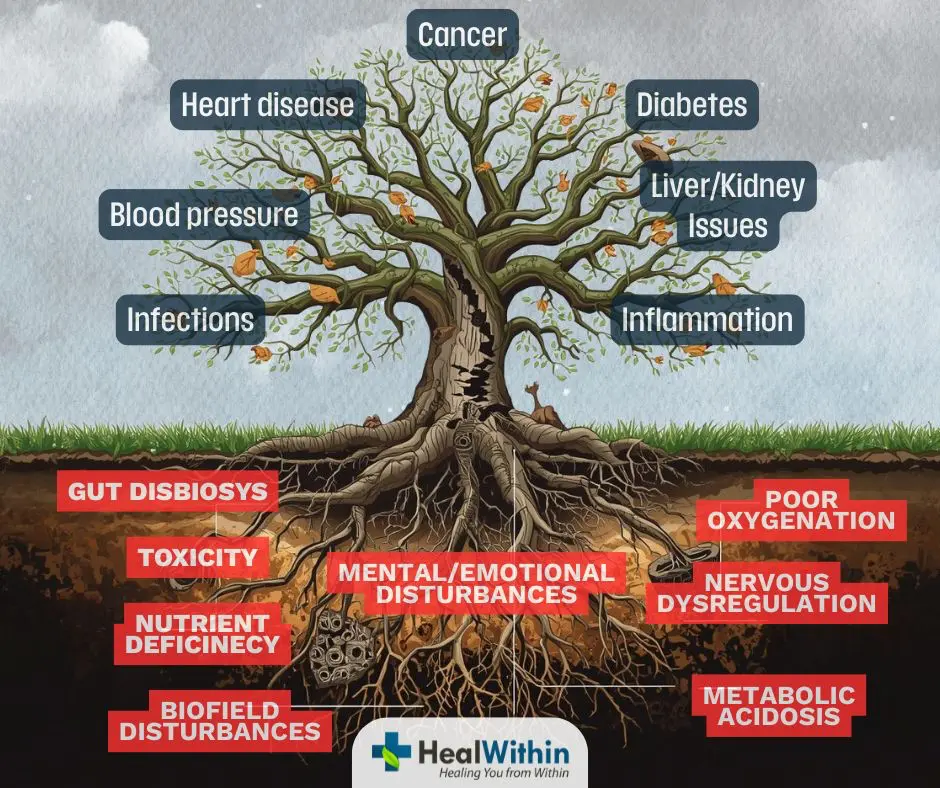
When I tell patients we need to treat their underlying root causes, most assume I’m talking about finding better diagnoses or identifying infections and genetic factors. But root causes represent something entirely different—and understanding this distinction will transform how you approach your healing journey.

A CLEAR, SIMPLE DEFINITION OF WHAT ROOT CAUSES ACTUALLY ARE

Root causes are the fundamental physiological imbalances that create the internal environment where diseases can develop and thrive in your body.

  1. Root causes are foundational physiological dysfunctions – These are disruptions in your body’s basic functions like detoxification capacity, cellular energy production, nutrient utilization, and waste elimination that must work properly for health.
  2. Root causes create disease-favoring internal conditions – They establish an environment within your body where chronic diseases can develop and perpetuate, while preventing your natural healing mechanisms from functioning effectively.
  3. Root causes exist before symptoms appear – These fundamental imbalances operate silently for months or years, gradually creating dysfunction before you experience any noticeable symptoms or receive disease diagnoses.

ANALOGIES TO HELP YOU UNDERSTAND ROOT CAUSES

Analogies make the abstract concept of root causes concrete and easier to grasp in practical terms.

  1. Root causes are like contaminated soil in a diseased garden – Just as poisoned soil allows weeds to flourish while preventing healthy plants from growing, root causes create internal conditions that favor disease development over health maintenance.
  2. Think of root causes as cracks in your home’s foundation – Surface repairs to walls and paint won’t solve structural problems; similarly, treating symptoms without addressing foundational physiological dysfunction ensures continued deterioration and recurring problems.
  3. Root causes function like upstream pollution in a river system – Contamination at the source affects everything downstream, just as fundamental imbalances in your basic body functions create cascading dysfunction throughout all your organ systems.

SECONDARY CAUSES VS. ROOT CAUSES

Understanding these different levels of causation prevents you from pursuing treatments that address the wrong level of dysfunction entirely.

  1. Secondary causes are immediate triggers and downstream factors – These include bacterial infections, stress events, dietary indiscretions, or environmental exposures that seem to “cause” your symptoms but only affect you because deeper dysfunction already exists.
  2. Root causes are the underlying physiological imbalances – These are the basic dysfunctions in detoxification, circulation, cellular metabolism, and immune function that create vulnerability to secondary causes and immediate triggers.
  3. Secondary cause treatment provides temporary relief only – Addressing immediate triggers without correcting root cause dysfunction ensures that symptoms will return when you encounter new triggers or stress factors in the future.

WHAT MAKES SOMETHING A TRUE ROOT CAUSE VS. SECONDARY CAUSE

This distinction helps you evaluate whether your current treatments are addressing the right level of dysfunction for lasting healing.

  1. True root causes exist at the foundational physiological level – They involve basic body functions that, when disrupted, affect multiple organ systems simultaneously and create widespread dysfunction throughout your body.
  2. Secondary causes develop because root causes have already created dysfunction – Hormonal imbalances, bacterial overgrowth, and inflammatory responses occur because root cause imbalances have compromised your body’s ability to maintain normal function.
  3. True root causes can create multiple different diseases – One root cause like heavy metal toxicity can simultaneously contribute to heart disease, diabetes, autoimmune conditions, and neurological problems, explaining why you may have multiple chronic conditions.

WHAT CONVENTIONAL MEDICINE CALLS "CAUSES" VS. WHAT TRUE ROOT CAUSES ARE

This comparison reveals why conventional treatments often fail to provide lasting healing despite identifying apparent “causes” of disease.

  1. Conventional medicine identifies downstream effects as causes – When doctors say high cholesterol “causes” heart disease or bacteria “cause” infections, they’re addressing secondary factors rather than the fundamental imbalances that created these conditions.
  2. True root causes exist deeper in the physiological hierarchy – Heavy metal toxicity, chronic nutrient deficiency, poor cellular oxygenation, and compromised detoxification represent the foundational imbalances that must be corrected for lasting healing.
  3. Conventional “causes” are actually symptoms of root cause dysfunction – High blood pressure, elevated blood sugar, and chronic inflammation are manifestations of deeper imbalances, not primary problems requiring isolated treatment approaches.

THE CASCADE FROM ROOT CAUSE TO INTERMEDIATE EFFECTS TO SYMPTOMS

Understanding this progression explains how diseases actually develop and why timing of intervention determines treatment success.

  1. Step 1: Root causes create foundational dysfunction – Toxicity, nutrient deficiency, poor circulation, and other fundamental imbalances disrupt your body’s basic physiological processes before any symptoms become apparent.
  2. Step 2: Intermediate pathological states develop – These root cause imbalances generate inflammation, acidosis, compromised immunity, hormonal disruption, and cellular energy dysfunction as intermediate effects of ongoing foundational problems.
  3. Step 3: Symptoms and disease diagnoses finally emerge – Only after months or years of accumulated dysfunction do you experience the pain, organ dysfunction, and chronic diseases that prompt you to seek medical treatment.

EXAMPLES: CONVENTIONAL "CAUSES" VS. TRUE ROOT CAUSES

Specific examples illustrate the difference between what doctors typically treat and what actually needs to be addressed for complete healing.

  1. High cholesterol example: conventional vs. root cause approach – Doctors treat high cholesterol as “the cause” of heart disease with statin drugs, but true root causes include heavy metal toxicity damaging blood vessels, chronic inflammation from poor nutrition, and nutrient deficiencies preventing proper cholesterol metabolism.
  2. Bacterial infection example: immediate trigger vs. foundational dysfunction – Doctors treat bacterial infections with antibiotics, but the true root causes are compromised immunity from toxicity, nutrient deficiency, and poor circulation that allowed opportunistic bacteria to overwhelm your natural defenses.
  3. Diabetes example: blood sugar management vs. metabolic restoration – Conventional treatment manages blood sugar with medications, but root causes include heavy metal toxicity damaging insulin receptors, chronic inflammation disrupting glucose metabolism, and nutrient deficiencies preventing proper cellular energy production.

WHY THIS DISTINCTION MATTERS FOR HEALING AND TREATMENT RESULTS

Understanding root causes versus secondary factors determines whether you experience temporary symptom relief or complete, lasting restoration of health.

  1. Treating symptoms provides temporary management only – Medications that suppress pain, inflammation, or other symptoms provide relief while root causes continue creating ongoing dysfunction and eventual symptom recurrence.
  2. Treating secondary causes offers moderate, incomplete improvement – Addressing hormonal imbalances, bacterial overgrowth, or inflammatory responses improves your condition but leaves foundational dysfunction intact, limiting healing potential and allowing disease progression.
  3. Treating true root causes delivers complete, lasting healing – Only by correcting fundamental physiological imbalances can you eliminate the source of disease, restore normal organ function, and achieve the sustainable health that prevents recurrence and progression.

What Are the True Root Causes Behind Most Chronic Diseases?
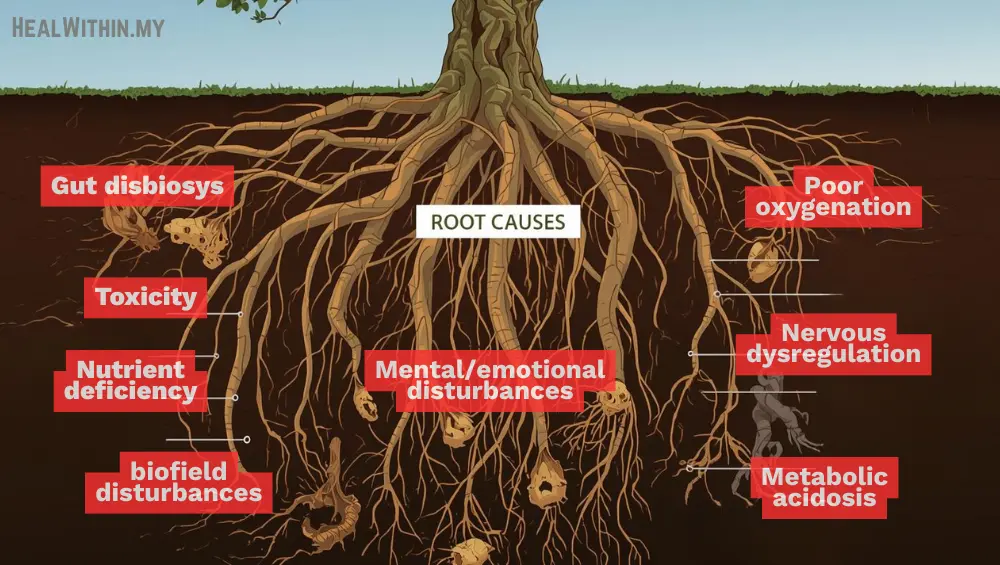
After treating thousands of chronic disease patients, I’ve identified that virtually all chronic conditions stem from the same fundamental imbalances. While conventional medicine sees hundreds of different diseases requiring different treatments, integrated medicine recognizes that these apparently separate conditions actually arise from a limited number of root causes that must be addressed systematically.

THE 12 FUNDAMENTAL ROOT CAUSES IDENTIFIED

Through decades of clinical experience and comprehensive patient analysis, I’ve identified twelve specific physiological imbalances that create the foundation for chronic disease development in virtually all patients.

  1. Gut dysbiosis and acidosis (bad gut condition) – Imbalanced intestinal bacteria and acidic gut environment disrupts digestion, immune function, neurotransmitter production, and creates systemic inflammation that affects your entire body.
  2. Toxicity – presence of organic or inorganic toxins, or heavy metals – Environmental pollutants, industrial chemicals, and toxic metals like mercury, lead, and cadmium interfere with enzymatic processes, hormone production, and cellular communication throughout your system.
  3. Essential nutrients deficiency – Depleted soils and processed foods create widespread deficiencies in vitamins, minerals, amino acids, and fatty acids that are essential for cellular repair, immune function, and metabolic processes.
  4. Chronic infection (presence of bacteria or viruses, for long periods) – Persistent bacterial, viral, fungal, or parasitic infections create ongoing immune system burden, systemic inflammation, and drain your body’s healing resources continuously.
  5. Chronic metabolic acidosis – Persistent acidic conditions in your body’s tissues and fluids impair cellular function, enzyme activity, and mineral absorption while promoting inflammation and degenerative processes.
  6. Poor oxygenation – low oxygen supply to all organs – Compromised circulation, respiratory dysfunction, and cellular membrane damage limit oxygen delivery to tissues, forcing cells into inefficient energy production and creating widespread dysfunction.
  7. Chronic nervous dysregulation – Disrupted autonomic nervous system function affects heart rate, digestion, sleep, hormone production, and immune responses, preventing your body from maintaining proper physiological balance.
  8. Chronic hormonal imbalances – Disrupted production, metabolism, or receptor sensitivity of hormones affects metabolism, reproduction, stress response, sleep cycles, and cellular repair throughout your entire body.
  9. Chronic high sugar levels – Persistent elevation of blood glucose levels damages cellular membranes, impairs mitochondrial function, and creates systemic inflammation that affects every organ system.
  10. Low immunity – Compromised immune system function reduces your body’s ability to fight infections, eliminate toxins, repair damaged tissues, and maintain healthy cellular function across all organs.
  11. Chronic exposure to dissonant EMF radiation – Artificial electromagnetic frequencies from technology interfere with cellular communication, disrupt sleep patterns, and impair your body’s natural bioelectric healing mechanisms.
  12. Chronic mental/emotional imbalances – Persistent psychological stress, unresolved trauma, and emotional dysfunction disrupts hormonal balance, immune function, digestive processes, and cardiovascular health through continuous stress pathway activation.

THE INTERCONNECTED NATURE OF ROOT CAUSE SYSTEMS

These twelve root causes don’t operate independently—they create complex webs of dysfunction where each imbalance amplifies and perpetuates the others.

  1. Root causes create cascading dysfunction patterns – Gut dysbiosis increases toxicity, which depletes nutrients, which reduces immunity, which allows chronic infections, creating self-perpetuating cycles of declining health throughout your system.
  2. Multiple root causes compound each other’s effects – When you have several root causes simultaneously—such as toxicity, nutrient deficiency, and chronic infections—their combined impact creates exponentially worse dysfunction than any single cause alone.
  3. Addressing one root cause while ignoring others limits healing – Partial treatment that corrects some root causes while leaving others intact prevents complete healing and allows remaining imbalances to recreate disease patterns.

HOW ROOT CAUSES CREATE DISEASE MANIFESTATIONS

Understanding this process explains why the same root causes can create different diseases in different people and why multiple conditions often occur together.

  1. Root causes first create intermediate pathological states – Before diseases appear, these twelve root causes generate inflammation, compromised immunity, poor circulation, and cellular dysfunction as immediate consequences of ongoing imbalances.
  2. Intermediate states progress to organ-specific dysfunction – Depending on your genetic vulnerabilities, toxic load distribution, and lifestyle factors, these intermediate states manifest as dysfunction in your weakest organ systems first.
  3. Organ dysfunction eventually becomes diagnosed disease – After months or years of accumulating damage, organ dysfunction reaches levels that produce recognizable symptoms and meet diagnostic criteria for specific disease classifications.

Why Can't Single Treatment Modalities Effectively Address Root Causes?
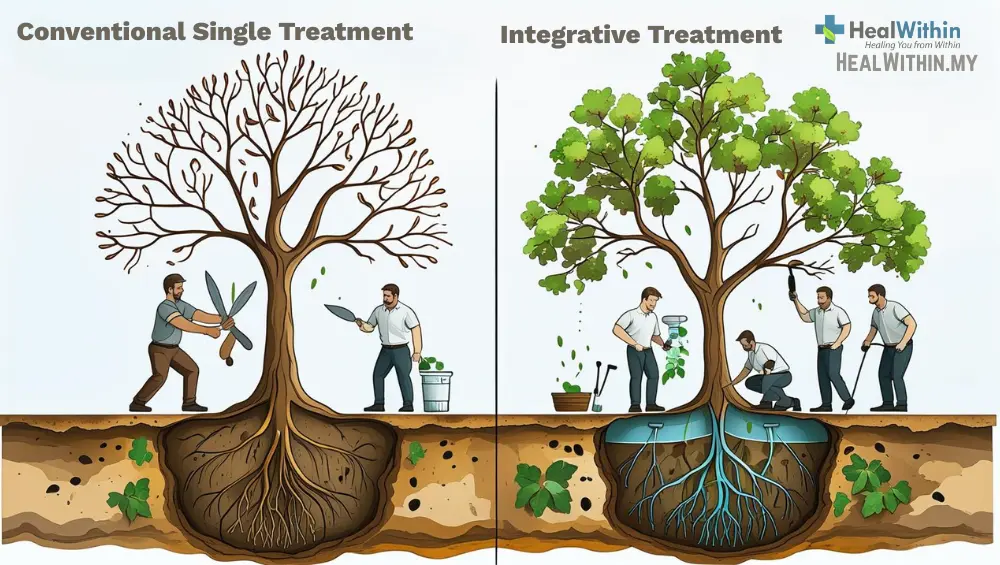
When patients ask why their previous treatments failed despite using “good” therapies, the answer lies in understanding that root causes are complex, interconnected problems that require comprehensive solutions. Single treatment approaches—whether conventional drugs or alternative remedies—are fundamentally inadequate for addressing the multifaceted nature of chronic disease root causes.

THE LIMITATION OF CONVENTIONAL SINGLE-DRUG APPROACHES

Conventional medicine’s pharmaceutical model is designed around the concept of one drug targeting one specific pathway, which creates inherent limitations when dealing with complex root cause dysfunction.

  1. Single drugs can only target one physiological pathway at a time – A blood pressure medication affects cardiovascular function but doesn’t address the toxicity, nutrient deficiencies, or chronic infections that created the high blood pressure in the first place.
  2. Pharmaceutical approaches suppress symptoms rather than correct dysfunction – Medications are designed to block or override normal physiological processes rather than restore the healthy function that prevents symptoms from occurring naturally.
  3. Drug side effects often create new root cause imbalances – Many pharmaceuticals burden detoxification pathways, deplete essential nutrients, and disrupt gut bacteria, actually worsening several root causes while treating symptoms.

WHY ALTERNATIVE THERAPIES ALONE ARE INSUFFICIENT

While natural and alternative therapies often work more harmoniously with your body than pharmaceuticals, single modality approaches still fail to address the comprehensive nature of root cause dysfunction.

  1. Individual supplements cannot correct multiple nutrient deficiencies simultaneously – Taking vitamin D doesn’t address your magnesium, B12, omega-3, and amino acid deficiencies that are equally important for restoring cellular function and metabolic balance.
  2. Single detoxification methods cannot eliminate all types of toxins – Chelation therapy removes heavy metals but doesn’t address chemical toxins, while liver detox protocols don’t remove metals, leaving multiple toxic burdens unaddressed.
  3. Isolated therapies cannot restore complex physiological balance – Acupuncture may improve circulation but doesn’t correct gut dysbiosis, nutritional therapy may provide nutrients but doesn’t address chronic infections that prevent nutrient absorption.

THE NECESSITY OF MULTI-MODAL INTERVENTION

The interconnected nature of root causes demands treatment approaches that can address multiple dysfunctions simultaneously and synergistically.

  1. Root causes require simultaneous correction to prevent re-creation – Treating toxicity while ignoring gut dysbiosis allows the damaged gut to continue absorbing toxins, while treating infections without supporting immunity ensures reinfection occurs.
  2. Complex dysfunction needs comprehensive therapeutic support – Restoring cellular energy production requires detoxification, oxygenation, nutrition, circulation enhancement, and infection elimination working together to create optimal cellular environment.
  3. Sustainable healing demands whole-system restoration – Unless all major root causes are addressed simultaneously, the untreated imbalances will continue creating stress on treated systems, preventing complete healing and ensuring disease recurrence.

How Does Integrated Treatment Address Multiple Root Causes Simultaneously?
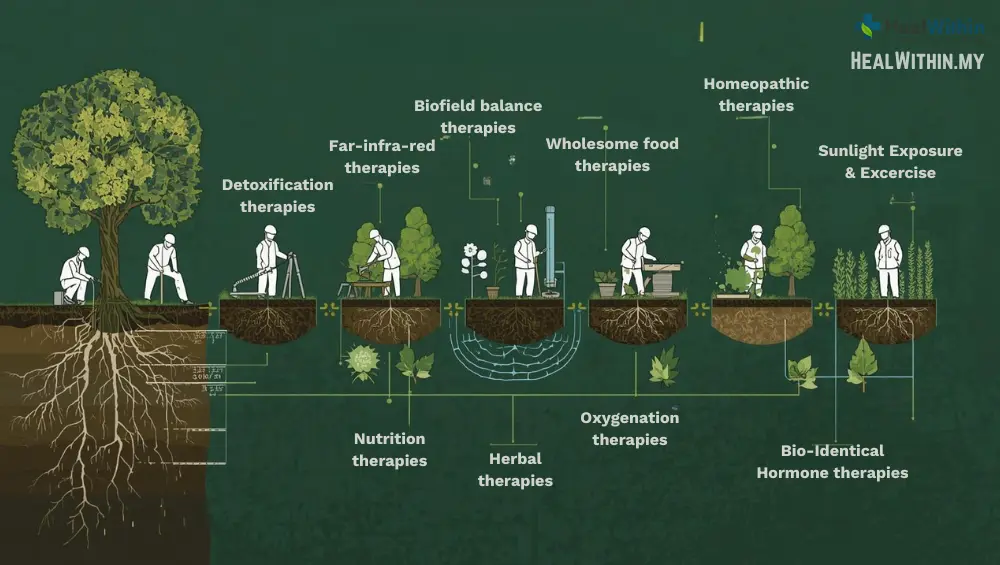
Understanding why single treatments fail naturally leads to the question of how integrated treatment succeeds where others don’t. Integrated treatment represents a fundamental shift from targeting individual problems to orchestrating comprehensive healing across all body systems by strategically combining multiple therapeutic modalities that work synergistically together.

THE STRATEGIC COMBINATION OF THERAPEUTIC MODALITIES

Integrated treatment protocols are carefully designed to address different aspects of root cause dysfunction simultaneously, creating comprehensive healing responses throughout your body.

  1. Detoxification therapies eliminate multiple types of toxins simultaneously – Chelation therapy removes heavy metals while IV glutathione supports liver detoxification and lymphatic drainage clears cellular waste, addressing the complete spectrum of toxic burdens comprehensively.
  2. Nutritional interventions restore cellular function across all systems – IV nutrition delivers essential nutrients directly to cells while wholesome food therapy provides sustained nourishment and targeted supplementation corrects specific deficiencies simultaneously.
  3. Oxygenation and circulation therapies improve cellular energy production – Hyperbaric oxygen therapy increases tissue oxygen levels while autohemo therapy enhances circulation and ozone therapy improves cellular oxygen utilization, creating optimal cellular energy environment.

TARGETING MULTIPLE PATHWAYS FOR COMPREHENSIVE HEALING

Rather than hoping one therapy will somehow fix everything, integrated treatment systematically addresses each root cause through specific therapeutic interventions working together.

  1. Gut restoration requires multi-modal approach – Antimicrobial therapy eliminates pathogenic bacteria while probiotic therapy restores beneficial microbes, digestive enzymes improve nutrient absorption, and gut-healing nutrients repair intestinal barrier function simultaneously.
  2. Immune system optimization needs comprehensive support – IV vitamin C provides direct immune enhancement while detoxification reduces immune burden, proper nutrition supplies immune building blocks, and stress management prevents immune suppression.
  3. Hormonal balance demands whole-system restoration – Bioidentical hormone replacement provides missing hormones while detoxification improves hormone metabolism, nutrition supports hormone production, and stress management prevents hormonal disruption.

SYNERGISTIC EFFECTS OF INTEGRATED APPROACHES

When therapeutic modalities are combined strategically, they create synergistic effects that multiply healing potential far beyond what individual treatments could accomplish alone.

  1. Combined interventions accelerate healing beyond additive effects – Detoxification protocols work exponentially better when supported by nutritional therapy, circulation enhancement, and immune support simultaneously rather than sequentially.
  2. Simultaneous root cause treatment prevents therapeutic interference – Addressing toxicity while correcting nutrient deficiencies prevents detox reactions from depleting essential nutrients, while supporting circulation ensures nutrients reach all tissues effectively.
  3. Comprehensive protocols create sustainable healing environments – When all root causes are addressed together, your body can maintain healing gains because no remaining imbalances are working to recreate disease conditions.

How Can Patients Identify if Their Treatment Addresses Root Causes?

Many patients believe they’re receiving root cause treatment when they’re actually getting sophisticated symptom management. Learning to evaluate your treatment approach objectively can save you years of ineffective therapies and guide you toward treatments that deliver genuine, lasting healing.

KEY QUESTIONS TO ASK YOUR HEALTHCARE PROVIDER

These specific questions will quickly reveal whether your practitioner truly understands and addresses root cause treatment or simply uses root cause terminology while providing conventional approaches.

  1. “What specific testing will you do to identify my underlying imbalances?” – Root cause treatment requires comprehensive diagnostic testing for toxicity, nutrient status, gut health, chronic infections, and metabolic function, not just standard blood panels.
  2. “Which of the 12 root causes are you testing for in my case?” – A true root cause practitioner should be able to discuss specific root causes like gut dysbiosis, toxicity, nutrient deficiency, chronic infections, and explain which ones apply to your condition.
  3. “How are you addressing multiple root causes simultaneously in my treatment?” – Authentic root cause treatment involves comprehensive protocols that tackle several root causes together, not sequential treatment of individual problems over months or years.

SIGNS YOUR TREATMENT IS ADDRESSING ROOT CAUSES

Genuine root cause treatment produces specific types of progress and experiences that differ markedly from symptom management approaches, allowing you to evaluate treatment effectiveness objectively.

  1. Multiple health improvements occur simultaneously across different body systems – True root cause treatment improves energy, digestion, sleep, mental clarity, and various symptoms together because it’s restoring foundational health rather than targeting individual problems.
  2. You experience sustainable improvement that continues even when treatment intensity decreases – Root cause healing creates lasting changes in your body’s function, unlike symptom management that requires continuous intervention to maintain benefits.
  3. Your practitioner monitors progress through comprehensive testing, not just symptom tracking – Effective root cause treatment shows measurable improvements in laboratory markers, organ function tests, and physiological parameters, not just subjective symptom relief.

RED FLAGS OF SYMPTOM-ONLY APPROACHES

Recognizing these warning signs helps you avoid wasting time and resources on treatments that won’t deliver the comprehensive healing you need for lasting health restoration.

  1. Treatment focuses on managing your diagnosed diseases rather than investigating underlying causes – If your practitioner primarily discusses controlling diabetes, managing heart disease, or treating autoimmune conditions without addressing why you developed these conditions, you’re receiving symptom management.
  2. Recommendations center around suppressing symptoms with medications or supplements – Whether using pharmaceuticals or natural remedies, approaches that aim to reduce pain, lower cholesterol, or control inflammation without addressing causative factors are symptom-focused treatments.
  3. Progress is measured only by symptom reduction rather than functional restoration – If success is defined by reduced pain scores, lower blood pressure readings, or improved mood ratings without testing underlying physiological improvements, you’re not receiving root cause treatment.

Summary and Conclusion

The fundamental truth about treating underlying root causes is that it represents a completely different paradigm from the medical approaches most patients have experienced. Throughout this article, we’ve established the critical distinctions that separate genuine root cause treatment from sophisticated symptom management:

  • True root causes are foundational physiological imbalances – The 12 fundamental root causes including gut dysbiosis, toxicity, nutrient deficiency, chronic infections, metabolic acidosis, poor oxygenation, nervous dysregulation, hormonal imbalances, high sugar levels, low immunity, EMF exposure, and mental/emotional imbalances that create disease-favoring environments
  • Root causes operate through predictable cascades – These imbalances first create intermediate pathological states like inflammation and compromised immunity before manifesting as the chronic diseases that bring patients to seek treatment
  • Single treatment modalities cannot address interconnected dysfunction – Whether conventional pharmaceuticals or individual alternative therapies, isolated approaches fail because root causes work synergistically and require comprehensive intervention
  • Integrated treatment addresses multiple root causes simultaneously – Strategic combination of therapeutic modalities creates synergistic healing effects that restore foundational health across all body systems
  • Patients can evaluate treatment effectiveness objectively – Genuine root cause treatment produces simultaneous improvements across multiple health parameters and creates sustainable healing that continues beyond active treatment phases

When you understand that your chronic diseases are manifestations of deeper system-wide imbalances rather than isolated conditions requiring separate treatments, you realize why fragmented medical approaches continue to disappoint despite using advanced diagnostics and sophisticated therapies. Your body operates as one integrated biological system where foundational dysfunction inevitably creates multiple health problems that can only be resolved through comprehensive root cause correction.

This understanding transforms your entire approach to healing from hoping individual treatments might eventually work to systematically restoring the fundamental physiological balance that your body requires for optimal health. The question isn’t whether you’ll try another medication or supplement, but whether you’ll finally address your health challenges with the comprehensive precision they demand for complete, lasting recovery.


Featured Cases

Was this article helpful?

Subscribe to Heal Within® Education and get all future educational lessons and articles sent to your email as soon as they’re published.

Just enter your best email-id and hit subscribe!

And then, Share the knowledge with your friends

TREATMENT EXECUTION PROCESS

PHASE 1: DIAGNOSIS

Integrated & Holistic Diagnosis

Objective for Diagnosis:

Our treatment plan is tailored to each patient based on each patient’s body condition. The primary objective for diagnosis is to determine each patient’s current body condition and by this to then tailor the most effective & efficient treatment plan for each patient.

Data Collected for Diagnosis:

  1. The patient’s medical history: Genesis & progression of diseases, medications  & other treatments used in the past, allergies, diet patterns, sleep habits, exercise habits, supplements used, etc.
  1. Vitality Factors: The patient’s current levels in energy, body & limb mobility, digestion & bowel movement, mental & emotional state, sleep, sexual function, skin complexion, and immunity.
  1. Symptoms: Symptoms are primarily aches, pains & discomforts experienced by the patient, and external-physical-body changes seen in the patient.
  1. Conditions in major organs: Specific abnormal conditions (if any) in the stomach, spleen, gut, colon, liver, gallbladder, heart, lungs, brain, nerves, blood vessels & blood, lymph vessels & lymph, bones & joints, and muscles.
  1. Causes to abnormal conditions in organs: (1) Toxins – organic / inorganic / heavy-metals (2) Acids of food-fermentation from gut (3) Infectious agents – bacteria / viruses (4) Metabolic acids above homeostatic-threshold (5) Lack of essential nutrients; (6) Lack of oxygen (7) Hormonal imbalances (8) High sugar level (9) Low white blood cells levels (10) EMF disturbances from external environment.
  1. Existence of 10 Primary Abnormalities: (1) Gut disbiosys from a toxic-diet; (2) Heavy metals dental fillings; (3) Bad external environment at home or work; (4) Nutrition-deficient diet; (5) Lack of muscular-skeletal motion resulting into poor blood circulation; (6) Lack of muscular-skeletal motion resulting into poor lymph circulation; (7) Abnormal brain & nerve regulation; (8) Mitochondrial dysfunction; (9) Sympathetic overdrive from a chronic stressed state of mind; (10) Genetic organ disorders.

Diagnosis Procedure:

(what happens in the centre during phase 1 diagnosis.)

To determine the above 5 things, the designated medical doctor gathers a complete detailed record of the patient’s medical history, and then conducts a series of specialised medical tests. Then, based on the results of the medical history analysis & medical tests, he tailors the most effective treatment plan.

Part 1: Medical data gathering:

Here, the dedicated nurse conducts a very comprehensive verbal introspection with the patient to record the patient’s medical history, vitality factors, and symptoms; which includes – patient’s past diseases, past medications, present diseases, present medications, allergies, diet patterns, sleep habits, exercise habits, supplements used, etc.

Part 2: Diagnostic tests:

Preliminary tests:

  1. Live Blood Analysis
  2. Dry Blood Analysis
  3. 12 Internal Organs Scan by Digital Meridian Analysis
  4. Body Composition Analysis
  5. Pulse Rate Analysis
  6. Urine Dipstick
  7. Saliva Test
  8. Free Radical Urine Test
  9. Dental Evaluation & Oral Examination

Advanced tests: 

  1. Total Blood Chemistry Test
  2. Heart Variability Test
  3. Toxicology Test
  4. Nutritional Status Test
  5. Hormonal Profile Test
  6. Stool Test
  7. ECG Test
  8. Ultrasound Test
  9. Other specific advanced tests (done through 3rd party service providers)
Part 3: Detailed analysis of test results:
In this part, the doctor will analyse all patient’s medical history, vitality factors, symptoms gathered in part 1 together with all results of tests done in part 2.
Part 4: Treatment plan tailoring & explanation:
In this part, the doctor consults the patient, explains the patient’s condition per his analysis done in part 3, and then tailors the treatment plan.
Part 5: Treatment plan execution schedule:

In this last part, the dedicated nurse helps schedule the treatment execution (dates/time on which each therapy of the treatment needs to be administered) and coaches the patient on the details.

The dedicated nurse is available to the patient for questions & doubts anytime during the entire treatment duration.

* Images for illustration purpose only. Procedures shown in images do not necessarily represent all procedures in this phase. Please refer to the written text for accurate representation of contents in this phase.

TREATMENT EXECUTION PROCESS

PHASE 2: TREATMENT

Integrated & Holistic Treatment

Objectives for Treatment:

While the purpose of treatment could seem obvious, it is necessary to recall the objective purpose of the treatment, which are the 3 Primary Objectives (already written & explained earlier in the web-page). To help you recall, following are the 3 Primary Objectives of the treatment in Heal Within®:

  1. Treat all unhealthy conditions in diseased organs (ex. clear plaque from heart arteries, shrink & dissolve cancer-tumours, dissolve & flush-out crystallised stones from kidneys, etc.)
  1. Treat the root causes to the unhealthy conditions in diseased-organs (ex. treat the root causes to plaque formation in heart arteries, cancer-tumours in liver, stones in kidneys, etc.)
  1. Optimise the condition & function of all organs, so to prevent recurrences of past diseases, and prevent occurrence of any other potential chronic disease in the future.

Doing the above 3 necessary steps is the only way to achieve holistic healing, recurrence prevention, and optimal health & high quality of life long-term.

Contents in Treatment:

The contents in treatment is basically the therapies that the designated doctor tailors & plans for the patient at the end of ‘Phase 1 – Diagnosis. Notwithstanding, the patient’s progress is continuously monitored during the execution of the treatment plan, and if necessary doctor adjusts the treatment plan based on the patient’s progress.

Following are the list of some of the therapies administered during the treatment execution, for to achieve each of the 3 Primary Objectives.

For Objective 1: Treat all Unhealthy Conditions in Diseased Organs
  1. Chelation therapy
  2. Detoxification therapy
  3.  Far-infra-red therapy
  4. Hydrogen therapy
  5. Green vegetable blend therapy
  1. EECP Therapy
  2. Hyperbaric therapy
  3. Autohemo therapy
  4. IV Nutrition therapy
  5. Herbal therapy
For Objective 2: Treat Root Causes to Unhealthy Conditions
  1. Oral nutrition therapy
  2. IV Nutrition therapy
  3.  Wholesome food therapy
  4. Detoxification therapy
  5. Chelation therapy
  6. Far-infra-red therapy
  7. Hydrogen therapy
  1. Autohemo
  2. Herbal therapy
  3. EECP Therapy
  4. Hyperbaric therapy
  5. Photodynamic therapy
  6. Bio-identical hormone therapy
  7. Physio-therapy
For Objective 3: Optimise Condition & Function of All Organs
  1. Oral nutrition therapy
  2. Wholesome food therapy
  3.  Bio-identical hormone therapy
  4. Pleuri-potent-cell therapy
  5. Blood irradiation therapy
  1. Herbal therapy
  2. EECP therapy
  3. Hyperbaric therapy
  4. Physio-therapy

NOTE: All these therapies are not administered to every patient; instead, the designated doctor choose the necessary therapies from among these based on each patient’s condition.

** The details of each of these therapies are explained within the section titled “Treatment Objectives & Key Results”, above in the main web-page.

* Images for illustration purpose only. Procedures shown in images do not necessarily represent all procedures in this phase. Please refer to the written text for accurate representation of contents in this phase.

TREATMENT PRINCIPLES

10 PILLARS
OF HEALTH

Dr Lee calls them 10 Pillars because
these are the foundations for good health.

Dr Lee calls them 10 Pillars because these are the foundations for good health.

FOUNDATIONAL PRINCIPLE FOR HEALTH & DISEASE:

Listed below are the 10 Pillars of health. Good health is natural effect/consequence of a normal state in all these 10 Pillars of Health; and, Disease is a natural effect/consequence of an abnormal state in any one or more of these 10 Pillars of Health.

NORMAL 10 PILLARS OF HEALTH ➨ GOOD HEALTH

When all 10 Pillars of Health* are in their normal state, it results in healthy condition & function in all organs, and thereby results in good health. (i.e. Good health & vitality is a consequential effect of all 10 Pillars of Health being in their normal state.)

10 Pillars of Health in their Normal State means thus: (1) Wholesome food diet, full spectrum nutrition, clean & healthy gut; (2) Minimal internal toxicity, non-toxic external environment; (3) Normal blood & lymph circulation and oxygenation; (4) Normal brain & nerve regulation; (5) Normal hormonal levels; (6) Healthy base-cell* levels; (7) Normal mitochondrial function; (8) Normal genetics & epigenetics; (9) Normal state of mind & emotions; (10) Normal physical activity & lifestyle.

The following graphics illustrate this principle:

10 Pillars of Health in their Normal State

For example, when all 10 Pillars are in their normal states, it results in:

  • The gut being in its healthy condition, and thereby consequentially results in one experiencing good health and not experiencing any associated disease symptoms such as gastric stomach pain, acid reflux, bloating, indigestion, IBS, etc.
  • The liver being in its healthy condition, and thereby consequentially results in one experiencing good health and not experiencing any associated disease symptoms such as abdominal pain, swollen abdomen and legs, tiredness or mental confusion, etc.
  • The heart being in its healthy condition, and thereby consequentially results in one experiencing good health and not experiencing any associated disease symptoms such as chest pain, breathlessness, tiredness, etc.


And healthy conditions in all other organs too, and thereby cumulatively results in one experiencing good health & good vitality.

ABNORMAL 10 PILLARS OF HEALTH ➨ DISEASE

When any one or more of the 10 Pillars of Health* are in an abnormal state, it results in an unhealthy condition & function in one or more organs, and thereby results in disease symptoms, aches, pains, discomforts, and lowered vitality. (i.e. All diseases & lowered vitality are just consequential effects of any one or more of the 10 Pillars of Health being in an abnormal state.)

10 Pillars of Health in an Abnormal State means thus: (1) Bad food diet, lack of essential nutrition, bad gut environment (2) Too much internal toxicity, & highly toxic external environment; (3) Poor blood & lymph circulation and oxygenation; (4) Abnormal brain & nerve regulation; (5) Hormonal imbalances; (6) Low base-cell* levels; (7) Abnormal mitochondrial function; (8) Abnormal genetics & epigenetics; (9) Stressed state of mind & emotions; (10) Poor physical activity & lifestyle.

The following graphics illustrate this principle:

10 Pillars of Health in an Abnormal State

For example, when any one or more of the 10 Pillars are in an abnormal state, it results in:

  • Unhealthy Gut condition such as disbiosys, acidosis, etc., and thereby results in symptoms of gastric stomach pain, acid reflux, bloating, indigestion, IBS, etc.
  • Unhealthy Liver condition such as fatty liver, liver cirrhosis, etc. and thereby results in symptoms of abdominal pain, swollen abdomen and legs, tiredness, mental confusion, etc.
  • Unhealthy Heart condition such as coronary artery atherosclerosis, and thereby results in symptoms of chest pain, breathlessness, tiredness, etc.
  • Unhealthy Lung condition such as
    bronchitis, and thereby results in symptoms of cough with phlegm, breathlessness, tiredness, chest discomfort etc.


And unhealthy conditions in other organs too, and thereby cumulatively results in one experiencing disease symptoms, aches, pains, discomforts, and lowered vitality.

OPTIMAL 10 PILLARS OF HEALTH ➨ OPTIMAL HEALTH

When all the 10 Pillars of Health* are in their optimal state, it results in all organs being in their optimal condition and functioning at their optimal levels, optimal immunity, and thereby results in preventing recurrences of past diseases, preventing occurrences of any potential future diseases, optimal vitality, and ultimately into optimal health & high quality of life long-term. (i.e. Disease-free life, optimal health, optimal vitality, and high quality of life long-term are just consequential effects of all the 10 Pillars of Health being in their optimal state.)

10 Pillars of Health in their Optimal State means thus: (1) Optimally wholesome food diet, full spectrum nutrition, clean & healthy gut; (2) Optimally minimal internal toxicity, non-toxic external environment; (3) Optimal blood & lymph circulation and oxygenation; (4) Optimal brain & nerve regulation; (5) Optimal hormonal levels; (6) Optimal base-cell* levels; (7) Optimal mitochondrial function; (8) Optimal genetics & epigenetics; (9) Optimally healthy state of mind & emotions; (10) Optimal physical activity & lifestyle.

The following graphics illustrate this principle:

10 Pillars of Health in their Optimal State

For example, when all 10 Pillars are optimised, it results in:

  • Optimising the condition in the Gut, and thereby consequentially results in preventing recurrences of any unhealthy condition in the Gut and thereby preventing recurrences of symptoms such as gastric stomach pain, acid reflux, bloating, indigestion, IBS, etc.
  • Optimising the condition in the Liver, and thereby consequentially results in preventing recurrences of any unhealthy condition in the Liver and thereby preventing recurrences of symptoms such as abdominal pain, swollen abdomen and legs, tiredness or mental confusion, etc.
  • Optimising the condition in the Heart, and thereby consequentially results in preventing recurrences of any unhealthy condition in the Heart and thereby preventing recurrences of symptoms such as chest pain, breathlessness, tiredness, etc.
  • Optimising the condition in the Lungs, and thereby consequentially results in preventing recurrences of any unhealthy condition in the Lungs and thereby preventing recurrences of  symptoms such as cough with phlegm, breathlessness, tiredness, chest discomfort etc.
TREATMENT EXECUTION PROCESS

PHASE 3: MAINTENANCE

Integrated & Holistic Wellness

Objectives for Maintenance:

The last thing a patient would want after regaining his health (after his/her treatment in Heal Within®), is to experience a recurrence of that disease or an occurrence of another chronic disease in the future; which would certainly be the case if the patient goes back to the same lifestyle patterns that caused the environment around organ-cells to turn unhealthy and thereby resulted in disease.

Therefore, the objectives of this Phase 3 Maintenance are:

  1. Help the patient maintain a healthy lifestyle, by helping them adhere to a healthy lifestyle plan.

  2. Periodically monitor the patient’s condition by medical tests to make sure he/she is still healthy and immune against any chronic disease.

So to cumulatively help the patient experience optimal health & high quality of life long-term.

Contents in Maintenance:

1: Healthy lifestyle plan

Here, doctor tailors a healthy lifestyle plan for the patient to adhere to. This plan comprises of the following:

  1. Wholesome food
  2. List of foods to eat, and which to avoid
  3. Full spectrum nutrition
  4. Probiotics
  5. Bio-id hormones (if needed)
  1. Cardiovascular exercise
  2. Muscular-skeletal development exercise
  3. Periodic detoxification
  4. Mediation & mind-emotional control
  5. Rest

All the necessary products (nutrition, probiotics, etc.) are provided, and a dedicated nurse is assigned to the patient who can be reached by the patient for any needed support.

2: Periodic medical tests for on-going monitoring

The patient’s health condition is monitored on-going at periodic intervals to make sure that the patients is continuously healthy & immune against any potential chronic disease; thereby helping the patient experience optimal health & high quality of life long-term. Following are the tests used for on-going monitoring:

  1. Live Blood Analysis
  2. Dry Blood Analysis
  3. 12 Internal Organs Scan by Digital Meridian Analysis
  4. Heart Variability Test
  5. ECG Test
  1. Body Composition Analysis
  2. Urine Dipstick
  3. Saliva Test
  4. Free Radical Urine Test
  5. Dental Evaluation & Oral Examination

* Images for illustration purpose only. Procedures shown in images do not necessarily represent all procedures in this phase. Please refer to the written text for accurate representation of contents in this phase.

FOUNDATIONAL PRINCIPLES
FOR DISEASE & TREATMENT

Dr Lee's Foundational Principles for understanding
how diseases happen, and how to treat any disease.

Dr Lee's Foundational Principles for understanding how disease happens, and how to treat any disease.

PRINCIPLES FOR DISEASE

DISEASE PRINCIPLE 1

An unhealthy condition in any one or more of the major organs is the cause to all disease symptoms, aches, pains, & lowered vitality.

(i.e. All disease symptoms, aches, pains, & lowered vitality, are just consequential effects of any one or more of the major organs being in an unhealthy condition.)

When all the major organs in an individual are in a healthy condition, the entire body system works well and one feels totally healthy and has no disease symptoms, no aches, no pains, and has vitality.

And on the other hand, when any one or more of the internal major organs transforms from a healthy condition to an unhealthy condition, it directly results into one experiencing disease symptoms, aches, pains, discomforts, and lowered vitality.

The various unhealthy conditions that the major organs can have are: mucus accumulation, acidosis, disbiosys, infection, hypertrophy, hypotrophy, inflammation, fat saturation, crystallisation (stones), plaque formation & accumulation, blood clots, fibrosis, cirrhosis, cancer, degeneration, rupture/trauma, and organ-failure. When a major organ has any one or more of these unhealthy conditions, it directly results in symptoms – aches, pains & lowered vitality.

The following graphic illustrates this principle:

Examples:

  • Gut disbiosys/acidosis is a unhealthy condition in the gut, which results in symptoms of gastric stomach pain, acid reflux, bloating, indigestion, IBS, etc.

  • Fatty liver is an unhealthy condition in the liver, which results in symptoms of abdominal pain, swollen abdomen and legs, tiredness, mental confusion, etc.

  • Heart atherosclerosis is an unhealthy condition in the heart in which plaque accumulates and blocks the heart arteries, which results in symptoms of chest pain, breathlessness, tiredness, etc.

  • Bronchitis is an unhealthy condition in the lungs, which results in symptoms of cough with phlegm, breathlessness, tiredness, chest discomfort etc.

DISEASE PRINCIPLE 2

An abnormal state in one or more of the 10 Pillars of Health*, is the Root Cause to all unhealthy conditions in major organs.

(i.e. all unhealthy conditions in major organs are just consequential effects of an abnormal state in any one or more of the 10 Pillars of Health*.)

The major organs do to change to an unhealthy condition magically; something else abnormal needs to happen in the body first, which then causes the major organs to change into an abnormal condition. Those abnormalities that happen first are within a set of ten foundational factors that Dr Lee calls 10 Pillars of Health.

Dr Lee calls these factors 10 Pillars of Health because these are the ten foundational factors that govern the condition & function of all major organs, and thereby the foundational factors that govern the overall health of the individual.

Here are the 10 Pillars of Health:

When any one or more of these 10 Pillars of Health* are in an abnormal state, it directly results in unhealthy conditions in one or more of the major organs, and then consequentially results in disease symptoms, aches, pains, discomforts, & lowered vitality.

Specifically that means, the root causes to abnormal conditions in all major organs, is any one or more of these: (1) Bad food diet, lack of essential nutrition, bad gut environment (2) Too much internal toxicity, & highly toxic external environment; (3) Poor blood & lymph circulation and oxygenation; (4) Abnormal brain & nerve regulation; (5) Hormonal imbalances; (6) Low base-cell* levels; (7) Abnormal mitochondrial function; (8) Abnormal genetics & epigenetics; (9) Stressed state of mind & emotions; (10) Poor physical activity & lifestyle. When you have any one or more of these 10 Pillars in an abnormal state per described here, the natural consequence is good health.

The following graphics illustrate this principle:

10 Pillars of Health in an Abnormal State

For example, when any one or more of the 10 Pillars are in an abnormal state, it results in:

  • Unhealthy Gut condition of disbiosys/acidosis, and thereby results in symptoms of gastric stomach pain, acid reflux, bloating, indigestion, IBS, etc.

  • Unhealthy Liver condition of fatty liver, and thereby results in symptoms of abdominal pain, swollen abdomen and legs, tiredness, mental confusion, etc.

  • Unhealthy Heart condition of atherosclerosis, and thereby results in symptoms of chest pain, breathlessness, tiredness, etc.

  • Unhealthy Lung condition of
    bronchitis, and thereby results in symptoms of cough with phlegm, breathlessness, tiredness, chest discomfort etc.

PRINCIPLES FOR TREATMENT

TREATMENT PRINCIPLE 1

Restoring all major organs to their healthy condition, results in resolving all symptoms, aches, pains, & lowered vitality.

(i.e. Normal health & vitality is just a consequential effect of all major organs being restored to their healthy condition.)

As explained above under ‘Principles for Disease’, when any one or more of the major organs transforms from a healthy to an unhealthy condition, it directly results in symptoms – aches, pains, & lowered vitality.

And on the other hand, when all the major organs in an individual are in a healthy condition, the entire body system works well and one feels totally healthy and has no symptoms – no aches, no pains, & vitality.

Therefore in the context of effectively treating diseases, all diseases can be effectively treated, simply by restoring all unhealthy major organs from an unhealthy condition to their healthy condition, which then results in resolving all disease symptoms, aches, pains, & discomforts, & and restoring vitality.

The following graphic illustrates this principle:

Examples:

  • When the Gut is normalised from disbiosys/acidosis, i.e. restored from an unhealthy disbiosys/acidosis condition to its healthy condition, it results in resolving symptoms of gastric stomach pain, acid reflux, bloating, indigestion, IBS, etc.
  • When the Liver is normalised from fatty-liver, i.e. restored from an unhealthy fatty-liver condition to its healthy condition, it results in resolving symptoms of abdominal pain, swollen abdomen and legs, tiredness, mental confusion, etc.
  • When the Heart is normalised from atherosclerosis, i.e. restored from an unhealthy atherosclerosis condition to its normal condition, it results in resolving symptoms of chest pain, breathlessness, tiredness, etc.
  • When the Lungs are normalised from bronchitis, i.e. restored from an unhealthy bronchitis condition to its healthy condition, it results in resolving symptoms of cough with phlegm, breathlessness, tiredness, chest discomfort etc.

TREATMENT PRINCIPLE 2

Normalising all 10 Pillars of Health*, results in restoring all major organs to their healthy condition.

(i.e. normal conditions in all major organs is a consequential effect of normal states in all the 10 Pillars of Health*.)

As explained above under ‘Principles for Disease’, when any one or more of the 10 Pillars of Health transforms from its normal state to an abnormal state, it directly results in a transformation of one or more major organs from their healthy condition to an unhealthy condition.

And on the other hand, when all the 10 Pillars of Health are normalised, it directly results into a restoration of all major organs from any unhealthy condition to their healthy condition.

Therefore in the context of effectively treating diseases, all diseases can be effectively treated simply by restoring all 10 Pillars of Health to their normal states, which then results in all major organs being restored to their healthy condition, and consequentially results in resolving all disease symptoms, aches, pains, & discomforts, and restoring vitality.

Normalising all 10 Pillars of Health specifically means thus: (1) Wholesome food diet, full spectrum nutrition, clean & healthy gut; (2) Minimal internal toxicity, non-toxic external environment; (3) Normal blood & lymph circulation and oxygenation; (4) Normal brain & nerve regulation; (5) Normal hormonal levels; (6) Healthy base-cell* levels; (7) Normal mitochondrial function; (8) Normal genetics & epigenetics; (9) Normal state of mind & emotions; (10) Normal physical activity & lifestyle. When you have all 10 Pillars normalised per this manner, the natural consequence is good health.

The following graphics illustrate this principle:

10 Pillars of Health in their Normal State

For example, when all 10 Pillars are normalised, it results in:

  • Normalising the Gut from disbiosys/acidosis, i.e. the gut is restored from an unhealthy disbiosys/acidosis condition to its healthy condition, and thereby consequentially results in resolving symptoms of gastric stomach pain, acid reflux, bloating, indigestion, IBS, etc.
  • Normalising the Liver from fatty-liver, i.e. the liver is restored from an unhealthy fatty-liver condition to its healthy condition, and thereby consequentially results in resolving symptoms of abdominal pain, swollen abdomen and legs, tiredness or mental confusion, etc.
  • Normalising the Heart from atherosclerosis, i.e. the heart is restored from an unhealthy atherosclerosis condition to its normal condition, and thereby consequentially results in resolving symptoms of chest pain, breathlessness, tiredness, etc.
  • Normalising the Lungs from bronchitis, i.e. the lungs are restored from an unhealthy bronchitis condition to its healthy condition, and thereby consequentially results in resolving symptoms of cough with phlegm, breathlessness, tiredness, chest discomfort etc.

PRINCIPLE FOR RECURRENCE PREVENTION & OPTIMAL HEALTH

Optimising all 10 Pillars of Health*, results in optimising the condition & function in all major organs, and thereby results in preventing recurrence of past diseases and occurrences of any other chronic disease in the future, ultimately resulting in long-term optimal health & high quality of life.

As explained above, good health is natural effect of normal states in all the 10 Pillars of Health*; and, disease is a natural effect of an abnormal state in any one or more of these 10 Pillars of Health*.

And now to logically add to that principle, optimal health & long-term wellbeing (no recurrences of past diseases, and no occurrences of other diseases) is a natural effect of improving all 10 Pillars of Health* to their optimal state.

When all the 10 Pillars of Health* are optimised, then all major organs further improve to their optimal condition & function, and thereby recurrences of past diseases and occurrences of other diseases are prevented, and one can experience on-going optimal health, long-term wellbeing, and a high quality of life.

The following graphics illustrate this principle:

10 Pillars of Health in their Optimal State

For example, when all 10 Pillars are optimised, it results in:

  • Optimising the condition in the Gut, and thereby consequentially results in preventing recurrences of any unhealthy condition in the Gut and thereby preventing recurrences of symptoms of gastric stomach pain, acid reflux, bloating, indigestion, IBS, etc.
  • Optimising the condition in the Liver, and thereby consequentially results in preventing recurrences of any unhealthy condition in the Liver and thereby preventing recurrences of symptoms of abdominal pain, swollen abdomen and legs, tiredness or mental confusion, etc.
  • Optimising the condition in the Heart, and thereby consequentially results in preventing preventing recurrences of any unhealthy condition in the Heart and thereby preventing recurrences of symptoms of chest pain, breathlessness, tiredness, etc.
  • Optimising the condition in the Lungs, and thereby consequentially results in preventing recurrences of any unhealthy condition in the Lungs and thereby preventing recurrences of  symptoms of cough with phlegm, breathlessness, tiredness, chest discomfort etc.

CONCLUSIVE PRINCIPLES

CONCLUSIVE PRINCIPLE 1

Therefore, diseases can effectively treated only by doing these three necessary steps:
RESTORE MAJOR ORGANS TO HEALTHY CONDITION

Treat the causes to the patient’s disease symptoms, aches, pains, discomforts, & lowered vitality (Unhealthy conditions in major organs are the cause to disease symptoms, aches, pains, & lowered vitality).

Treat the causes to the patient’s disease symptoms, aches, pains, discomforts, & lowered vitality (Unhealthy conditions in major organs are the cause to disease symptoms, aches, pains, & lowered vitality).

NORMALISE ALL 10 PILLARS OF HEALTH

Treat the root causes to the unhealthy conditions in the patient’s major organs, and thereby induce holistic healing (Abnormal states in 10 Pillars of Health are the root cause to unhealthy conditions in major organs).

Treat the root causes to the unhealthy conditions in the patient’s major organs, and thereby induce holistic healing (Abnormal states in 10 Pillars of Health are the root cause to unhealthy conditions in major organs).

OPTIMISE ALL 10 PILLARS OF HEALTH

Optimise the condition & function of the patient’s every major organ, optimise immunity, and thereby prevent disease recurrences, and induce optimal health & high quality of life.

Optimise the condition & function of the patient’s every major organ, optimise immunity, and thereby prevent disease recurrences, and induce optimal health & high quality of life.

Doing the above 3 necessary steps is the only way to achieve holistic healing, recurrence prevention, and long-term wellbeing.

CONCLUSIVE PRINCIPLE 2

Therefore, Integrated & Holistic Treatment is the only way toward holistic healing, recurrence prevention, and long-term wellbeing.

As established above under ‘Conclusive Principle 1’, effective treatment of any disease can only be achieved by these 3 necessary steps: (1) Normalise the condition of the diseased major organ, (2) Normalise all 10 Pillars of Health*, and thereby treat the Root Causes to any unhealthy condition in all major organs, and (3) Optimise the condition & function in all major organs by optimising all the 10 Pillars of Health*.

No one therapy or treatment modality can help complete all three necessary steps; an integration (combination) of various therapies is necessary for this.

Therefore Integrated & Holistic Treatment is necessary, and is the only way toward effective treatment of any disease.

The following graphic illustrates this conclusive principle:

Integrated & Holistic Treatment
is the strategic integration of multiple therapies
for achieving holistic healing, recurrence prevention
and long-term optimal-health & well-being.