
Are you investing in advanced therapies while neglecting the daily basics your body actually needs to heal?
What if the most powerful healing interventions aren’t found in a clinic—but in what you do every single day?
In my years of treating chronic disease patients, I’ve observed a pattern that repeats itself far too often. Many patients are always looking for easy external therapies to fix their health problems while ignoring the daily essential habits that are absolutely necessary for healing. They want the IV drip, the supplement, the procedure—but resist committing to what they must do themselves, every single day. They focus on the branches while leaving the roots unnourished.
You cannot produce healthy fruits from a tree with neglected roots. The 7 foundations I’m about to present are the daily essentials that nourish those roots. At Heal Within®, our clinical therapies address root causes, but they do not replace these foundations—they build upon them. Together, foundations and therapies work in an integrative manner to holistically nourish the roots and thereby the whole tree, producing good fruits. Without the foundations in place, even the most powerful root-cause therapies cannot achieve their full effect.
I’ve arranged these 7 foundations in a specific order, beginning with mind and purpose. How you think and why you live determines whether you’ll actually practice the other five consistently. We start with the deepest roots first.
Whether you’re beginning treatment, starting a new year, or recommitting after a setback—this is your moment for honest assessment. Which roots have you been neglecting?
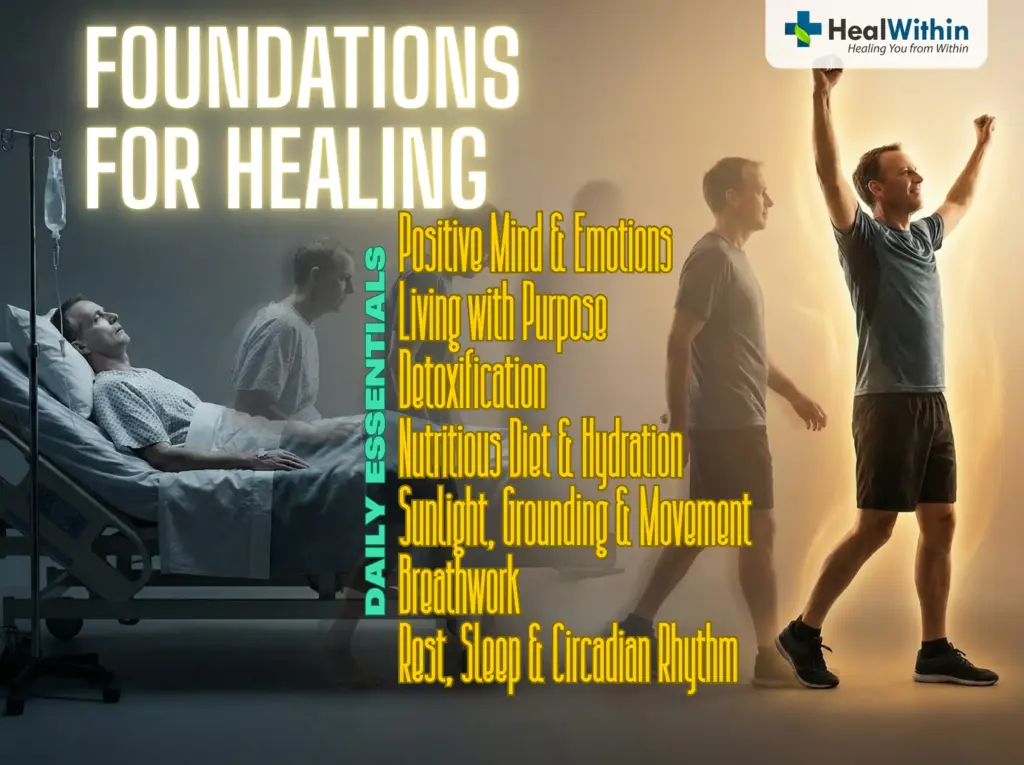
- Positive Mind & Emotions
- Living with Purpose
- Detoxification
- Nutritious Diet & Hydration
- Sunlight, Grounding & Movement
- Breathwork
- Rest, Sleep & Circadian Rhythm Alignment
FOUNDATION 1: Positive Mind & Emotions
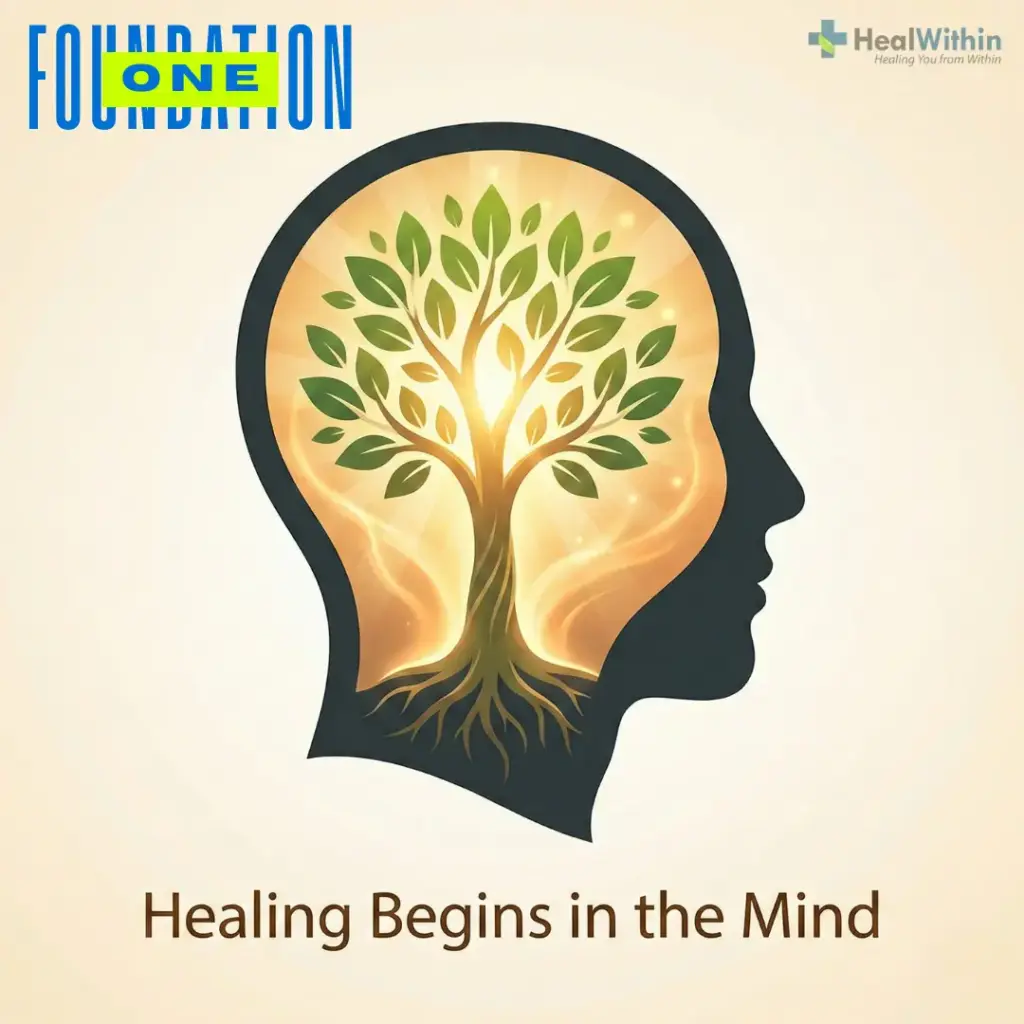
The first foundation begins not with what you eat or how you move—but with how you think and feel. Your mental and emotional state is not separate from your physical health. It is the soil in which healing either flourishes or fails.
WHAT IT IS
Positive mind and emotions refers to the mental-emotional environment you carry daily—your beliefs about healing, your emotional patterns, and your capacity to regulate stress. This is not about forced positivity or denying difficult emotions. It is about cultivating a consistent internal state that supports rather than sabotages your body’s healing processes.
- Healing beliefs: The conviction that your body can heal and that your efforts matter—this belief itself changes cellular behaviour.
- Optimistic mindset: A general orientation toward possibility rather than despair, even in the face of chronic illness.
- Emotional regulation: The ability to process emotions rather than suppress or be overwhelmed by them.
WHY IT'S NON-NEGOTIABLE
Your cells are listening to your thoughts and emotions. This is not metaphor—it is biology. The field of psychoneuroimmunology has demonstrated that mental and emotional states directly influence hormone production, inflammatory markers, and immune function. When you live in chronic fear, resentment, or hopelessness, your body receives constant danger signals that keep it in survival mode rather than healing mode.
- Stress hormones follow thought patterns: Fearful or anxious thinking triggers cortisol and adrenaline release, even without external threat.
- Emotions alter gene expression: Research in epigenetics shows that emotional states can switch genes on or off, affecting everything from inflammation to cellular repair.
- The mind-body connection is bidirectional: Just as physical illness affects mood, mental-emotional states directly affect physical healing capacity.
HOW IT HEALS
When your mind and emotions are oriented toward healing, your cellular environment transforms. This is the biology of belief in action.
- Reduced inflammatory signalling: Positive emotional states lower pro-inflammatory cytokines that drive chronic disease progression.
- Parasympathetic activation: Calm, hopeful mental states activate the rest-and-repair branch of your nervous system, enabling healing processes.
- Enhanced immune function: Optimism and emotional wellbeing are consistently linked to stronger immune responses and better recovery outcomes.
- Cellular receptivity: Cells in a “safe” internal environment are more responsive to nutrients, therapies, and repair signals.
HOW TO PRACTICE IT
Building a positive mental-emotional foundation requires daily attention, not occasional effort.
- Daily gratitude practice: Begin or end each day by acknowledging what is working in your life and body—this shifts brain chemistry toward optimism.
- Conscious thought reframing: Notice fear-based or hopeless thoughts and deliberately choose more empowering interpretations.
- Emotional processing: Allow emotions to be felt and released rather than suppressed—journaling, talking, or simply sitting with feelings.
- Environment curation: Surround yourself with supportive relationships and limit exposure to chronic negativity, including news and media.
- Belief cultivation: Regularly affirm your body’s capacity to heal—read recovery stories, visualise healing, speak to yourself with encouragement.
WHAT HAPPENS WHEN YOU SKIP IT
A mind stuck in chronic stress, fear, resentment, or hopelessness creates a cellular environment hostile to healing—regardless of what therapies you receive or how well you eat.
- Perpetual survival mode: Stress hormones remain elevated, diverting resources from repair to emergency response.
- Chronic inflammation: Negative emotional states sustain inflammatory processes that drive disease progression.
- Suppressed immunity: Prolonged stress impairs immune surveillance and response, leaving the body vulnerable.
- Therapy resistance: Even powerful root-cause therapies cannot fully work when the mental-emotional soil is toxic.
This is why I place positive mind and emotions first. It is the deepest root. Without it, the other six foundations struggle to take hold.
FOUNDATION 2: Living with Purpose

The second foundation goes even deeper than mindset—it asks the question your cells are silently waiting for you to answer: Why do you want to heal? Purpose is not a luxury for those who have the time to reflect. It is a biological necessity that shapes whether your body commits fully to recovery.
WHAT IT IS
Living with purpose means having a reason to heal that extends beyond symptom relief. It is the sense that your life matters, that you have something meaningful to contribute, and that recovery serves something greater than just feeling better.
- Inner fulfillment: A felt sense of meaning and satisfaction in how you spend your days.
- Meaningful engagement: Active participation in relationships, work, creativity, or service that connects you to something beyond yourself.
- Future orientation: A compelling vision of what your healthy life will look like and what you will do with it.
WHY IT'S NON-NEGOTIABLE
Research consistently shows that people with a strong sense of purpose have better health outcomes, faster recovery from illness, and longer lifespans. This is not coincidence—it is biology. Your body responds to whether or not you have a reason to live.
- Purpose activates survival mechanisms: When the brain perceives that life has meaning, it prioritises repair and longevity rather than mere short-term survival.
- Existential health affects physical health: A sense of meaninglessness creates chronic low-grade stress that undermines every bodily system.
- Motivation sustains behaviour: Without purpose, patients abandon healthy habits when they become inconvenient—purpose provides the “why” that keeps them going.
HOW IT HEALS
Purpose transforms the internal environment at a fundamental level. It tells your body that the effort of healing is worthwhile.
- Stress resilience: Purpose provides a buffer against life’s difficulties—setbacks feel manageable when they serve a larger meaning.
- Sustained motivation: The daily discipline required for the other foundations becomes easier when connected to something meaningful.
- Hormonal optimisation: Purposeful living is associated with healthier cortisol patterns, better sleep, and improved inflammatory markers.
- Cellular commitment: The body “knows” when there is a reason to repair itself—purpose sends the signal that full recovery is worth the investment.
HOW TO PRACTICE IT
Purpose is not something you find once and forget. It must be cultivated and reconnected to daily.
- Identify what matters: Reflect on the relationships, contributions, or experiences that give your life meaning—these are your anchors.
- Engage daily: Even small acts of meaningful engagement—a conversation, a creative project, an act of service—reinforce your sense of purpose.
- Envision your healthy future: What will you do with your restored health? Who will you be present for? What will you contribute? Make this vision vivid.
- Address purpose deficit honestly: If you cannot identify a sense of meaning, this itself becomes a healing priority—not something to ignore until you feel better.
- Connect healing to purpose: Frame your daily health practices not as burdens but as acts of service to the life you are here to live.
WHAT HAPPENS WHEN YOU SKIP IT
Without purpose, the healing journey becomes a joyless grind—and eventually, most patients quit.
- Motivation collapse: Patients ask “why bother?” and compliance with treatments and foundations drops.
- Existential stress: A life without meaning is itself a chronic stressor that the body registers and responds to.
- Short-term thinking: Without a compelling future, patients seek quick fixes rather than committing to the sustained effort healing requires.
- Incomplete recovery: Even patients who achieve physical improvement often relapse when they lack a reason to maintain their health.
This is why purpose comes second, immediately after mindset. Together, these two foundations form the psychological and existential soil that determines whether the other five can take root and flourish.
FOUNDATION 3: Detoxification
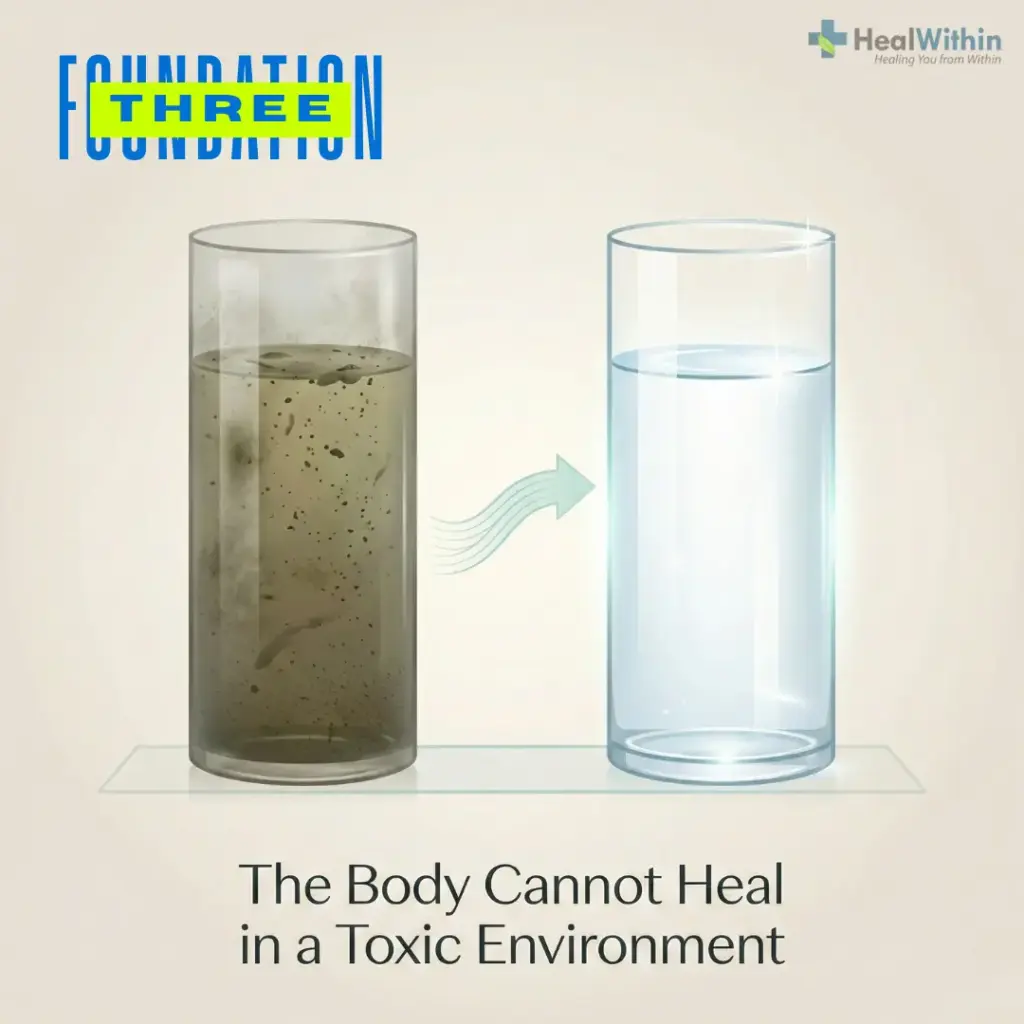
With the right mindset and a clear purpose in place, we now turn to the physical terrain of your body. The third foundation addresses a reality of modern life that cannot be ignored: we are constantly accumulating toxins. Your body cannot heal in a polluted internal environment—no matter how positive your mindset or how powerful your therapies.
WHAT IT IS
Detoxification is the daily practice of supporting your body’s elimination of accumulated toxins through its natural pathways—the liver, kidneys, lymphatic system, skin, lungs, and bowels. This is not about occasional cleanses or dramatic purges. It is about consistent, daily support for the processes your body is already trying to perform.
- Elimination support: Ensuring toxins that have been processed actually leave the body through regular bowel movements, urination, sweating, and breathing.
- Liver and kidney support: Nourishing the organs responsible for filtering and neutralising toxins.
- Lymphatic flow: Keeping the body’s waste-removal network moving through movement and hydration.
WHY IT'S NON-NEGOTIABLE
We live in an unprecedented toxic environment. Heavy metals, pesticides, herbicides, microplastics, air pollution, food additives, pharmaceutical residues, household chemicals—the list is endless. Your body was not designed to handle this load. When toxins accumulate faster than they can be eliminated, they poison the very cellular environment where healing must occur.
- Toxicity is a root cause: At Heal Within, we recognise toxicity as one of the fundamental root causes of chronic disease—it must be addressed, not ignored.
- Toxins block healing: Accumulated toxins create inflammation, disrupt hormone function, damage mitochondria, and impair cellular communication.
- The body prioritises survival over repair: When overwhelmed by toxins, your body spends its energy on damage control rather than healing and regeneration.
HOW IT HEALS
When the toxic burden is reduced, the body can finally redirect its resources toward repair. The internal environment shifts from contaminated to clean—and healing accelerates.
- Reduced inflammatory load: Many toxins directly trigger inflammation; removing them calms this chronic fire.
- Restored cellular energy: Mitochondria—your cellular power plants—function better when not burdened by heavy metals and chemical toxins.
- Improved nutrient utilisation: A clean internal environment allows nutrients from food and therapies to be properly absorbed and used.
- Enhanced immune function: The immune system can focus on genuine threats rather than constantly reacting to internal toxicity.
HOW TO PRACTICE IT
Daily detoxification is not complicated, but it requires consistency. These practices should become as automatic as brushing your teeth.
- Daily bowel movements: This is non-negotiable—if you are not eliminating at least once daily, toxins are being reabsorbed. Address constipation as a priority.
- Adequate hydration: Water is essential for kidney filtration and all elimination pathways. Drink consistently throughout the day.
- Sweating: Whether through exercise, sauna, or simply being active—sweating is a powerful elimination route, especially for heavy metals.
- Liver support: Include bitter foods, cruciferous vegetables (broccoli, cabbage, cauliflower), and herbs like milk thistle and dandelion.
- Lymphatic movement: The lymphatic system has no pump—it relies on physical movement and deep breathing to circulate. Move daily; consider dry brushing.
- Reduce incoming toxins: While eliminating what is already inside, also minimise new exposure—clean food, filtered water, non-toxic household products.
WHAT HAPPENS WHEN YOU SKIP IT
Without daily detoxification support, toxins accumulate relentlessly. The internal environment becomes increasingly hostile to healing.
- Chronic inflammation persists: Even with perfect diet and mindset, an overloaded toxic burden keeps inflammatory pathways activated.
- Liver overwhelm: The liver becomes congested, less efficient, and unable to keep up with the toxic load.
- Nutrient malabsorption: Toxins interfere with gut function and nutrient uptake—you can eat well and still be malnourished at the cellular level.
- Therapy limitations: Clinical detoxification therapies like chelation provide powerful support, but without daily elimination practices, reaccumulation is inevitable.
- Energy depletion: The body exhausts itself managing toxicity, leaving little reserve for repair and regeneration.
This is why detoxification comes third—after mindset and purpose have prepared you for the daily commitment required. A clean internal terrain is the foundation upon which all other physical healing rests.
FOUNDATION 4: Nutritious Diet & Hydration
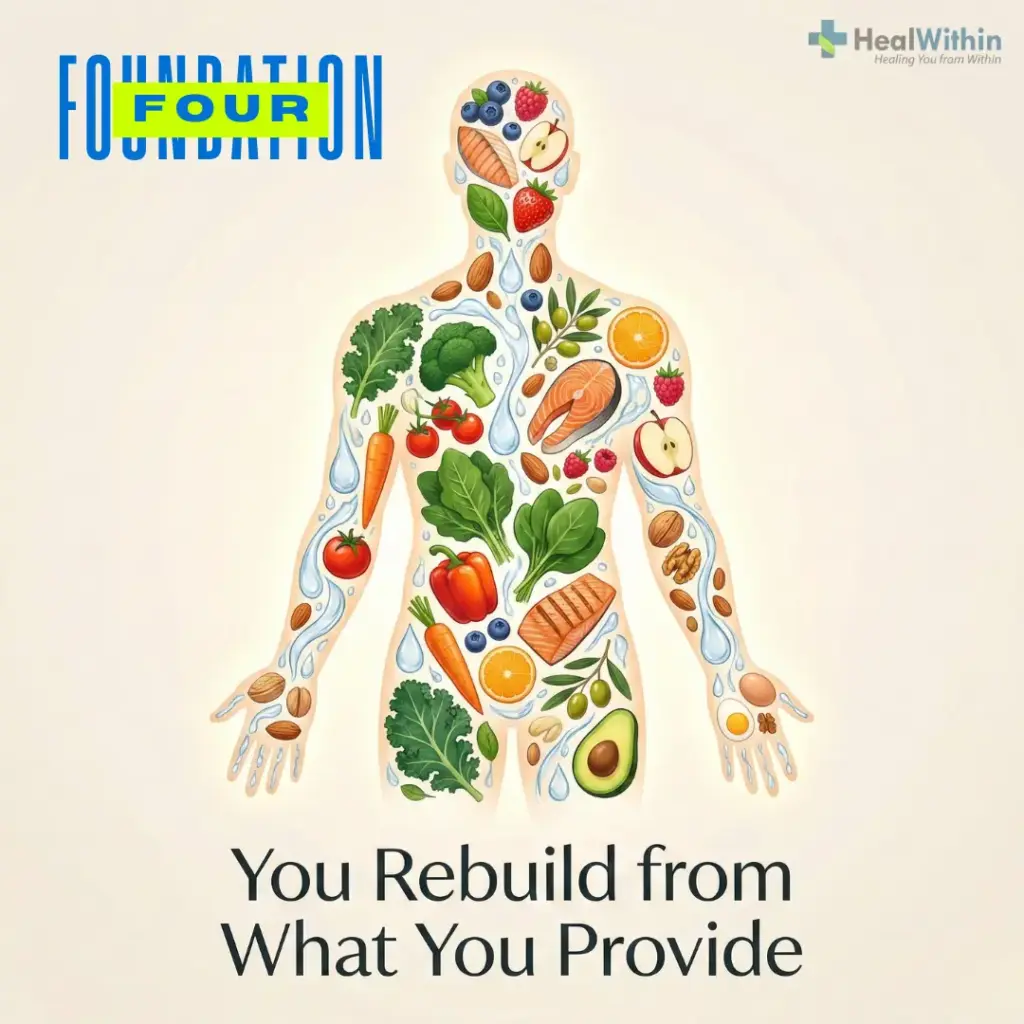
With toxins being eliminated, we now address what must come in. The fourth foundation is deceptively simple yet profoundly neglected: eating real food and drinking enough water. Your body rebuilds itself from the materials you provide. If you feed it poorly, it builds poorly—no therapy can compensate for a diet that starves your cells of what they need.
WHAT IT IS
Nutritious diet and hydration means consistently consuming wholesome, unprocessed foods that provide the raw materials for cellular repair, while maintaining adequate water intake for circulation, detoxification, and cellular function. This is food as medicine—not supplements as shortcuts.
- Wholesome foods: Vegetables, quality proteins, healthy fats, and complex carbohydrates in their natural or minimally processed forms.
- Nutrient density: Prioritising foods that deliver maximum vitamins, minerals, and phytonutrients per bite.
- Adequate hydration: Consistent water intake throughout the day to support every physiological process.
WHY IT'S NON-NEGOTIABLE
Your body is in a constant state of rebuilding—cells die and are replaced, tissues repair, enzymes and hormones are synthesised. Every one of these processes requires raw materials that can only come from what you eat and drink. Additionally, the gut microbiome—central to immunity, inflammation, and even mental health—is shaped directly by your dietary choices.
- Nutrient deficiency is a root cause: At Heal Within, we recognise that chronic deficiency of essential nutrients drives disease progression and blocks recovery.
- Gut dysbiosis is a root cause: An imbalanced gut microbiome—often caused by poor diet—creates systemic inflammation and immune dysfunction.
- Cells cannot repair without materials: Amino acids for proteins, fatty acids for cell membranes, vitamins and minerals for enzymatic reactions—without these, healing stalls.
- Dehydration impairs everything: Water is required for circulation, nutrient delivery, waste removal, and cellular function—chronic mild dehydration is epidemic and overlooked.
HOW IT HEALS
When you consistently nourish your body with real food and adequate water, you provide the building blocks and internal environment that healing demands.
- Cellular repair becomes possible: With amino acids, essential fats, and micronutrients available, the body can actually rebuild damaged tissues.
- Gut microbiome restoration: Fibre, fermented foods, and diverse plant matter feed beneficial bacteria, reducing inflammation and supporting immunity.
- Reduced inflammatory triggers: Removing processed foods, refined sugars, and industrial seed oils eliminates major sources of chronic inflammation.
- Optimised circulation: Proper hydration keeps blood flowing smoothly, delivering nutrients to cells and carrying waste away.
- Stable energy and blood sugar: Whole foods provide sustained energy without the spikes and crashes that stress the body.
HOW TO PRACTICE IT
Nutritious eating is not about perfection or deprivation. It is about consistently choosing real food over manufactured products.
- Eat whole foods: If it grew from the ground or had a mother, it is likely real food. If it came from a factory with a long ingredient list, it is likely not.
- Prioritise vegetables: Make vegetables the foundation of most meals—diverse colours indicate diverse nutrients.
- Include quality proteins: Whether animal or plant-based, ensure adequate protein for tissue repair and enzyme production.
- Choose healthy fats: Avocados, olive oil, nuts, seeds, and fatty fish provide essential fatty acids for cell membranes and brain function.
- Minimise processed foods: Refined sugars, artificial additives, and industrial seed oils drive inflammation and feed harmful gut bacteria.
- Hydrate consistently: Do not wait until you are thirsty—drink water throughout the day. Herbal teas and water-rich foods contribute as well.
- Eat mindfully: Chew thoroughly, eat without rushing, and allow your digestive system to function optimally.
WHAT HAPPENS WHEN YOU SKIP IT
Poor diet and inadequate hydration create a cascade of dysfunction that undermines every other healing effort.
- Cellular starvation: Even with therapies providing acute support, long-term healing requires daily nutritional building blocks that only diet can supply.
- Gut dysbiosis worsens: Processed foods and sugar feed pathogenic bacteria and yeast, creating inflammation that spreads systemically.
- Chronic inflammation persists: Inflammatory foods keep the fire burning, regardless of other interventions.
- Dehydration impairs detoxification: Without adequate water, the kidneys cannot filter properly, and toxins accumulate.
- Blood sugar instability: Refined carbohydrates and sugars create metabolic stress that worsens insulin resistance and hormonal imbalance.
- Nutrient therapies lose effectiveness: IV nutrition and supplementation support acute needs, but they cannot replace the daily nourishment that comes from real food.
This is why nutritious diet and hydration comes fourth—after the internal environment has been prepared through mindset, purpose, and detoxification. You are now ready to build, and what you build with matters.
FOUNDATION 5: Sunlight, Grounding & Movement
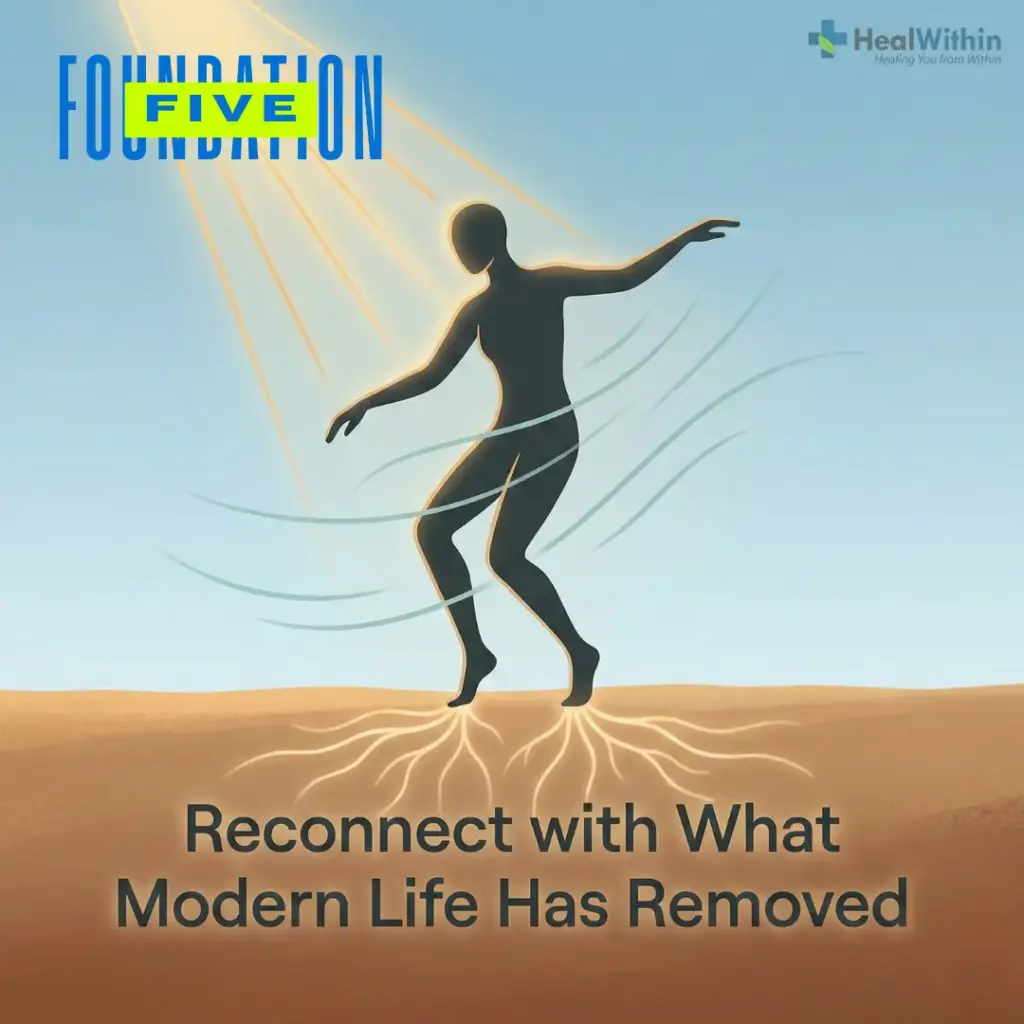
The fifth foundation reconnects you with what modern life has systematically removed: your relationship with the natural environment. Sunlight, earth contact, and physical movement are not optional lifestyle enhancements—they are biological requirements that your body expects and cannot function optimally without. We evolved outdoors, moving, connected to the earth. Indoor sedentary life is a biological mismatch with profound consequences.
WHAT IT IS
This foundation encompasses three interconnected practices that restore your body’s natural interaction with its environment.
- Sunlight exposure: Regular contact with natural light, particularly morning sunlight, for vitamin D synthesis, circadian regulation, and mitochondrial activation.
- Grounding (Earthing): Direct physical contact with the earth’s surface—walking barefoot on grass, sand, or soil—to restore bio-electrical balance.
- Movement: Consistent physical activity that circulates blood and lymph, activates mitochondria, and prevents the stagnation of sedentary life.
WHY IT'S NON-NEGOTIABLE
These three elements address multiple root causes simultaneously. Lack of sunlight disrupts hormones and depletes vitamin D. Disconnection from the earth allows unnatural electrical charge to accumulate. Sedentary living causes circulation to stagnate, lymph to pool, and mitochondria to deteriorate. Together, these deficits create a body that is hormonally confused, electrically imbalanced, and physically stagnant—a body primed for chronic disease.
- Hormonal imbalance is a root cause: Sunlight regulates the hormonal cascade that governs sleep, mood, immunity, and metabolism.
- EMF disturbance is a root cause: Modern life bombards us with electromagnetic frequencies while disconnecting us from the earth’s balancing electrical field.
- Sub-optimal circulation is a root cause: Blood and lymph must flow to deliver nutrients, remove waste, and enable immune surveillance—sedentary life stops this flow.
- Mitochondrial dysfunction is a root cause: Movement stimulates mitochondrial biogenesis; without it, cellular energy production declines.
HOW IT HEALS
Each of these three practices contributes uniquely to the healing environment, yet they work synergistically when combined.
SUNLIGHT
- Vitamin D synthesis: Sunlight on skin produces vitamin D, essential for immunity, bone health, mood regulation, and countless cellular functions.
- Circadian alignment: Morning light exposure sets your biological clock, regulating sleep-wake cycles and hormonal rhythms.
- Mitochondrial activation: Near-infrared light from the sun penetrates tissue and directly stimulates mitochondrial energy production.
- Mood and mental health: Sunlight triggers serotonin production, supporting emotional wellbeing and countering depression.
GROUNDING
- Electrical neutralisation: The earth carries a negative charge that neutralises the accumulated positive charge from EMF exposure and metabolic processes.
- Inflammation reduction: Studies show that grounding reduces inflammatory markers by allowing excess electrons to discharge into the earth.
- Cortisol normalisation: Earth contact has been shown to help restore healthy cortisol rhythms, supporting sleep and stress response.
- Blood viscosity improvement: Grounding thins the blood slightly, improving circulation and reducing cardiovascular strain.
MOVEMENT
- Blood circulation: Movement pumps blood throughout the body, delivering oxygen and nutrients to every tissue.
- Lymphatic flow: Unlike blood, lymph has no heart to pump it—movement and muscle contraction are essential to keep this waste-removal system flowing.
- Mitochondrial biogenesis: Regular physical activity stimulates the creation of new mitochondria, increasing cellular energy capacity.
- Metabolic health: Movement improves insulin sensitivity, supports healthy weight, and enhances metabolic flexibility.
HOW TO PRACTICE IT
These practices do not require expensive equipment or large time commitments. They require consistency and intention.
- Morning sunlight: Get outside within the first hour of waking for 10-20 minutes. Let natural light reach your eyes (no sunglasses) and skin. This sets your circadian rhythm for the entire day.
- Regular sun exposure: Beyond morning light, aim for moderate sunlight throughout the week—enough to maintain healthy vitamin D levels without burning.
- Barefoot earth contact: Walk on grass, sand, soil, or even concrete (which conducts) for 10-30 minutes daily when possible. If outdoor grounding is impractical, grounding mats and sheets are available.
- Daily movement: Move your body every day—walking, stretching, swimming, cycling, strength training, gardening. The specific activity matters less than consistency. Avoid prolonged sitting.
- Movement variety: Include both gentle movement (walking, stretching) and more vigorous activity (exercise that elevates heart rate and induces sweating).
- Combine practices: Walk barefoot in morning sunlight when possible—this integrates all three elements efficiently.
WHAT HAPPENS WHEN YOU SKIP IT
A life lived indoors, sedentary, and disconnected from the earth creates compounding dysfunction that accelerates disease and blocks recovery.
- Vitamin D deficiency: Widespread and underdiagnosed, this deficiency weakens immunity, worsens mood, and impairs countless healing processes.
- Circadian disruption: Without proper light signals, sleep suffers, hormones become chaotic, and the body loses its natural rhythm.
- Electrical accumulation: Chronic disconnection from earth allows positive charge to build up, contributing to inflammation and cellular stress.
- Circulation stagnation: Sedentary life means poor nutrient delivery, toxin accumulation in tissues, and sluggish immune function.
- Mitochondrial decline: Without movement stimulus, mitochondria deteriorate—energy production drops, fatigue becomes chronic, and cellular repair slows.
- Lymphatic congestion: Stagnant lymph means accumulated waste, increased infection risk, and persistent swelling or puffiness.
This foundation reconnects you with the environmental inputs your body evolved to expect. Sunlight, earth, and movement are not extras—they are essentials that no amount of indoor therapy can replace.
FOUNDATION 6: Breathwork
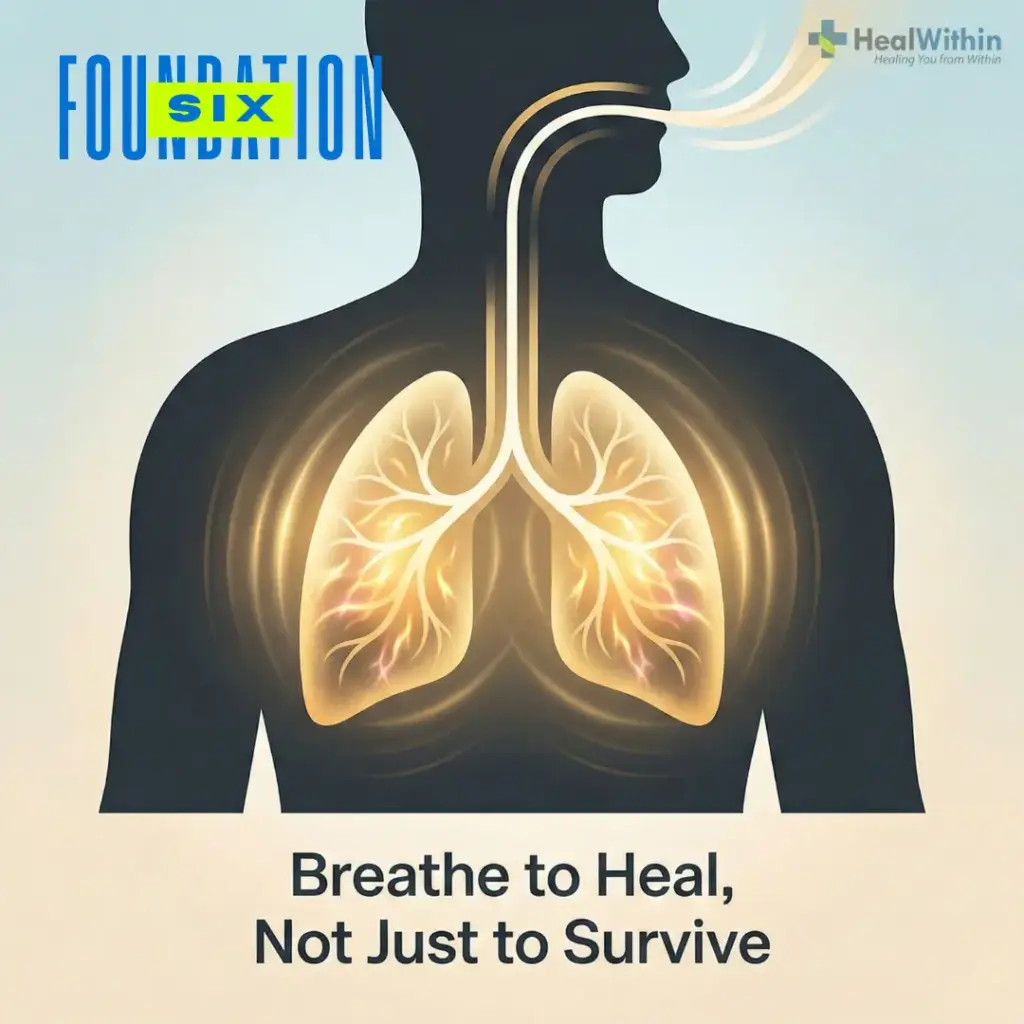
The sixth foundation is so fundamental that most people never think about it—yet how you breathe determines whether your body thrives or merely survives. Every cell in your body requires oxygen to produce energy. Most people breathe just enough to stay alive, but not enough to heal. Conscious breathwork transforms this automatic function into a powerful healing tool.
WHAT IT IS
Breathwork refers to the practice of conscious, intentional breathing that optimises oxygen delivery and activates the body’s rest-and-repair systems. This is not simply breathing to survive—it is breathing to heal.
- Conscious breathing: Bringing awareness to the breath and intentionally modifying its depth, rhythm, and pace.
- Diaphragmatic breathing: Breathing deeply into the belly rather than shallowly into the chest, engaging the diaphragm fully.
- Regulated breathing patterns: Specific techniques that slow the breath, extend the exhale, or follow structured rhythms to shift nervous system state.
WHY IT'S NON-NEGOTIABLE
Poor oxygenation is a root cause of chronic disease that hides in plain sight. Most people breathe shallowly, rapidly, and unconsciously—a pattern that keeps the body in perpetual low-grade oxygen deficit and chronic stress activation. This is not a minor issue. Oxygen is required for every single energy-producing reaction in your cells. Without adequate oxygen, mitochondria cannot function, cells cannot repair, and the body remains stuck in survival mode.
- Poor oxygenation is a root cause: At Heal Within, we recognise that inadequate oxygen delivery impairs cellular energy production and blocks healing at the most fundamental level.
- Breathing patterns reflect nervous system state: Shallow, rapid breathing signals danger to the brain and keeps the sympathetic (stress) nervous system activated.
- Chronic sympathetic dominance prevents healing: When the body perceives constant threat, it prioritises emergency response over repair and regeneration.
- Breath is the only autonomic function you can consciously control: This makes it a direct gateway to shifting your entire physiological state.
HOW IT HEALS
Conscious breathwork delivers immediate physiological benefits while creating cumulative improvements over time. It is one of the fastest ways to shift your internal environment from stress to healing.
- Enhanced oxygen delivery: Deep, full breaths increase oxygen saturation in the blood, ensuring every cell receives the fuel it needs for energy production.
- Parasympathetic activation: Slow, extended exhales directly stimulate the vagus nerve, activating the rest-and-repair branch of the nervous system.
- Stress hormone reduction: Within minutes of slow conscious breathing, cortisol and adrenaline levels begin to drop, reducing inflammatory signalling.
- Improved pH balance: Proper breathing regulates carbon dioxide levels, maintaining optimal blood pH and reducing acidosis.
- Lymphatic support: Deep diaphragmatic breathing massages internal organs and pumps lymphatic fluid, supporting detoxification.
- Mental clarity and emotional regulation: Adequate brain oxygenation improves cognitive function, while breath control helps regulate emotional responses
HOW TO PRACTICE IT
Breathwork does not require special equipment or large time commitments. Even a few minutes of conscious breathing creates measurable physiological shifts.
- Daily practice: Set aside 5-10 minutes daily for dedicated conscious breathing. Morning practice sets a calm tone for the day; evening practice supports sleep.
- Diaphragmatic breathing: Place one hand on your chest and one on your belly. Breathe so that your belly rises and falls while your chest remains relatively still.
- Slow the breath: Aim for 5-6 breaths per minute during practice. Inhale for 4-5 seconds, exhale for 6-8 seconds. The extended exhale activates parasympathetic response.
- Box breathing: Inhale for 4 counts, hold for 4 counts, exhale for 4 counts, hold for 4 counts. Repeat for several minutes. This is excellent for acute stress.
- Breath awareness throughout the day: Notice your breathing during daily activities. When you catch yourself breathing shallowly or holding your breath, consciously deepen and slow your breathing.
- Breathe through the nose: Nasal breathing filters, warms, and humidifies air while producing nitric oxide, which improves oxygen absorption. Mouth breathing bypasses these benefits.
- Use breath during stress: When facing stressful situations, use breath as your first intervention—a few slow, deep breaths can prevent the stress cascade before it takes hold.
WHAT HAPPENS WHEN YOU SKIP IT
Unconscious shallow breathing keeps the body in a state that is incompatible with healing. Most people have no idea how much their breathing pattern is undermining their recovery.
- Chronic oxygen deficit: Cells operate with insufficient fuel, impairing energy production, repair capacity, and resilience.
- Perpetual sympathetic activation: Shallow breathing signals danger to the nervous system, maintaining stress hormones at elevated levels around the clock.
- Inflammation persistence: Stress-state breathing sustains inflammatory signalling that drives chronic disease progression.
- Impaired detoxification: Without deep breathing, lymphatic flow is sluggish and internal organs receive less circulation.
- Acidosis tendency: Poor breathing disrupts CO2 balance, contributing to an acidic internal environment that favours disease.
- Emotional dysregulation: Breath and emotion are intimately linked—chaotic breathing perpetuates anxiety, irritability, and emotional instability.
- Sleep disruption: Breathing patterns during the day affect breathing during sleep—many people carry their dysfunctional patterns into the night.
FOUNDATION 7: Rest, Sleep & Circadian Rhythm Alignment
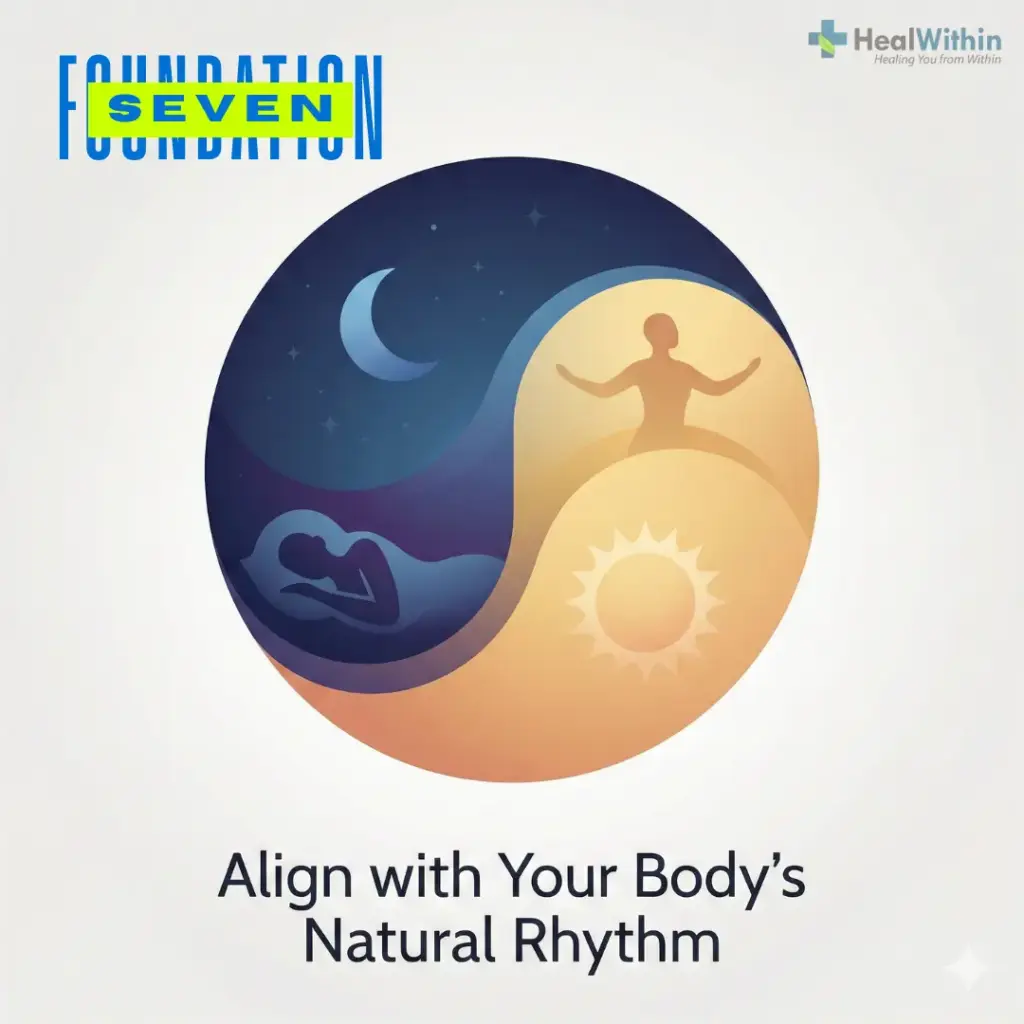
The seventh foundation is where healing actually happens. Everything we have discussed so far—mindset, purpose, detoxification, nutrition, movement, breathwork—prepares the conditions for healing. But the repair itself occurs during rest and sleep, governed by circadian rhythms that modern life relentlessly disrupts. You cannot hustle your way to health. You must rest your way there.
WHAT IT IS
This foundation encompasses three interconnected elements that together form the master regulator of your body’s healing capacity.
- Rest: Intentional periods of low activity during waking hours that allow the nervous system to shift out of constant doing mode.
- Sleep: Adequate duration (7-9 hours for most adults) and quality of nightly sleep, when the deepest repair processes occur.
- Circadian rhythm alignment: Synchronising your daily patterns—sleep-wake cycles, eating windows, light exposure, activity—with your body’s internal biological clock.
WHY IT'S NON-NEGOTIABLE
Healing does not happen during activity. It happens during rest. When you are awake and active, your body is in output mode—expending energy, responding to demands, managing stress. Only when you rest and sleep does the body shift fully into repair mode—rebuilding tissues, consolidating memories, clearing waste, restoring immune function. This is not optional recovery time. This is when the actual healing occurs.
- Nervous system dysregulation is a root cause: At Heal Within, we recognise that chronic sympathetic overdrive—the body stuck in stress mode—prevents the healing that can only happen in parasympathetic rest state.
- Hormonal imbalance is a root cause: Every hormone in your body follows circadian patterns. Disrupt these rhythms and you create hormonal chaos that undermines every other foundation.
- Sleep is not passive: During sleep, growth hormone surges, the glymphatic system clears brain toxins, immune cells activate, and cellular repair accelerates. Skip sleep and you skip healing.
- Modern life attacks circadian rhythm: Artificial light, irregular schedules, late-night eating, and screen exposure have disconnected most people from their natural biological timing.
HOW IT HEALS
Rest, sleep, and circadian alignment create the conditions where accumulated healing potential is finally realised. This is when your body cashes in on all the good work from the other foundations.
REST
- Parasympathetic activation: Intentional rest periods shift the nervous system out of sympathetic dominance, allowing repair processes to engage.
- Stress hormone clearance: Rest allows cortisol and adrenaline to normalise, reducing their inflammatory and catabolic effects.
- Mental recovery: Cognitive function, creativity, and emotional regulation all improve with adequate rest—not just sleep, but waking rest as well.
- Energy conservation: Rest preserves metabolic resources for healing rather than constant activity.
SLEEP
- Growth hormone release: The majority of growth hormone—essential for tissue repair and regeneration—is released during deep sleep.
- Glymphatic clearance: During sleep, the brain’s waste removal system activates, clearing metabolic debris and toxins including those linked to neurodegeneration.
- Immune optimisation: Sleep is when immune cells are produced, deployed, and coordinated. One night of poor sleep measurably impairs immune function.
- Cellular repair and regeneration: DNA repair, protein synthesis, and tissue regeneration all peak during sleep.
- Memory consolidation and emotional processing: Sleep integrates learning and processes emotional experiences, supporting mental and emotional health.
CIRCADIAN RHYTHM ALIGNMENT
- Cortisol regulation: Properly aligned, cortisol rises in the morning (providing energy and alertness) and falls at night (allowing sleep and recovery). Misalignment causes fatigue, insomnia, and inflammation.
- Melatonin optimisation: Melatonin—triggered by darkness—not only induces sleep but serves as a powerful antioxidant and immune modulator. Artificial light suppresses it.
- Insulin sensitivity timing: Your body processes food differently at different times. Eating in alignment with circadian rhythms improves metabolic function; eating at wrong times worsens it.
- Hormonal orchestration: Thyroid hormones, sex hormones, and dozens of other signalling molecules follow circadian patterns. Alignment keeps this orchestra playing in harmony.
HOW TO PRACTICE IT
Honouring rest, sleep, and circadian rhythm requires protecting these elements from a culture that celebrates constant productivity and ignores biological timing.
REST PRACTICES
- Schedule rest intentionally: Do not wait until exhaustion forces you to stop. Build rest periods into your day—even 10-20 minutes of intentional stillness.
- Distinguish rest from distraction: Scrolling your phone is not rest. True rest means low stimulation—sitting quietly, gentle stretching, time in nature, or simply doing nothing.
- Listen to fatigue signals: When your body asks for rest, honour the request rather than overriding it with caffeine or willpower.
SLEEP PRACTICES
- Consistent sleep schedule: Go to bed and wake at the same times daily, including weekends. Regularity matters as much as duration.
- Protect 7-9 hours: Most adults need this range. If you think you function fine on less, you have likely adapted to impairment without recognising it.
- Dark sleeping environment: Complete darkness supports melatonin production. Use blackout curtains or a sleep mask.
- Cool temperature: The body sleeps best in a slightly cool room—around 18-20°C (65-68°F).
- Wind-down routine: Begin relaxing 1-2 hours before bed. Dim lights, reduce stimulation, avoid stressful content or conversations.
- No screens before bed: Blue light from devices suppresses melatonin. Stop screen use at least one hour before sleep, ideally two.
CIRCADIAN ALIGNMENT PRACTICES
- Morning light exposure: Bright light—ideally sunlight—within the first hour of waking anchors your circadian rhythm for the entire day.
- Dim lights after sunset: Reduce artificial light in the evening, especially blue light. Use dim, warm lighting to signal approaching night.
- Eat during daylight hours: Confine eating to a window that aligns with daylight—ideally finishing your last meal at least 3 hours before bed.
- Earlier eating window: When possible, shift food intake toward earlier in the day. The body metabolises food more efficiently in morning and afternoon.
- Consistent daily schedule: Regular timing of meals, activity, and sleep reinforces circadian rhythm. Erratic schedules create chronic jet lag.
- Honour natural energy fluctuations: Work with your body’s rhythms rather than against them—demanding tasks when energy is high, rest when it naturally dips.
WHAT HAPPENS WHEN YOU SKIP IT
Without adequate rest, quality sleep, and circadian alignment, your body never fully enters the repair mode where healing occurs. All other foundations become less effective.
- Perpetual breakdown mode: The body stays in catabolic state—breaking down rather than building up. Tissue repair is postponed indefinitely.
- Growth hormone suppression: Without deep sleep, this essential repair hormone remains low, slowing recovery from any condition.
- Brain toxin accumulation: Inadequate sleep means the glymphatic system cannot clear waste, contributing to brain fog and long-term neurodegeneration risk.
- Immune compromise: Sleep deprivation measurably reduces immune cell production and function, increasing vulnerability to infection and disease progression.
- Hormonal chaos: Circadian disruption throws off cortisol, melatonin, insulin, thyroid, and sex hormones—creating dysfunction that cascades through every system.
- Metabolic dysfunction: Eating at wrong times and sleeping irregularly worsens insulin resistance, weight gain, and inflammatory markers.
- Emotional instability: Sleep deprivation impairs emotional regulation, worsens anxiety and depression, and reduces stress resilience.
- Accelerated ageing: Chronic sleep deficit and circadian disruption speed up biological ageing at the cellular level.
This foundation comes last not because it is least important, but because it is where healing culminates. The other six foundations prepare the conditions. Rest, sleep, and circadian alignment are when your body finally does the work of repair. Skip this foundation, and you skip healing itself.
WHY ALL 7 MUST WORK TOGETHER
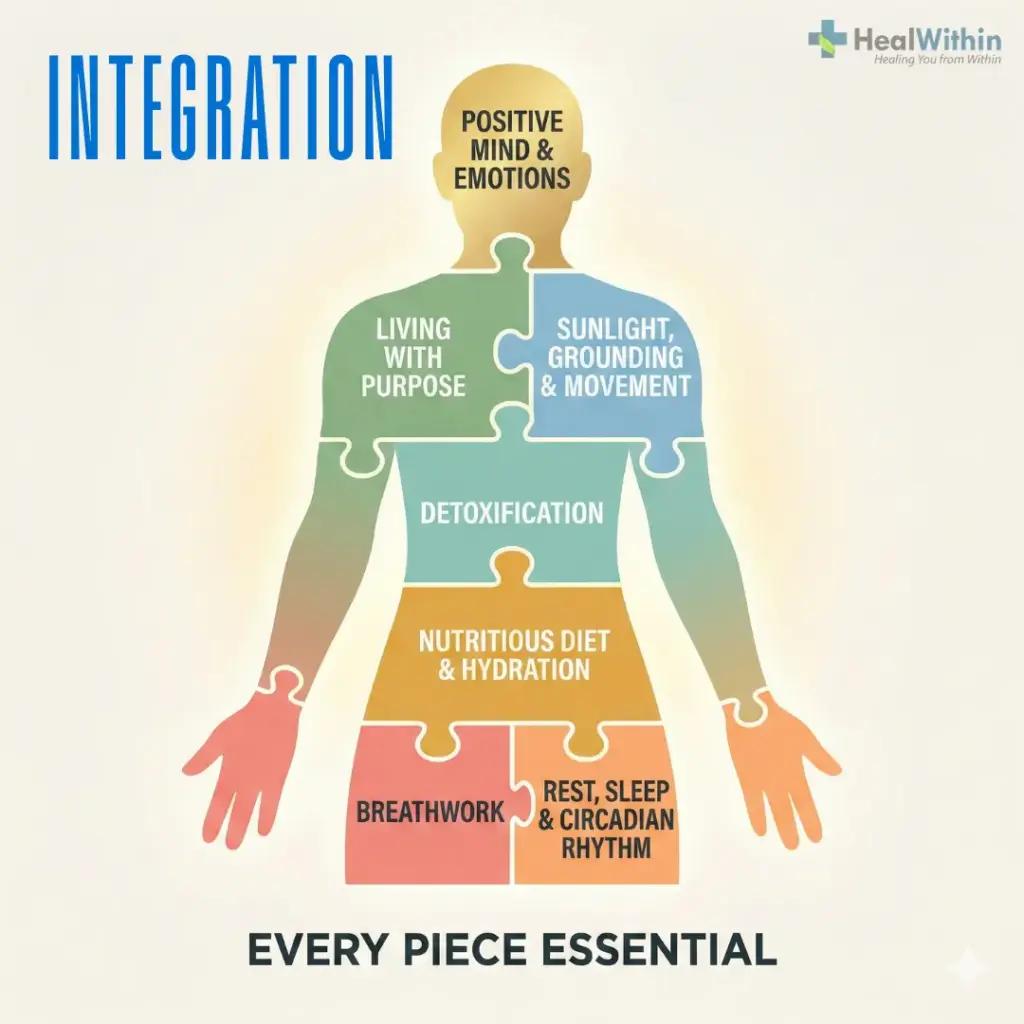
Think of your healing capacity as a tree sustained by 7 essential roots. Weaken one root, and the tree struggles. Sever three or four, and the tree cannot survive—no matter how much sunlight or water it receives. These foundations do not work in isolation. They form an integrated system where each one supports and amplifies the others.
- Sleep depends on everything else: Circadian alignment, calm emotions, stable blood sugar, physical tiredness from movement, and regulated breathing all determine whether you sleep well.
- Detoxification requires support: Hydration flushes toxins, movement pumps lymph, breathwork oxygenates pathways, and sleep activates the brain’s glymphatic cleaning system.
- Mindset becomes easier with physical foundations: Adequate sleep stabilises mood, proper nutrition prevents blood sugar crashes, movement releases endorphins, and sunlight boosts serotonin.
- Purpose sustains everything: Without a reason to heal, motivation for daily discipline collapses. Purpose transforms these foundations from burdens into meaningful acts.
- Consequences compound: Skip one foundation—you create a weakness. Skip three or four—you create a cascade of dysfunction that no therapy can overcome.
This is why partial commitment produces partial results. You cannot choose your favourite foundations and ignore the rest. When all 7 are in place, their combined effect exceeds what any single foundation could achieve alone—and your therapies finally reach their full potential.
YOUR HEALING COMMITMENT

Understanding these 7 foundations is not enough. Knowledge without action changes nothing. The question now is simple: Will you commit?
HONEST SELF-ASSESSMENT
Before continuing, pause and reflect honestly. Which of these 7 foundations have you been practising consistently? Which have you neglected or ignored entirely?
- Positive Mind & Emotions
- Living with Purpose
- Detoxification
- Nutritious Diet & Hydration
- Sunlight, Grounding & Movement
- Breathwork
- Rest, Sleep & Circadian Rhythm Alignment
Your answer reveals exactly where your healing has been compromised—and where your focus must be from this day forward.
REALISTIC IMPLEMENTATION
- You do not need perfection: You need consistency. Small daily actions sustained over time outperform intense efforts that burn out quickly.
- Start where you are weakest: The foundation you have most neglected is likely the one limiting your healing most severely. Begin there.
- Build incrementally: You do not need to master all 7 simultaneously. Add one foundation at a time until each becomes habit—then add the next.
- But understand the truth: Partial implementation produces partial results. Eventually, all 7 must be in place for full healing to occur.
FOR CURRENT PATIENTS
These foundations are why your treatments work. Our clinical therapies address root causes, but they build upon these daily practices. Commit to them alongside your treatment protocol—not as optional extras, but as essential partners in your recovery.
FOR PAST PATIENTS IN MAINTENANCE
These foundations are how you prevent recurrence. Treatment may have ended, but these practices do not. They are no longer “therapy”—they are how you live. Maintenance phase means sustaining these foundations for life.
FOR THOSE CONSIDERING TREATMENT
If you are researching Heal Within, understand this clearly: we can offer powerful root-cause therapies, but we cannot do your part for you. If you are ready to commit to both clinical treatment AND these daily foundations, we can help you heal. If you are seeking external therapies while unwilling to change daily habits, results will disappoint—here or anywhere else.
Summary and Conclusion
You cannot produce healthy fruits from a tree with neglected roots.
The 7 non-negotiable foundations are:
- Positive Mind & Emotions — Your cells respond to your mental and emotional state. Healing requires an internal environment of safety, not chronic stress.
- Living with Purpose — Your body needs a reason to heal. Purpose sustains the daily discipline that recovery demands.
- Detoxification — The body cannot heal in a toxic environment. Daily elimination practices are essential, not optional.
- Nutritious Diet & Hydration — Your body rebuilds itself from what you provide. Real food and adequate water supply the raw materials for repair.
- Sunlight, Grounding & Movement — Reconnect with what modern life has removed. Light, earth contact, and physical activity are biological expectations, not lifestyle luxuries.
- Breathwork — How you breathe determines whether your body thrives or merely survives. Conscious breathing shifts your entire physiology toward healing.
- Rest, Sleep & Circadian Rhythm Alignment — Healing happens during rest, not activity. Honour your body’s need for recovery and its natural biological timing.
These are not suggestions. They are not wellness trends. They are biological requirements that your body demands daily—whether you are just beginning your healing journey, in active treatment, or maintaining the health you have restored.
At Heal Within, our integrative therapies and these daily foundations work together to nourish your roots and produce the fruits of vibrant health. One without the other is incomplete.
The question is no longer whether these foundations matter. The question is whether you will honour them.
Your healing depends on your answer.