

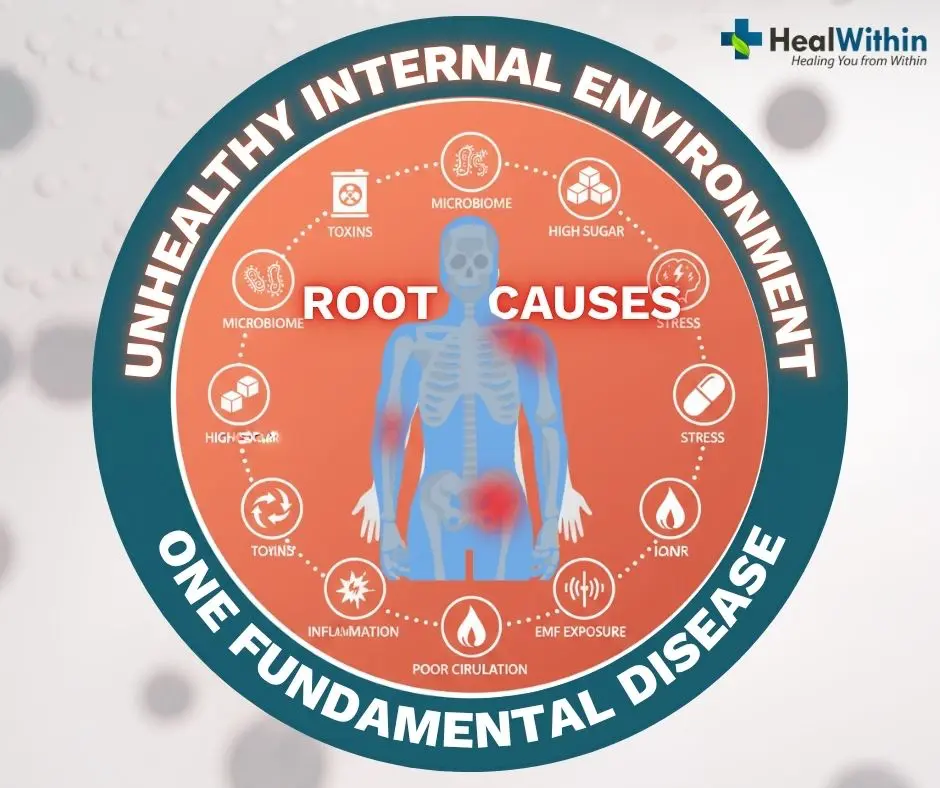
Have you ever wondered why so many chronic disease patients suffer from multiple diseases simultaneously—diabetes with heart disease, cancer with fatty liver, arthritis with hypothyroidism?
Could it be pure coincidence, or is there something deeper connecting these seemingly unrelated conditions?
For decades, conventional medicine has trained us to view diseases as separate, isolated entities—each requiring its own specialist, its own medication, its own treatment protocol. Yet in my 15+ years of treating thousands of chronic disease patients, I’ve witnessed a fascinating pattern: when we treat the underlying causes of one disease, other diseases in the same patient begin resolving simultaneously, even though we never specifically “targeted” them. This isn’t a coincidence I’ve seen once or twice; this is a consistent, repeatable phenomenon I observe in patient after patient.
This observation led me to a paradigm-shifting realization that challenges everything conventional medicine teaches: all chronic diseases are not separate diseases at all, but rather different expressions of the same fundamental problem—a breakdown in the body’s internal environment caused by a handful of common root causes. Understanding this reality is the key to achieving true healing, preventing recurrences, and experiencing optimal health long-term. In this article, I will explain why your diabetes, heart disease, and autoimmune condition are essentially the same disease manifesting in different organs, and what this means for your treatment approach.
Why Do Patients with One Chronic Disease Almost Always Have Multiple Other Diseases?
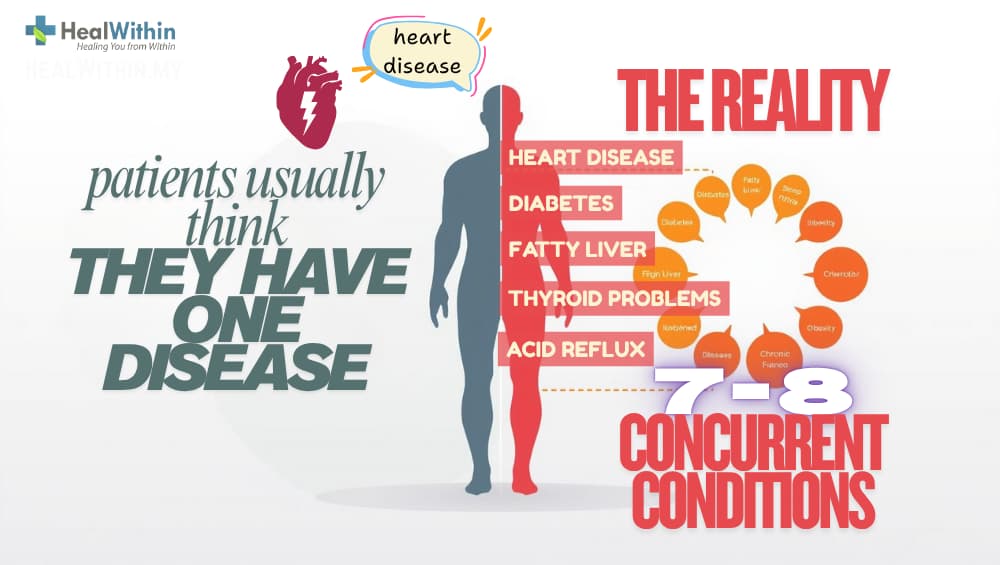
When a new patient walks into Heal Within, they rarely come with just one disease. Instead, they arrive with a complex web of interconnected health problems that conventional medicine treats as separate, unrelated conditions. This pattern is so consistent that it reveals something profound about the nature of chronic disease itself.
THE MULTI-DISEASE PATTERN IN CHRONIC ILLNESS
In my clinical practice, I observe a striking pattern that challenges everything conventional medicine teaches: patients with one chronic disease almost invariably present with multiple other diseases simultaneously.
- Heart disease patients carry multiple diagnoses: The typical heart disease patient I treat doesn’t just have blocked arteries—they also present with high blood pressure, high cholesterol, diabetes, fatty liver, sleep apnea, erectile dysfunction, chronic fatigue, and obesity, usually 5-8 concurrent conditions at minimum.
- Cancer patients have widespread systemic dysfunction: When I diagnose cancer patients, I consistently find they also suffer from chronic inflammation, severe hormonal imbalances, gut dysbiosis, compromised immunity, metabolic syndrome, and various organ dysfunctions far beyond their primary tumor—the cancer is merely the most visible manifestation.
- Autoimmune conditions cascade into each other: A patient who develops rheumatoid arthritis often later develops Hashimoto’s thyroiditis, then psoriasis, then chronic fatigue syndrome, then fibromyalgia—one autoimmune disease triggers others in a predictable cascade pattern that conventional medicine cannot satisfactorily explain.
THE STATISTICAL IMPOSSIBILITY OF COINCIDENCE
If these were truly separate, independent diseases, the mathematical probability of one person having multiple conditions simultaneously would be astronomically low. Yet this is exactly what I observe consistently in clinical practice.
- The co-occurrence rate defies random chance: If heart disease, diabetes, and fatty liver were truly independent conditions each with certain population prevalence, the probability of one person having all three simultaneously would be extremely low—yet over 70% of my heart disease patients present with this exact combination.
- Clinical data reveals overwhelming multi-disease patterns: Research and my own observations consistently show that 80-90% of chronic disease patients have three or more concurrent chronic conditions—this overwhelming pattern indicates a common underlying mechanism driving all these diseases, not random coincidental occurrence.
- The pattern repeats across all disease categories: Whether I’m treating cardiovascular disease, metabolic disorders, autoimmune conditions, or cancer, I observe the identical phenomenon: multiple organ systems dysfunctioning simultaneously, creating multiple disease labels for what is fundamentally one systemic problem affecting the entire body.
WHAT CONVENTIONAL MEDICINE MISSES
Conventional medicine’s specialist-based system completely misses the fundamental reality that these multiple diseases share common underlying causes. Each specialist focuses on symptoms in their isolated domain without asking the critical question that changes everything.
- Specialists treat territories, not the whole person: Cardiologists treat the heart, endocrinologists treat hormones, gastroenterologists treat digestion, rheumatologists treat joints—each addressing symptoms in their isolated domain without considering the interconnected systemic breakdown occurring simultaneously throughout the body.
- Medications accumulate but nothing actually heals: The typical chronic disease patient leaves conventional treatment with 5-10 different medications: statins for cholesterol, metformin for diabetes, antihypertensives for blood pressure, proton pump inhibitors for reflux—each drug suppresses one symptom while the underlying root causes continue destroying health.
- Root causes remain completely unaddressed: Not one specialist asks the fundamental question that would change everything: “Why is this patient’s entire body breaking down simultaneously?” They treat the manifestations—high blood pressure, high blood sugar, inflammation—but never investigate what’s causing multiple organ systems to malfunction together.
- Disease collections keep expanding over time: Because root causes go untreated, patients predictably accumulate new diagnoses every few years: diabetes at 45, then heart disease at 50, then kidney disease at 55—this predictable progression proves we’re not dealing with separate coincidental diseases but one fundamental disease progressively affecting more organs.
What Is the "One Fundamental Disease" That Manifests as Different Chronic Conditions?
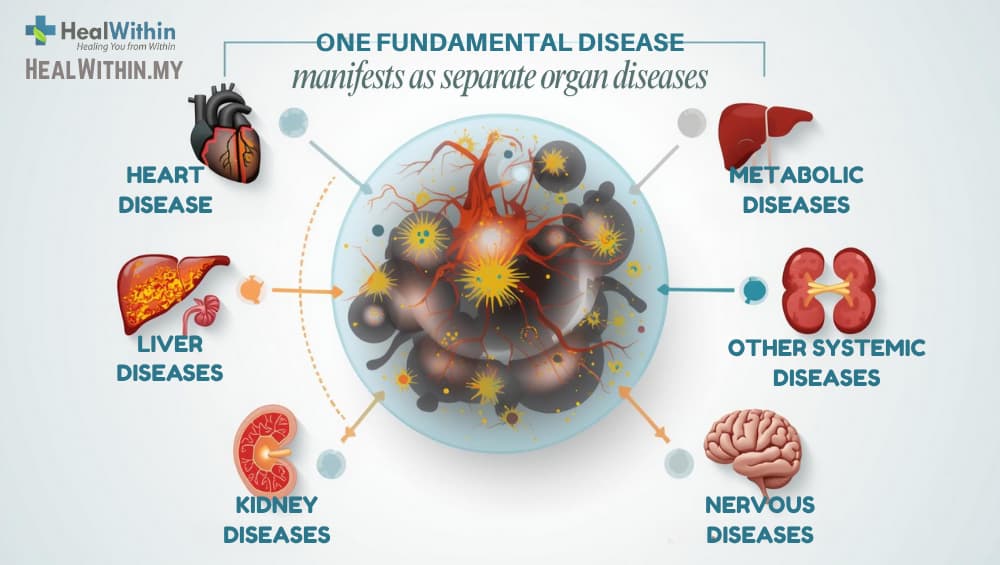
After observing thousands of patients over 15+ years, I’ve come to understand a profound truth that conventional medicine refuses to acknowledge: what we call different chronic diseases are actually just different expressions of the same fundamental problem. This realization transforms everything about how we approach treatment and explains why addressing root causes heals multiple diseases simultaneously.
THE FUNDAMENTAL DISEASE DEFINED
The one fundamental disease underlying all chronic conditions is this: the internal body environment becomes unhealthy, overloads the organs, and eventually one or more organs fall into prolonged unhealthy states that we then label as different “diseases.”
- The internal body environment determines organ health: All your organ cells are surrounded by and bathed in an internal environment—the blood, lymph, and interstitial fluid that deliver nutrients, oxygen, and remove waste. When this environment becomes unhealthy for prolonged periods, every organ operating in this compromised environment becomes stressed and begins to malfunction.
- Specific root causes create the unhealthy internal environment: The internal environment becomes unhealthy when specific root causes are present: bad food diet, gut dysbiosis, high blood sugar and insulin resistance, toxins and heavy metals, essential nutrient deficiencies, poor blood and lymph circulation and oxygenation, mitochondrial dysfunction, chronic mental and emotional stress, abnormal brain and nerve regulation, hormonal imbalances, poor sleep and circadian rhythm disruption, dissonant EMF disturbances, abnormal epigenetic signals, poor physical activity, lack of sunlight exposure, lack of earth grounding, and limiting beliefs with stored negative emotions—these root causes directly poison and degrade the internal environment where all your organs must function.
- Prolonged unhealthy environment overloads organs beyond capacity: Your organs—especially the liver, kidneys, gut, and lymphatic system—work constantly to maintain healthy internal conditions by detoxifying, processing nutrients, eliminating waste, and regulating metabolic balance. When these root causes persist and the internal environment remains unhealthy for extended periods, these organs become overwhelmed trying to compensate and eventually can no longer maintain normal function.
- Overwhelmed organs eventually fall into specific unhealthy states: Once organs can no longer cope with the chronically unhealthy internal environment, they manifest specific pathological conditions: inflammation, acidosis, dysbiosis, plaque accumulation, crystallization (stones), fat infiltration, fibrosis, cirrhosis, abnormal cell division (cancer), or degeneration—these specific unhealthy organ states produce the symptoms we label as different chronic diseases.
- This is the one fundamental disease behind all chronic conditions: Whether you develop heart disease, diabetes, cancer, arthritis, kidney disease, or any other chronic condition depends simply on which organs are affected first and what type of unhealthy state they develop—but the fundamental problem is always identical: root causes creating a chronically unhealthy internal environment that overwhelms organs into prolonged dysfunctional states, which is why treating these root causes at Heal Within resolves multiple diseases simultaneously.
WHY DIFFERENT ORGANS PRODUCE DIFFERENT DISEASE LABELS
Now that you understand the one fundamental disease—root causes creating an unhealthy internal environment that overwhelms organs into dysfunctional states—the reason we have thousands of disease names becomes clear: it’s simply describing which organ is affected and what type of unhealthy state it developed.
- The disease label describes the affected organ location: When the heart and its blood vessels develop plaque accumulation and inflammation due to the unhealthy internal environment, conventional medicine labels this “coronary artery disease” or “heart failure.” When the pancreas and liver become dysfunctional due to the same unhealthy environment, it’s labeled “diabetes.” When joints become inflamed and degraded, it’s called “arthritis”—different names, same fundamental problem, different organ locations.
- The disease label describes the type of organ dysfunction: The specific unhealthy state an organ develops determines its disease name: inflammation produces conditions labeled arthritis, colitis, or hepatitis; plaque accumulation creates atherosclerosis or coronary artery disease; crystallization forms kidney stones or gallstones; abnormal cell division becomes cancer; fibrosis becomes cirrhosis—these are descriptive labels for different types of organ dysfunction, not separate diseases with different causes.
- Medical specialization reinforces the illusion of separate diseases: Conventional medicine divided the body into territories—cardiologists for hearts, endocrinologists for hormones, gastroenterologists for digestion—creating the false impression that heart disease, diabetes, and digestive disorders are separate, unrelated conditions requiring different specialists, when they’re actually the same fundamental disease affecting different organs simultaneously.
- Multiple disease labels in one patient prove it’s one disease: When a single patient develops diabetes, heart disease, fatty liver, and kidney disease together, conventional medicine treats these as four separate coincidental diseases—but this is the same fundamental disease (unhealthy internal environment from the same root causes) simply affecting four different organs, which is why they occur together and why treating the root causes resolves all of them simultaneously.
THE DOMINO EFFECT OF ORGAN DYSFUNCTION
Understanding why patients always have multiple diseases becomes clear when you realize that all organs share the same internal environment and are interconnected through blood circulation—dysfunction in one organ inevitably creates dysfunction in others through a predictable domino effect.
- All organs are bathed in the same internal environment: Your heart, liver, kidneys, brain, pancreas, and every other organ all function in the exact same blood, lymph, and interstitial fluid—when this shared internal environment becomes toxic, nutrient-deficient, acidic, and inflammatory due to root causes, every single organ begins deteriorating simultaneously, not just one organ in isolation.
- One dysfunctional organ poisons the entire system: When your liver becomes overwhelmed and toxic, it releases incompletely processed metabolites, inflammatory compounds, and toxins into the bloodstream that then circulate to every other organ—your heart, brain, kidneys, and all other organs must now function in this increasingly contaminated internal environment, causing them to develop their own dysfunctions.
- Detoxification organ failure accelerates systemic breakdown: When your primary detoxification organs (liver, kidneys, gut, lymphatic system) become dysfunctional, they can no longer adequately clean the internal environment—toxins and metabolic waste accumulate faster, the internal environment becomes progressively more unhealthy, and all other organs accelerate their decline into dysfunctional states.
- Compensatory mechanisms create cascading failures: When one organ fails, other organs must work harder to compensate—the kidneys must work overtime when the liver fails, the heart must pump harder when circulation is compromised, the adrenals must produce more stress hormones when energy production fails—this increased workload causes these compensating organs to eventually fail as well, creating the predictable multi-disease pattern.
- This explains why treating one organ in isolation always fails: You cannot restore a “healthy heart” while the blood remains toxic, nutrient-deficient, and inflammatory from ongoing root causes—the heart must function in whatever internal environment exists throughout your body, which is why conventional medicine’s approach of treating individual organs with medications while ignoring root causes and systemic dysfunction never produces lasting healing.
What Are the Common Root Causes That Create This "One Fundamental Disease"?
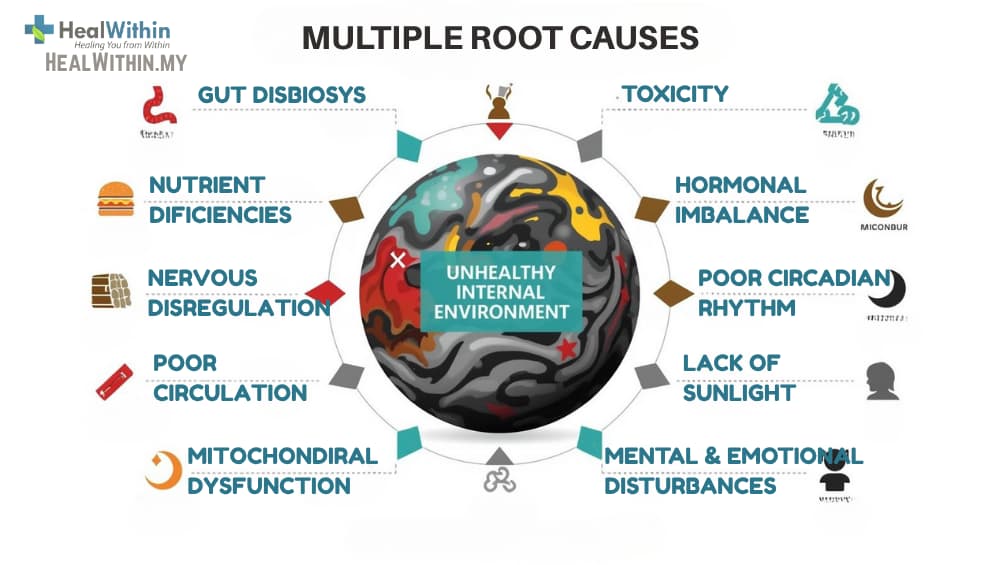
If all chronic diseases are fundamentally the same problem—an unhealthy internal environment overwhelming organs into dysfunctional states—then the next critical question becomes: what creates this unhealthy internal environment in the first place? After treating thousands of chronic disease patients over 15+ years, I’ve identified the specific root causes that consistently appear across virtually all chronic conditions, regardless of their disease labels.
THE ROOT CAUSES TO ALL CHRONIC DISEASES
Through comprehensive diagnostic testing and clinical observation, I’ve identified the root causes that create the unhealthy internal environment responsible for all chronic disease manifestations. These are the factors that must be addressed for true healing to occur.
- Bad food diet: Consuming processed foods, refined sugars, inflammatory oils, chemical additives, and nutrient-depleted meals directly poisons the internal environment, creates inflammation, disrupts cellular function, and provides the raw materials for disease rather than health.
- Gut dysbiosis and unhealthy gut environment: An imbalanced gut microbiome with harmful bacteria overgrowth, yeast infections, parasites, and leaky gut allows toxins, undigested food particles, and inflammatory compounds to enter the bloodstream, poisoning the entire internal environment.
- High blood sugar and insulin resistance: Chronically elevated blood glucose damages cellular membranes, creates inflammatory compounds called advanced glycation end products (AGEs), disrupts hormonal balance, and forces cells into dysfunctional metabolic states throughout the body.
- Toxins, heavy metals, and toxic external environment: Accumulated mercury, lead, cadmium, aluminum, along with pesticides, plastics, industrial chemicals, and environmental pollutants directly poison cellular function, disrupt enzymatic processes, damage DNA, and create severe oxidative stress throughout the internal environment.
- Essential nutrient deficiencies: Lacking vitamins, minerals, amino acids, essential fatty acids, and other critical nutrients prevents cells from performing repair functions, producing energy, synthesizing hormones, detoxifying properly, and maintaining normal physiological processes.
- Poor blood and lymph circulation and oxygenation: Compromised circulation prevents adequate oxygen and nutrient delivery to tissues while allowing metabolic waste and toxins to accumulate, creating stagnant, poorly-oxygenated areas where organs cannot function optimally.
- Mitochondrial dysfunction: Damaged cellular powerhouses cannot produce adequate ATP energy, forcing cells into survival mode, impairing all cellular processes including detoxification, repair, and immune function, while increasing lactic acid production that further acidifies the internal environment.
- Chronic mental and emotional stress: Prolonged stress activates the sympathetic nervous system continuously, flooding the body with cortisol and stress hormones that suppress immunity, impair digestion, dysregulate blood sugar, increase inflammation, and prevent healing mechanisms from engaging.
- Abnormal brain and nerve regulation: Disrupted nervous system signaling impairs organ communication, dysregulates autonomic functions, creates hormonal imbalances, compromises digestive processes, and prevents the coordinated healing responses necessary for recovery.
- Hormonal imbalances: Disrupted thyroid, adrenal, sex hormones, and insulin create widespread metabolic dysfunction affecting every cell’s ability to produce energy, detoxify, repair, and maintain normal function throughout the body.
- Poor sleep or circadian rhythm disruption: Inadequate or poor-quality sleep prevents the body from completing essential repair, detoxification, and immune system regeneration processes that only occur during deep sleep, causing progressive deterioration of all organ systems.
- Dissonant EMF (electromagnetic field) disturbances: Constant exposure to electromagnetic radiation from devices, WiFi, cell towers, and electrical systems disrupts cellular communication, damages mitochondrial function, increases oxidative stress, and interferes with the body’s natural electromagnetic regulatory systems.
- Low stem cell levels (natural depletion with aging): Declining stem cell populations reduce the body’s regenerative capacity, slowing tissue repair, organ restoration, and the replacement of damaged cells with healthy ones.
- Abnormal epigenetic environmental signals: Environmental toxins, stress, poor nutrition, and lifestyle factors trigger harmful gene expressions that promote inflammation, cellular dysfunction, and disease processes while suppressing genes responsible for health and healing.
- Poor physical activity and sedentary lifestyle: Lack of movement impairs circulation, reduces lymphatic drainage, weakens muscles and bones, decreases mitochondrial function, compromises detoxification, and prevents the positive metabolic effects of exercise.
- Lack of sunlight exposure: Insufficient sunlight creates vitamin D deficiency, disrupts circadian rhythms, impairs immune function, affects mood and neurotransmitter production, and reduces the body’s natural healing and regulatory mechanisms.
- Lack of earth grounding: Disconnection from direct earth contact prevents the transfer of free electrons that neutralize inflammation, reduces electromagnetic stress, disrupts natural electrical balance, and impairs the body’s voltage regulation systems.
- Limiting beliefs, pessimistic mindset, stored negative emotions: Deeply held negative thought patterns, unresolved emotional trauma, and pessimistic worldviews create chronic stress responses, suppress immune function, dysregulate hormones, increase inflammation, and prevent the relaxed physiological state necessary for healing.
Understanding what these root causes truly mean and how they create disease is essential for your healing journey.
THE REMARKABLE SIMILARITY OF ROOT CAUSES ACROSS DIFFERENT DISEASE DIAGNOSES
One of the most striking discoveries in my clinical practice is that patients with completely different disease labels—heart disease, cancer, diabetes, arthritis—consistently share 80-90% of the same underlying root causes. This observation provides powerful evidence that we’re dealing with one fundamental disease, not separate conditions.
- Heart disease and cancer patients have identical root causes: When I test a heart disease patient and a cancer patient, I consistently find both have severe toxicity, gut dysbiosis, nutrient deficiencies, chronic stress, poor circulation, and metabolic dysfunction—the only difference is whether their compromised organs manifested as plaque accumulation in arteries or abnormal cell division forming tumors.
- Diabetes and autoimmune patients share the same dysfunction: A diabetic patient and a rheumatoid arthritis patient typically present with the same root causes: inflammatory diet, leaky gut, hormonal imbalances, mitochondrial dysfunction, chronic stress, and toxin accumulation—one person’s pancreas and liver failed first creating diabetes, the other’s immune system became dysregulated first creating autoimmune disease.
- The disease label is determined by which organ fails first: Whether you develop kidney disease, liver disease, heart disease, or neurological disease depends not on having different root causes, but simply on which organ system in your particular body reaches the breaking point first under the burden of the same shared root causes affecting your entire internal environment.
- Individual susceptibility determines disease manifestation: Genetic predispositions, previous injuries, occupational exposures, or organ-specific stresses may cause one organ to fail before others—someone with family heart history may develop cardiovascular disease first, while someone with toxic dental work may develop neurological disease first—but the underlying root causes creating the unhealthy environment are virtually identical.
How Does Understanding This Reality Make Integrative & Holistic Treatment a Necessity (not an option)?
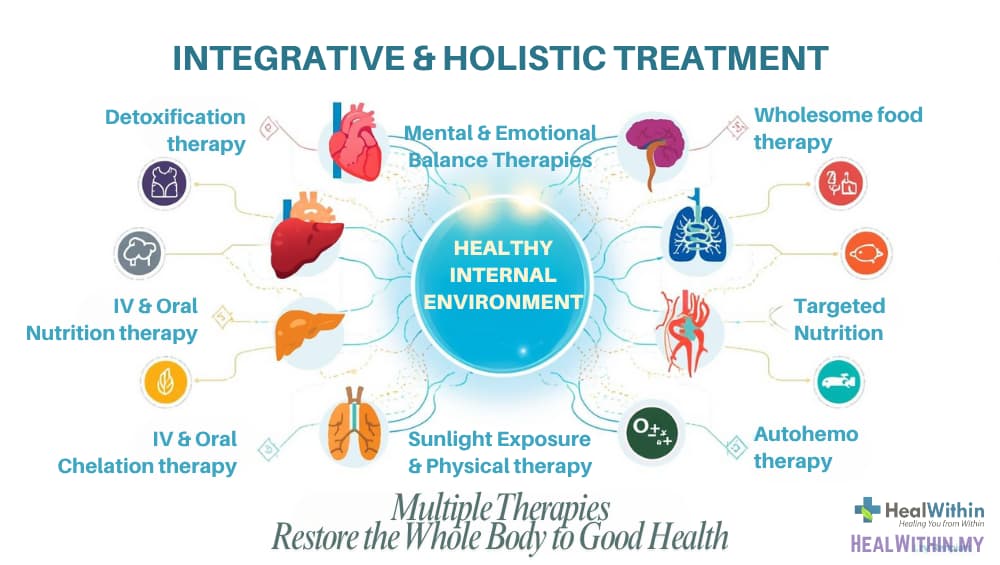
Once you understand that all chronic diseases are simply different manifestations of one fundamental problem—multiple root causes creating an unhealthy internal environment that overwhelms organs—you immediately recognize why integrative and holistic treatment isn’t just preferable, it’s absolutely necessary. This understanding reveals why conventional medicine’s approach is fundamentally incapable of producing true healing.
WHY SINGLE-FOCUS TREATMENTS CANNOT ADDRESS THE FUNDAMENTAL DISEASE
When the fundamental problem involves multiple root causes creating system-wide dysfunction, treating with single medications or isolated therapies becomes logically absurd and practically ineffective.
- One medication cannot address multiple root causes simultaneously: A statin drug may lower cholesterol, but it does nothing to remove heavy metals, restore nutrient deficiencies, improve circulation, heal gut dysbiosis, balance hormones, reduce stress, or address the dozen other root causes poisoning your internal environment—leaving the fundamental disease completely intact.
- Isolated therapies leave most root causes untreated: Even natural approaches that use single remedies—turmeric for inflammation, probiotics for gut health—address at most one or two root causes while leaving toxicity, nutrient deficiencies, poor circulation, hormonal imbalances, and other root causes completely unaddressed, ensuring the fundamental disease continues progressing.
- Sequential treatment of root causes takes too long and allows progression: If you tried addressing root causes one at a time—detoxify for six months, then work on nutrition for six months, then address circulation—the untreated root causes continue destroying your organs during this sequential approach, and the fundamental disease keeps advancing while you’re slowly working through isolated interventions.
- The mathematics demand integrative treatment: With 15-18 root causes commonly present in chronic disease patients, and multiple organs already dysfunctional, simple mathematics proves that only simultaneous, integrative treatment of multiple root causes can restore health within a reasonable timeframe and prevent further deterioration.
WHY TREATING ISOLATED ORGANS FAILS WHEN ALL ORGANS SHARE THE ENVIRONMENT
Understanding that all organs are bathed in the same internal environment makes it impossible to logically justify treating individual organs while ignoring the systemic dysfunction affecting the entire body.
- You cannot create a healthy heart in an unhealthy body: Conventional cardiology attempts to treat the heart with medications and procedures while the patient’s blood remains toxic, nutrient-deficient, acidic, and inflammatory—this is trying to heal one organ while it continues operating in the poisoned internal environment that created the disease, making lasting healing impossible.
- Organ-specific treatments ignore the shared blood supply reality: Your heart, liver, kidneys, brain, and pancreas all function in the identical blood, receiving the same toxins, the same nutrient deficiencies, the same inflammatory signals—treating one organ while leaving this shared environment poisoned ensures all organs remain dysfunctional and the treated organ cannot maintain improvement.
- The holistic principle becomes a necessity, not a preference: Once you understand that organs share the same internal environment and multiple organs are already dysfunctional from the same root causes, treating the whole body as one integrated system stops being an optional “holistic philosophy” and becomes the only logical approach that can produce actual healing.
- Partial treatment guarantees partial results and disease progression: Conventional medicine’s organ-isolated approach explains perfectly why their patients continue accumulating diseases—treating the heart while ignoring root causes means the liver will fail next, then the kidneys, then the brain, because the fundamental disease affecting all organs remains completely unaddressed.
WHY INTEGRATION OF MULTIPLE THERAPIES BECOMES ESSENTIAL
The reality of multiple root causes requiring simultaneous treatment while supporting multiple dysfunctional organs creates an absolute necessity for strategically integrating various therapeutic modalities—no single therapy can accomplish what’s required.
- Different therapies address different root causes: Chelation therapy removes heavy metals but doesn’t restore nutrients; IV nutrition provides cellular building blocks but doesn’t eliminate toxins; detoxification clears the internal environment but doesn’t improve circulation; EECP therapy enhances blood flow but doesn’t balance hormones—each therapy addresses specific root causes, making integration of multiple therapies essential for comprehensive root cause treatment.
- Synergistic combinations accelerate healing beyond individual therapies: When we combine detoxification with chelation therapy, the body eliminates toxins faster; when we provide IV nutrition while improving circulation, nutrients reach cells more effectively; when we balance hormones while reducing stress, healing responses amplify—integrated therapies create synergistic effects that multiply healing potential far beyond individual treatments used separately.
- Simultaneous organ support prevents cascade failures: While treating root causes, we must simultaneously support all affected organs—if we detoxify aggressively without supporting kidney and liver function, these organs can become overwhelmed; if we improve circulation without providing adequate nutrition, cells cannot utilize the increased blood flow—integrated treatment supports all organs together while addressing root causes.
- The integrated approach matches the complexity of the disease: The fundamental disease involves 15+ root causes creating dysfunction in multiple organs simultaneously through interconnected pathways—only an equally comprehensive, integrative treatment approach that addresses this complexity can restore health, making integrative and holistic treatment not just beneficial but absolutely necessary.
Why This Understanding Makes Heal Within's Integrative & Holistic Treatment Approach one of the Only Logical Solutions?
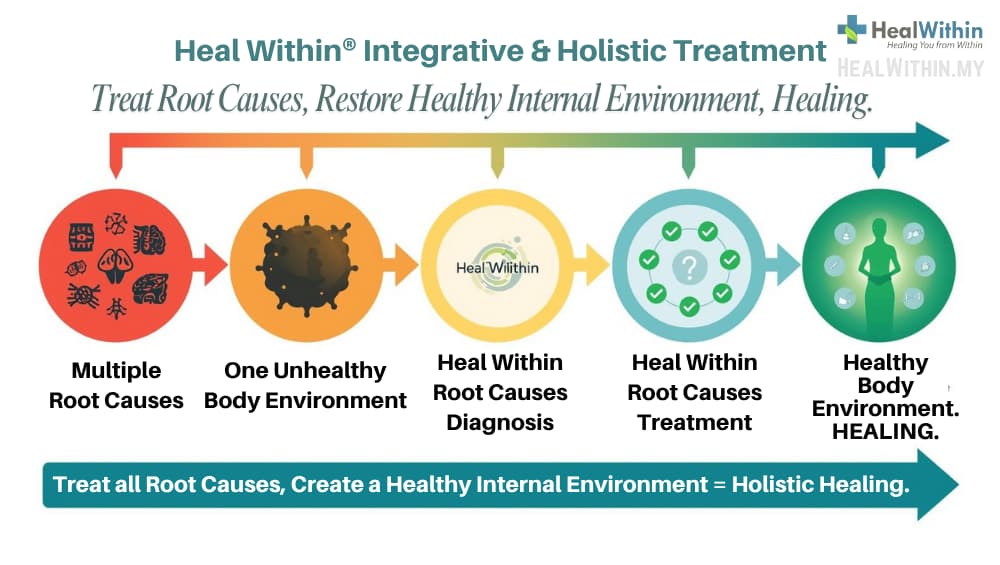
Once you grasp that chronic diseases are one fundamental problem with multiple root causes requiring whole-body treatment through integrated therapies, Heal Within’s treatment protocol becomes not just one option among many, but the only approach aligned with the actual nature of chronic disease.
- Our treatment directly addresses the fundamental disease: At Heal Within, we treat exactly what’s actually wrong—we identify and address all root causes creating your unhealthy internal environment, restore that environment to health through integrated therapies, and support all your organs simultaneously as they heal, directly treating the one fundamental disease rather than managing surface symptoms.
- Integrated therapy combinations address all root causes simultaneously: Our protocols strategically combine detoxification therapy, chelation therapy, IV nutrition, wholesome food therapy, herbal medicine, circulation enhancement, hormonal balancing, and other modalities to address all your root causes at once—eliminating toxins while restoring nutrients while improving circulation while healing the gut while balancing hormones simultaneously.
- Holistic treatment heals all organs together, not sequentially: Because we restore the internal environment that all your organs share, when we normalize your blood chemistry, eliminate toxicity, and address root causes, every organ benefits simultaneously—your heart, liver, kidneys, pancreas, brain all begin healing together, which is why our patients experience resolution of multiple diseases at the same time.
- This approach produces results impossible with conventional medicine: Our patients consistently experience outcomes that conventional medicine considers impossible—diabetes resolving while heart disease heals, multiple autoimmune conditions improving together, complete medication elimination across all diseases—these results are impossible with organ-isolated, symptom-suppression approaches but inevitable when you treat the actual fundamental disease with integrative and holistic protocols.
Summary and Conclusion
Throughout this article, we’ve explored a paradigm-shifting reality that transforms how you must understand and approach chronic disease treatment. The evidence and logic presented reveal truths that conventional medicine refuses to acknowledge but that you can observe in your own multi-disease experience:
- All chronic diseases are one fundamental disease: What we call different chronic diseases—heart disease, diabetes, cancer, arthritis, autoimmune conditions—are simply different manifestations of the same fundamental problem: root causes creating an unhealthy internal environment that overwhelms organs into prolonged dysfunctional states
- Multiple diseases occur together because they share root causes: Patients with one chronic disease almost always have multiple others because all these conditions arise from the same root causes—bad diet, toxicity, nutrient deficiency, poor circulation, gut dysbiosis, chronic stress, hormonal imbalances, and other factors poisoning the internal environment where all organs must function
- Disease labels merely describe which organs are currently expressing disease: Whether you’re diagnosed with heart disease, diabetes, cancer, or kidney disease depends on which organs in your body are currently manifesting dysfunction severely enough to produce symptoms and meet diagnostic criteria—but all your organs are operating in the same unhealthy internal environment, meaning organs without disease labels yet are also declining and will eventually express their own diseases
- Conventional medicine’s approach is not focused on holistic healing: Treating isolated organs with symptom-suppressing medications while ignoring root causes and the shared internal environment serves the purpose of symptom management but cannot produce holistic healing—this explains why patients remain on lifelong medications and continue accumulating new diseases every few years as untreated organs progressively fail
- Integrative and holistic treatment becomes absolutely necessary: Understanding that multiple root causes create system-wide dysfunction affecting all organs simultaneously makes integrative treatment combining multiple therapies to address all root causes while treating the whole body as one unit not just preferable, but the only logical approach capable of producing true healing and preventing disease recurrence
This understanding changes everything about how you must approach your health challenges. You are not suffering from multiple separate diseases that coincidentally occurred together—you have one fundamental disease expressing itself through different organs. Conventional medicine’s specialist-based, symptom-suppression approach is designed for acute care and symptom management, not holistic healing, which is why their patients remain on medications indefinitely and continue developing new diseases.
The choice before you is clear: continue managing symptoms of individual diseases in isolation while the fundamental problem destroys more of your body, or finally address the actual disease—the root causes creating your unhealthy internal environment—through integrative and holistic treatment that restores your entire system to health. At Heal Within, we’ve witnessed thousands of patients experience the resolution of multiple chronic diseases simultaneously not through coincidence, but because we treat what’s actually wrong. True healing requires you to stop thinking in terms of separate diseases and start understanding the one fundamental disease that integrative and holistic medicine was specifically designed to treat.