
Why do some patients’ bodies feel drained and unable to heal, even when they take all the right supplements?
What’s preventing your trillions of cells from producing the energy they need to repair and regenerate?
What if your mitochondria—the tiny power plants in every cell—are starving for something as simple as the right wavelength of light?
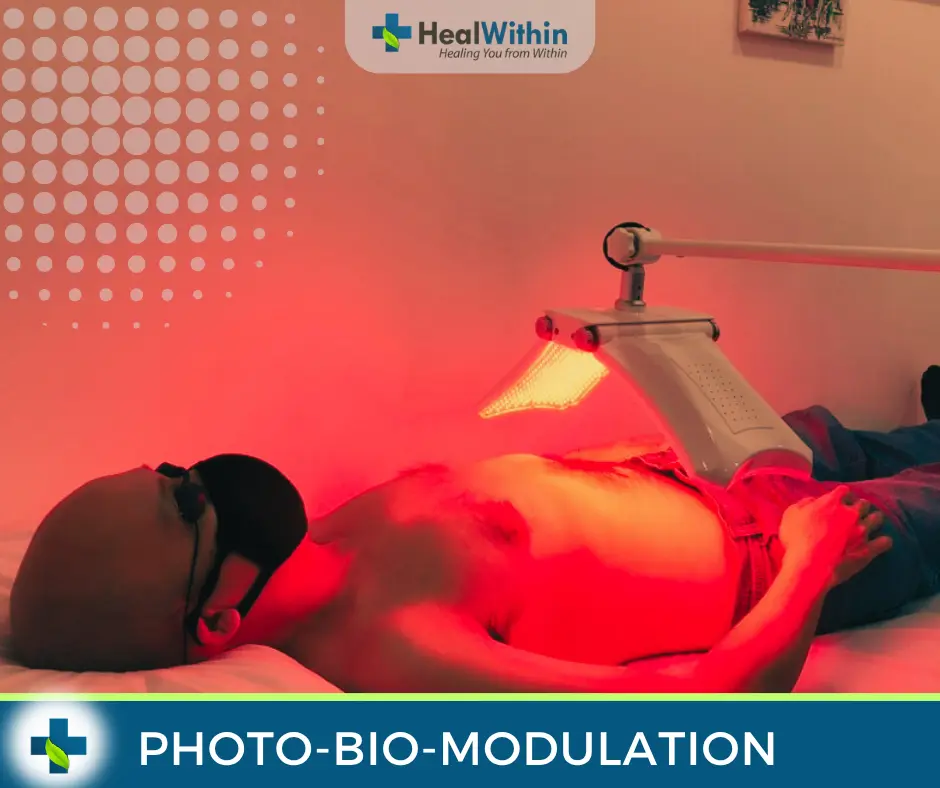
For decades, one of nature’s most powerful healing tools has remained underutilized in mainstream healthcare: light. Not just any light, but precisely calibrated red and near-infrared wavelengths that penetrate deep into your tissues and activate your mitochondria. This is photobiomodulation therapy, and it’s transforming how we approach chronic disease treatment at the cellular level. While conventional medicine excels at acute care and emergency intervention, cellular-level healing often falls outside its primary framework, leaving many patients searching for deeper solutions.
But here’s what makes photobiomodulation truly revolutionary in our integrative & holistic approach: it doesn’t work alone. When we combine therapeutic light with IV nutrition therapy, detoxification, and oxygenation treatments, we create a synergy that neither therapy can achieve in isolation. The light activates your cellular machinery while nutrition provides the raw materials, detoxification clears the obstacles, and oxygenation fuels the process. This is why integration is the key to addressing the root causes of your chronic disease—not just masking symptoms, but restoring function at the most fundamental level of your body.
What Is Photobiomodulation and Why Should You Care About It?
When we talk about light therapy, most people think of tanning beds or vitamin D production. But photobiomodulation operates on an entirely different level—one that targets the very foundation of cellular function and energy production.
SPECIFIC LIGHT WAVELENGTHS THAT HEAL AT THE CELLULAR LEVEL
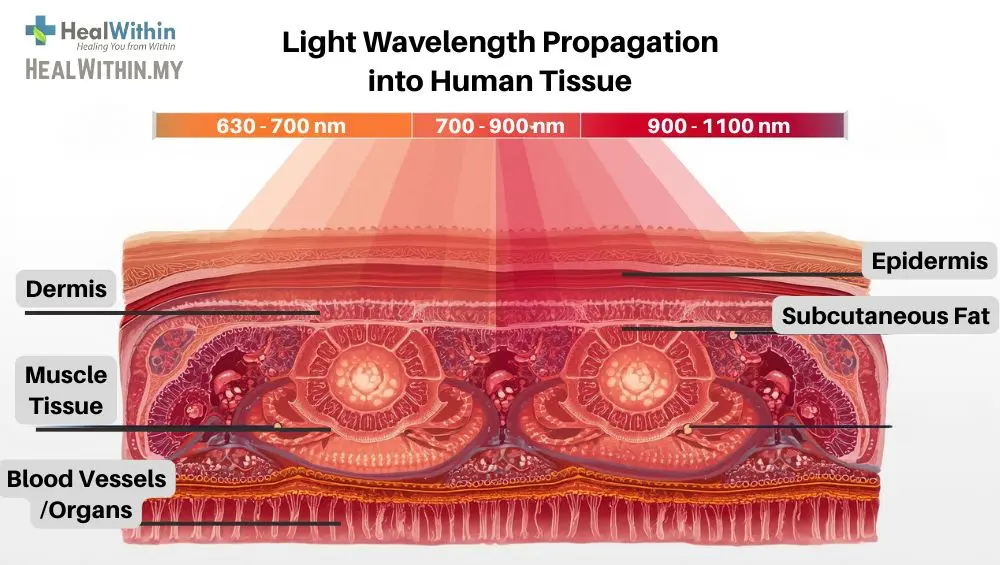
- Red light wavelengths (630-700 nanometers) penetrate skin and superficial tissues. These wavelengths reach depths of about 8-10 millimeters, making them effective for skin conditions, wound healing, and surface-level inflammation while still impacting deeper cellular processes.
- Near-infrared wavelengths (700-1100 nanometers) penetrate much deeper into your body. They can reach 2-4 centimeters or more into tissues, accessing muscles, joints, organs, and bone—critical for treating chronic diseases originating at organ and cellular levels.
- Precision matters because not all light wavelengths trigger healing responses. Your cells have specific light-sensitive molecules responding only to particular wavelengths. Wrong wavelengths won’t work—which is why natural sunlight or random LED lights cannot replicate calibrated photobiomodulation therapy.
LIGHT PHOTONS PENETRATING TISSUES AND ACTIVATING MITOCHONDRIA
- Light photons travel through your skin, fat, and muscle layers to reach target cells. Unlike medications requiring breakdown and bloodstream transport, photons work instantly upon contact with cellular targets—one of the most direct cellular interventions available.
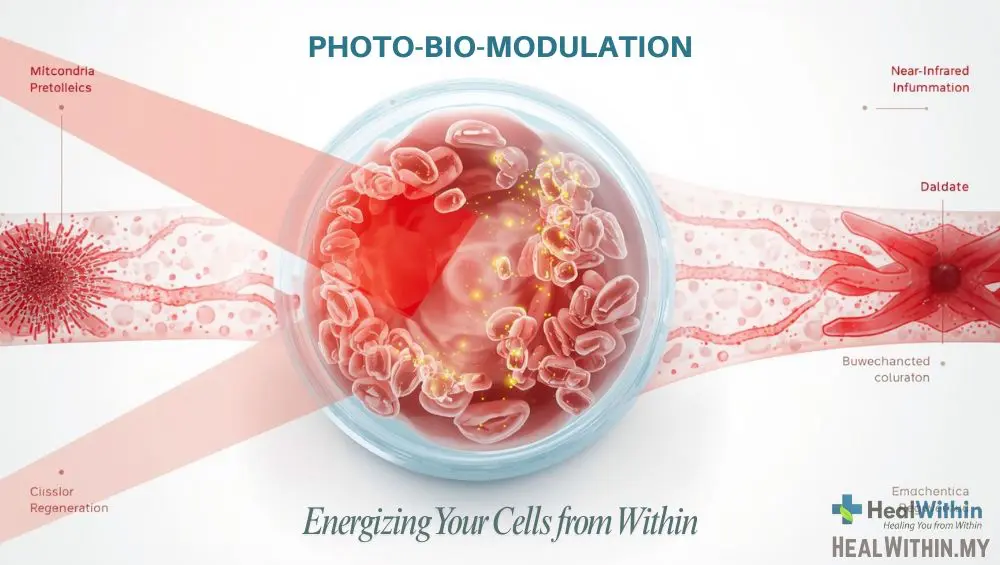
- Your mitochondria contain chromophores—light-sensitive molecules that absorb these photons. The primary chromophore is cytochrome c oxidase enzyme in mitochondrial membranes. When photons strike it, they trigger beneficial biochemical reactions changing how cells produce energy and respond to stress.
- This absorption transforms light energy into chemical energy (ATP) your cells use immediately. Like photosynthesis for human cells, your mitochondria convert therapeutic light into ATP—the universal energy currency powering every bodily function from heartbeat to immune response.
WHY THIS MATTERS FOR YOUR CHRONIC DISEASE TREATMENT
- Every chronic disease involves cellular dysfunction and energy depletion. Whether cancer, heart disease, diabetes, or autoimmune conditions, your cells have lost their ability to produce adequate energy and perform normal functions—a crisis conventional treatments rarely address directly.
- Photobiomodulation directly addresses cellular dysfunction through biophysical pathways. Unlike medications working through biochemistry with potential side effects, light therapy uses energy to restore energy—non-invasive, virtually no side effects, targeting root cellular failure rather than downstream symptoms.
- This therapy bridges the gap between symptom management and cellular restoration. In our integrative & holistic approach, photobiomodulation enhances all other therapies, creating the cellular environment where nutrition is utilized, detoxification occurs efficiently, oxygen is properly metabolized, and natural healing mechanisms finally engage.
How Does Light Actually Trigger Healing in Your Cells?
Understanding the mechanisms behind photobiomodulation helps you appreciate why this isn’t just another wellness trend—it’s a scientifically grounded approach to restoring cellular function at the most fundamental level.
MITOCHONDRIAL ACTIVATION
- Photobiomodulation activates cytochrome c oxidase, the key enzyme in your cellular energy chain. This enzyme is the final step in your mitochondria’s electron transport chain. When red and near-infrared light photons are absorbed, they remove nitric oxide that normally blocks this enzyme during cellular stress, immediately restoring energy production capacity.
- This activation dramatically increases ATP production—your cells’ primary energy currency. Within minutes of light exposure, mitochondria can increase ATP synthesis by 150-200%. More ATP means your cells have the energy to perform repair functions, maintain membranes, synthesize proteins, and execute all the complex tasks required for healing.
- Light therapy restores cellular energy systems that have been compromised by disease. Chronic illness depletes mitochondrial function over time. Photobiomodulation reverses this decline by optimizing the efficiency of energy production, allowing exhausted cells to recover their functional capacity and resume normal metabolic activities.
INFLAMMATION AND OXIDATIVE STRESS REDUCTION
- Therapeutic light reduces free radicals and oxidative stress at the cellular level. While photobiomodulation initially produces a small amount of reactive oxygen species (ROS), this triggers your cells’ antioxidant defense systems—resulting in a net reduction of harmful oxidative stress that damages DNA, proteins, and cellular membranes.
- It lowers chronic inflammation by modulating inflammatory cytokines and signaling pathways.Photobiomodulation decreases pro-inflammatory markers like IL-6, TNF-alpha, and COX-2 while increasing anti-inflammatory cytokines. This shifts your immune system from a state of chronic inflammation toward balanced immune regulation.
- Light protects cells from oxidative damage while enhancing natural antioxidant production. Your body produces its own antioxidants like glutathione and superoxide dismutase. Photobiomodulation upregulates these internal defense systems, providing lasting protection that dietary antioxidants alone cannot achieve.
CIRCULATION AND CELLULAR REGENERATION
- Photobiomodulation stimulates nitric oxide release, dilating blood vessels and improving circulation. Nitric oxide acts as a powerful vasodilator, increasing blood flow to tissues. Better circulation means more oxygen and nutrients reach cells while waste products are efficiently removed—essential for healing.
- Enhanced oxygen delivery supports aerobic metabolism and cellular respiration. With improved blood flow and optimized mitochondrial function, your cells can fully utilize oxygen for energy production rather than relying on less efficient anaerobic pathways that contribute to fatigue and metabolic dysfunction.
- Light therapy activates cellular repair mechanisms and stimulates regeneration processes. It increases growth factors, enhances stem cell activity, promotes collagen synthesis, and accelerates tissue repair. This regenerative capacity is crucial for healing damaged organs and reversing degenerative processes in chronic disease.
Which Root Causes of Chronic Disease Does Photobiomodulation Address?
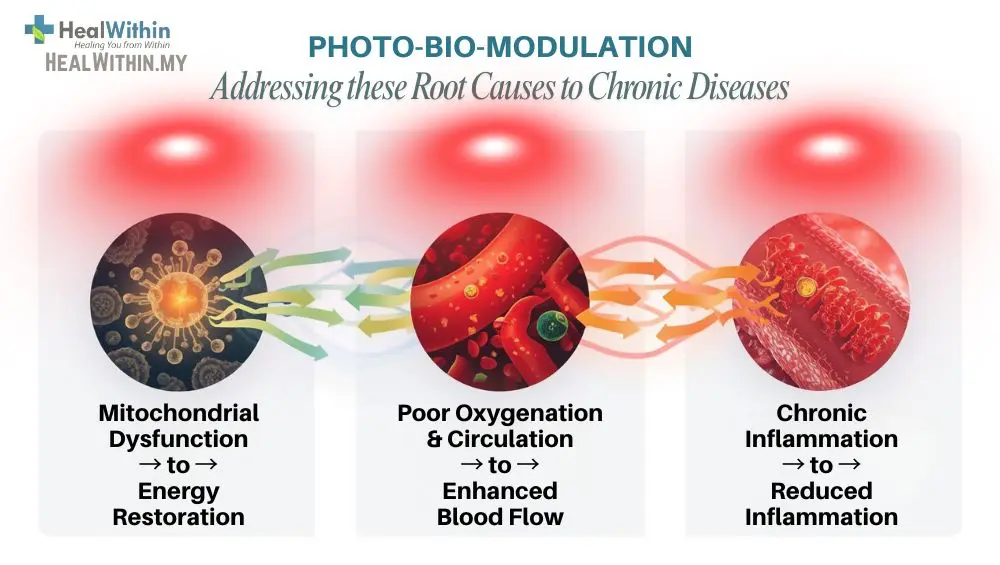
At Heal Within, we’ve identified around 10 major root causes underlying most chronic diseases. Photobiomodulation directly addresses several of these fundamental imbalances, making it an essential component of our integrative & holistic treatment protocol.
MITOCHONDRIAL DYSFUNCTION
- Photobiomodulation restores ATP production in mitochondria that have lost energy-generating capacity.Diseased cells often have mitochondria producing only 30-50% of normal ATP levels. Light therapy can restore this to 80-90% or higher, giving cells the energy they need to execute repair processes and resume normal functions.
- It reverses cellular fatigue that leaves your body unable to heal itself. When mitochondria fail, cells enter a survival mode where they can barely maintain basic functions, let alone repair damage. By restoring energy production, photobiomodulation shifts cells from survival mode back to healing and regeneration mode.
- Light therapy supports metabolic function by optimizing how cells process nutrients and oxygen. Efficient mitochondria extract maximum energy from glucose and fatty acids. Dysfunctional mitochondria waste nutrients and produce toxic metabolic byproducts. Photobiomodulation restores metabolic efficiency at the cellular level.
POOR OXYGENATION AND CIRCULATION
- It improves oxygen utilization at the cellular level, not just oxygen delivery. Many chronic disease patients have adequate oxygen in their blood but cells that cannot use it efficiently. Photobiomodulation enhances cellular respiration machinery, allowing cells to extract and utilize oxygen more effectively for energy production.
- Photobiomodulation enhances blood flow by stimulating nitric oxide release and angiogenesis. Better circulation means oxygen-rich blood reaches even poorly perfused tissues. Additionally, light therapy can trigger formation of new blood vessels in areas with compromised circulation—critical for healing ischemic or damaged tissues.
- Improved circulation delivers nutrients to tissues while removing metabolic waste products. Chronic disease often involves poor clearance of cellular debris, toxins, and inflammatory mediators. Enhanced blood and lymphatic flow accelerates waste removal, reducing toxic burden on cells and supporting detoxification processes.
CHRONIC INFLAMMATION
- Light therapy reduces systemic inflammation by modulating immune system signaling. Rather than suppressing immunity like anti-inflammatory drugs, photobiomodulation balances immune responses—reducing excessive inflammation while maintaining appropriate immune surveillance. This is crucial for both autoimmune conditions and cancer treatment.
- It breaks the inflammation cycle that perpetuates tissue damage and disease progression. Chronic inflammation damages tissues, which triggers more inflammation—a vicious cycle. Photobiomodulation interrupts this cycle by reducing inflammatory mediators, protecting tissues from oxidative damage, and promoting healing over continued destruction.
- Photobiomodulation supports immune regulation without suppressing necessary immune functions. Your immune system needs to fight infections and eliminate abnormal cells. Unlike immunosuppressive medications, light therapy optimizes immune function—reducing harmful inflammation while preserving protective immunity essential for long-term health.
Why Do We Integrate Photobiomodulation with IV Nutrition Therapy?
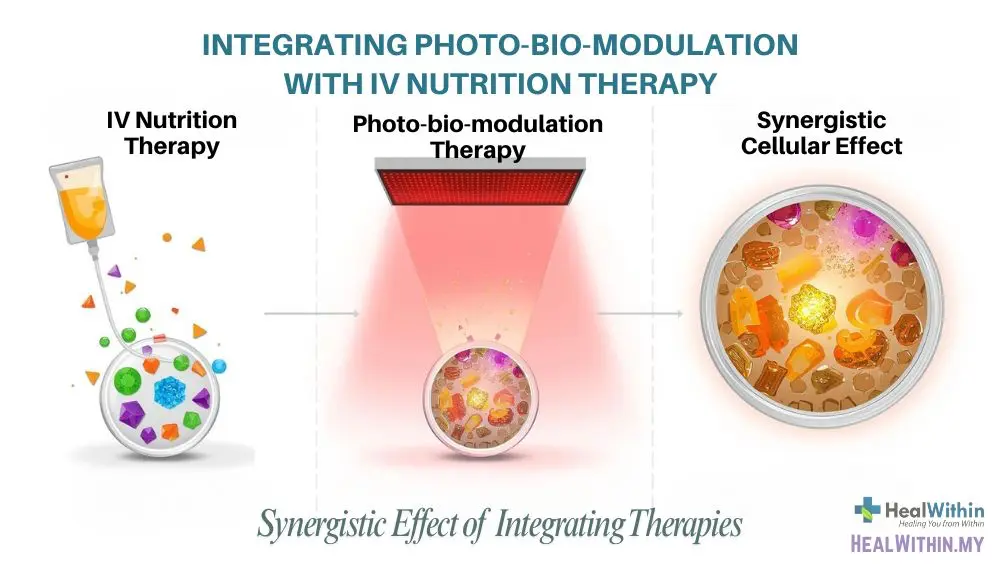
This is where our integrative & holistic approach reveals its true power. Photobiomodulation alone helps, and IV nutrition alone helps—but together, they create a synergistic effect that multiplies healing outcomes beyond what either therapy achieves independently.
THE SYNERGY PRINCIPLE
- Combination therapy works exponentially better than standalone treatments. When you provide nutrients without cellular energy to process them, absorption and utilization remain poor. When you activate cells without providing raw materials, healing capacity is limited. Together, they address both the “fuel” and the “engine” simultaneously.
- Light activates the cellular machinery that processes and utilizes nutrients effectively. Photobiomodulation increases ATP production, which powers active transport mechanisms that move nutrients into cells, activates enzymes that metabolize nutrients, and energizes cellular processes that incorporate nutrients into new tissues and repair damaged structures.
- Standalone therapies have inherent limitations that integration overcomes. IV nutrition can flood your bloodstream with vitamins, minerals, and amino acids, but if your cells lack energy to use them, much is wasted or excreted. Photobiomodulation can energize cells, but without adequate nutrients, cells cannot build new proteins, membranes, or repair damaged DNA.
IV NUTRITION DELIVERS, LIGHT ACTIVATES
- IV therapy provides raw materials—vitamins, minerals, amino acids—directly to your bloodstream. This bypasses digestive limitations and delivers therapeutic doses of nutrients that oral supplementation cannot achieve. Your blood becomes saturated with the building blocks your cells need for repair and regeneration.
- Photobiomodulation energizes mitochondria to actively utilize those nutrients for healing. The ATP generated by light therapy powers the enzymatic reactions that convert raw nutrients into functional cellular components—new proteins, repaired membranes, restored enzymes, and regenerated tissues. Energy drives utilization.
- This creates cellular receptivity where nutrients are absorbed and incorporated efficiently. Think of it as preparing soil before planting seeds. Photobiomodulation creates the optimal cellular environment—adequate energy, reduced inflammation, improved circulation—where delivered nutrients can be maximally absorbed and put to work immediately.
PART OF THE COMPREHENSIVE ROOT-CAUSES TREATMENT APPROACH
- Photobiomodulation integrates with detoxification therapies to enhance toxin elimination. Light therapy increases cellular energy for active detoxification processes, improves circulation for toxin transport, and supports liver and kidney function. When combined with chelation or other detox protocols, cells can more effectively expel accumulated heavy metals and toxins.
- It works alongside oxygenation therapies to maximize cellular respiration and metabolism. Whether we’re using ozone therapy, hyperbaric oxygen, or other oxygenation approaches, photobiomodulation ensures cells can actually utilize the increased oxygen availability—converting it into ATP rather than letting it go to waste.
- This addresses multiple root causes simultaneously for comprehensive healing. A cancer patient might have mitochondrial dysfunction, toxin accumulation, nutrient deficiency, poor circulation, and chronic inflammation all at once. Our integrative & holistic protocol—combining photobiomodulation, IV nutrition, detoxification, and other therapies—addresses all these root causes concurrently, creating conditions where true healing becomes possible.
How Does Photobiomodulation Support Healing Across Different Chronic Diseases?
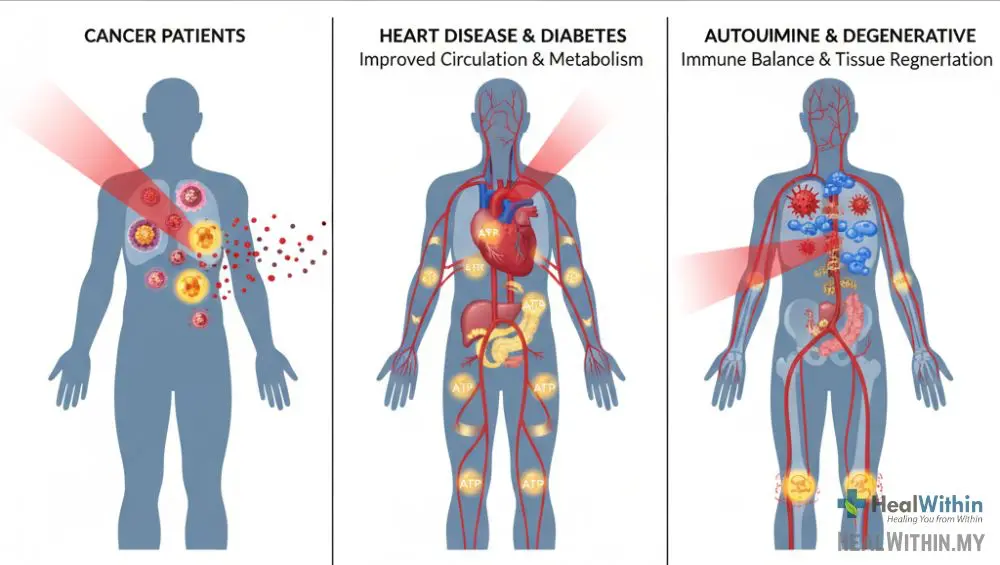
The beauty of addressing cellular dysfunction is that it benefits virtually all chronic diseases. While each condition has unique characteristics, they all share common underlying problems—energy depletion, inflammation, poor circulation, and oxidative stress—that photobiomodulation directly addresses.
CANCER PATIENTS
- Photobiomodulation supports cellular function and vitality during cancer treatment protocols. Cancer exhausts the body’s energy reserves while treatments like chemotherapy further deplete cellular function. Light therapy helps maintain mitochondrial health in normal cells, supporting overall vitality and resilience throughout treatment while addressing the metabolic dysfunction that allows cancer to thrive.
- It reduces inflammation and oxidative stress that fuel cancer progression and metastasis. Chronic inflammation creates an environment where cancer cells proliferate and spread. By reducing inflammatory cytokines and oxidative damage, photobiomodulation helps shift the body’s internal environment from one that supports cancer growth to one that supports healing.
- Light therapy enhances overall vitality, helping patients better tolerate comprehensive treatment. Cancer patients often feel too weak to complete treatment protocols. By restoring cellular energy, reducing treatment side effects, and supporting immune function, photobiomodulation helps patients maintain strength and quality of life throughout their healing journey.
HEART DISEASE AND METABOLIC CONDITIONS
- Photobiomodulation improves circulation and vascular function critical for cardiovascular health. It stimulates nitric oxide production for vasodilation, reduces arterial inflammation, and can help improve endothelial function. Better circulation reduces cardiac workload and ensures heart tissue receives adequate oxygen and nutrients for optimal function.
- It supports mitochondrial function in cardiac tissue that requires massive energy production. Your heart beats 100,000 times daily, requiring enormous ATP production. Heart disease often involves mitochondrial dysfunction in cardiac cells. Photobiomodulation restores energy production capacity, helping heart muscle perform more efficiently with less strain.
- Light therapy helps with diabetes by improving cellular glucose metabolism and insulin sensitivity.Mitochondrial dysfunction impairs how cells process glucose and respond to insulin. By restoring mitochondrial function, photobiomodulation helps cells utilize glucose more efficiently, reducing blood sugar levels and addressing one of the fundamental root causes we target in diabetes treatment.
AUTOIMMUNE AND DEGENERATIVE CONDITIONS
- Photobiomodulation modulates immune response, reducing autoimmune attacks on healthy tissues. It shifts the immune system from a hyperactive, self-attacking state toward balanced regulation. This occurs without suppressing necessary immune functions—a crucial distinction from immunosuppressive medications that leave patients vulnerable to infections.
- It supports tissue regeneration in conditions where degeneration outpaces repair. Degenerative diseases involve tissues breaking down faster than the body can rebuild them. Light therapy activates growth factors, enhances stem cell activity, and stimulates collagen synthesis—shifting the balance from degeneration toward regeneration and tissue restoration.
- Light therapy reduces systemic inflammation driving autoimmune flares and tissue damage. Autoimmune conditions involve cycles of inflammation that damage organs over time. By consistently reducing inflammatory mediators and protecting tissues from oxidative damage, photobiomodulation helps break these destructive cycles and create space for healing.
Summary and Conclusion
Photobiomodulation therapy represents a fundamental shift in how we approach chronic disease treatment—moving from symptom management to cellular restoration. Here are the key points we’ve covered:
- Specific red and near-infrared light wavelengths penetrate tissues and activate mitochondria, the energy-producing centers of your cells
- Light triggers healing mechanisms by increasing ATP production, reducing inflammation and oxidative stress, and enhancing circulation and cellular regeneration
- It addresses critical root causes including mitochondrial dysfunction, poor oxygenation and circulation, and chronic inflammation
- Integration with IV nutrition creates synergy where light activates cellular machinery while nutrients provide the raw materials for healing
- This therapy supports healing across diverse conditions from cancer and heart disease to diabetes and autoimmune disorders—because all share underlying cellular dysfunction
The question isn’t whether photobiomodulation works—the science is clear and compelling. The real question is: are you ready to address your chronic disease at the cellular level where true healing begins? Most patients spend years trying treatments that only manage symptoms while their cells remain energy-depleted, inflamed, and unable to heal.
Our integrative & holistic approach combining photobiomodulation with nutrition, detoxification, and other targeted therapies doesn’t just suppress your disease—it creates the cellular conditions where your body can finally restore itself. If you’re tired of treatments that don’t address the root causes, perhaps it’s time to consider an approach that literally energizes your cells’ capacity to heal.