

You have followed the prescriptions. You have taken the medications. You have gone through the procedures. Yet somehow, the disease keeps coming back — or never fully goes away. Have you ever stopped to ask yourself why? Could there be a root cause your treatment has never once addressed?
What if the anger you never expressed, the grief you buried, or the relentless stress you have been carrying for years is not just a emotional burden — but a biological one? The science is now unequivocal: chronic mental and emotional stress is not merely a state of mind. It is a physiological condition that silently drives inflammation, disrupts hormones, suppresses immunity, and lays the groundwork for serious chronic disease.
In my years of treating chronic disease patients, one pattern stands out above all others — the patients who struggle most to heal are almost always carrying an unresolved mental or emotional burden that no one has ever treated. True recovery is not possible when half the cause remains untouched. That is why at Heal Within, mental and emotional regulation is not an afterthought. It is a core part of how we find and treat the root causes of your disease.
Could Your Chronic Disease Actually Begin in Your Mind?
Most people think of disease as something that happens to the body — a malfunction of organs, a breakdown of cells. But this view is dangerously incomplete. The mind and body are one deeply integrated network, and what happens in the mind has direct, measurable consequences in the body.
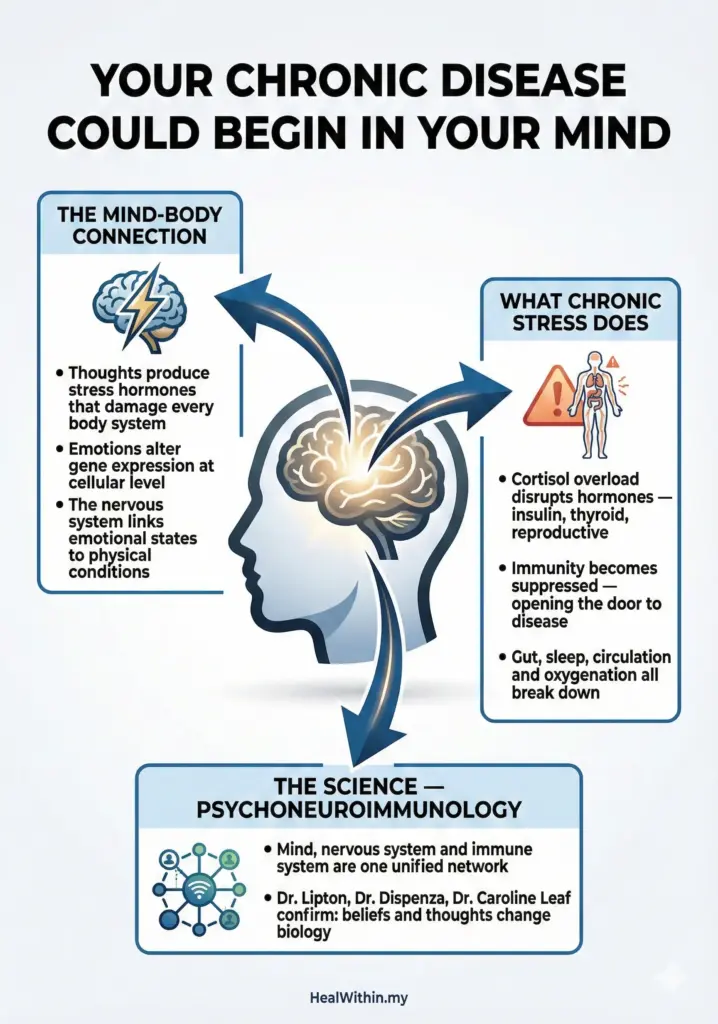
THE MIND-BODY CONNECTION IS NOT A METAPHOR
Every thought you think and every emotion you feel triggers a cascade of neurochemical and hormonal signals that instruct your cells, organs, and immune system on how to behave.
- Thoughts produce chemistry. When you experience fear, anger, or prolonged stress, your brain releases cortisol and adrenaline — hormones designed for short-term survival, not long-term living. When chronically elevated, they begin to damage every system in your body.
- Emotions alter gene expression. Dr. Bruce Lipton’s work in epigenetics has demonstrated that our emotional environment can literally switch genes on or off — meaning your emotional state is not just influencing your health, it is directing it at the cellular level.
- The nervous system is the messenger. Your autonomic nervous system is the direct pathway through which emotional states translate into physical conditions — regulating inflammation, immunity, circulation, digestion, and hormonal balance all at once.
WHAT CHRONIC STRESS DOES TO YOUR BODY
Chronic mental stress is one of the root causes I consistently identify in my patients. Left unaddressed, it creates a cascade of physiological damage that undermines every other treatment we provide.
- Cortisol overload disrupts hormonal balance. Prolonged stress keeps cortisol chronically elevated, interfering with insulin regulation, thyroid function, and reproductive hormones — contributing directly to conditions like diabetes, thyroid disease, and hormonal cancers.
- Immunity becomes suppressed. Chronic stress systematically weakens immune defences, leaving the body vulnerable to infections, abnormal cell growth, and autoimmune dysregulation — conditions at the core of many serious chronic diseases.
- Downstream damage spreads wide. Chronic stress impairs gut microbiota balance, disrupts sleep and circadian rhythm, reduces oxygenation, and compromises blood and lymph circulation — hitting multiple root causes simultaneously and accelerating disease progression.
THE SCIENCE BEHIND THE CONNECTION
This is an established and growing field of medicine called psychoneuroimmunology — the study of how the mind, nervous system, and immune system function as one unified network.
- Psychoneuroimmunology confirms what I see clinically. Studies consistently demonstrate that psychological stress produces measurable immunosuppression, systemic inflammation, and hormonal disruption — the very conditions that precede and perpetuate most chronic diseases.
- Thought leaders in this space have shifted the paradigm. Dr. Bruce Lipton’s biology of belief, Dr. Joe Dispenza’s research on mind-body chemistry, and Dr. Caroline Leaf’s neuroscience on toxic thought patterns all point to the same conclusion: the mind is a powerful determinant of physical health outcomes.
- Conventional medicine continues to miss this entirely. By focusing exclusively on physical symptoms and suppressing them with medication, conventional treatment leaves mental and emotional root causes completely untouched — which is why so many patients improve temporarily, only to relapse.
How Do Unresolved Emotions Manifest as Physical Disease?
Most people accept that stress “isn’t good for you.” But few truly understand the depth of biological damage that unresolved emotions silently cause over time. The body does not forget what the mind refuses to process — and eventually, it speaks through disease.
EMOTIONS AS BIOLOGICAL SIGNALS
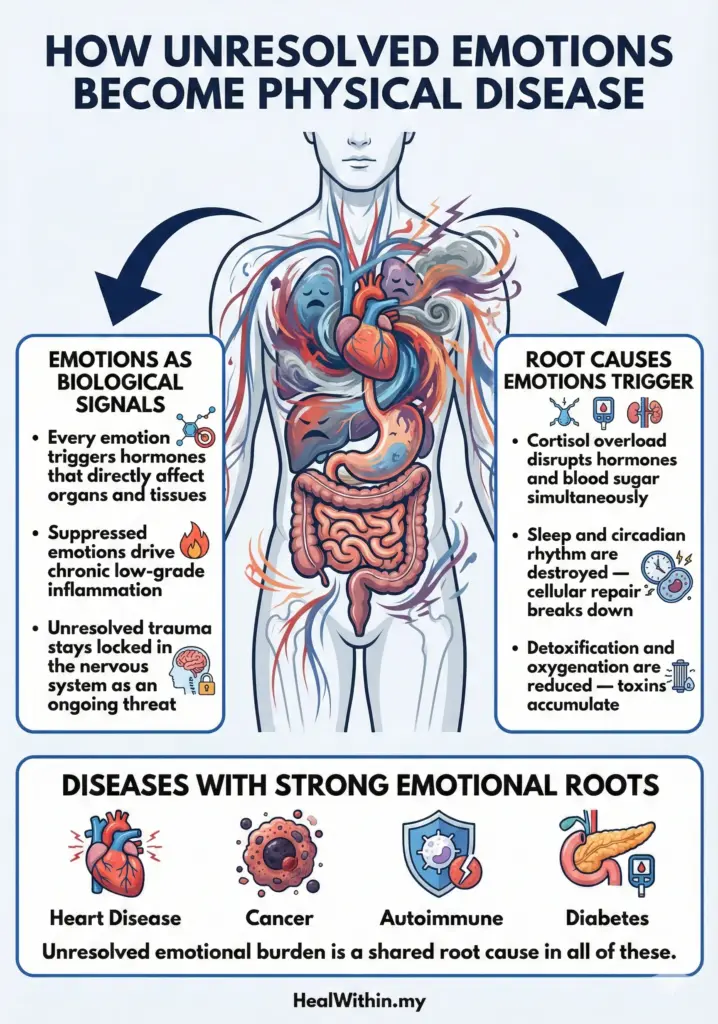
Every emotion you experience is not just a feeling — it is a chemical event. Your body responds to emotional states the same way it responds to physical threats.
- Every emotion triggers a hormonal response. Joy, fear, grief, anger — each produces a distinct cocktail of neurotransmitters and hormones that directly influence how your organs, immune cells, and tissues function moment to moment.
- Suppressed emotions drive chronic inflammation. When emotions are not processed and released, they do not disappear. They become stored as chronic physiological tension — keeping the body in a low-grade inflammatory state that silently damages tissues and organs over time.
- The body stores what the mind avoids. Unresolved emotional trauma embeds itself in the nervous system, creating persistent patterns of stress activation that the body cannot distinguish from a real, ongoing physical threat.
THE ROOT CAUSES MOST DIRECTLY LINKED TO EMOTIONAL HEALTH
Unresolved emotional stress does not damage the body in one isolated way. It simultaneously triggers multiple root causes — compounding the disease burden with every passing day it goes unaddressed.
- Chronic stress feeds hormonal imbalance and high blood sugar. Elevated cortisol directly disrupts insulin sensitivity and throws the entire endocrine system into dysfunction — two of the most common root causes I find in patients with serious chronic disease.
- Emotional dysregulation destroys sleep and circadian rhythm. Anxiety, unresolved grief, and chronic worry are among the most common causes of disrupted sleep — which in turn impairs cellular repair, immune regulation, and metabolic function.
- Emotional burden accelerates toxin accumulation and poor oxygenation. A chronically stressed body diverts resources away from detoxification and optimal breathing — allowing toxins and heavy metals to accumulate and reducing the oxygen delivery that every cell depends on to survive and heal.
COMMON CHRONIC DISEASES WITH STRONG EMOTIONAL ROOT CAUSES
In my clinical experience, the patients carrying the heaviest unresolved emotional burdens are often the ones facing the most serious diagnoses. This is not coincidence — it is biology.
- Heart disease has deep emotional roots. Chronic stress, suppressed anger, and emotional exhaustion are well-documented contributors to hypertension, arterial inflammation, and cardiovascular disease — conditions I regularly treat at Heal Within.
- Cancer and autoimmune conditions share a common thread. Long-term immunosuppression from chronic emotional stress creates the biological environment in which abnormal cell growth and immune dysregulation are most likely to take hold.
- Diabetes and metabolic disease are not purely dietary. Chronic emotional stress disrupts insulin regulation, promotes visceral fat accumulation, and drives the inflammatory cascades that underlie most metabolic conditions — making emotional healing an essential part of any serious diabetes recovery plan.
Why Treating Only the Physical Body Is Never Enough?
Conventional medicine is extraordinarily good at one thing — managing physical symptoms. But symptom management is not the same as healing. When the mental and emotional root causes of disease are never identified or treated, the body has no real chance of recovering fully.
THE CONVENTIONAL MEDICINE BLIND SPOT
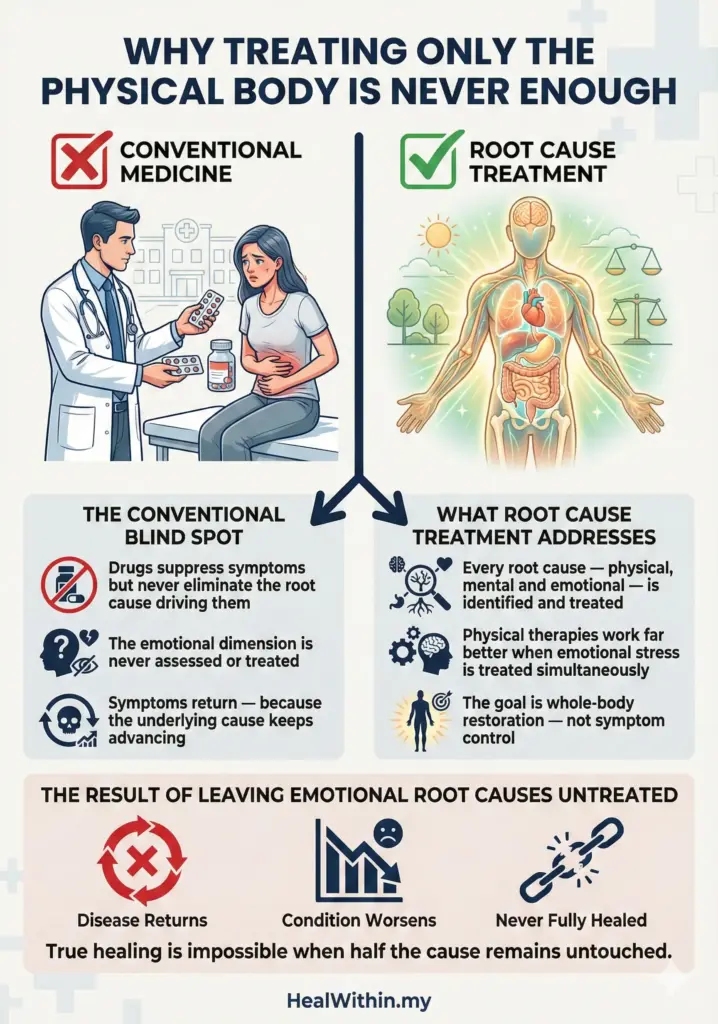
Conventional treatment is built on a single premise — find the diseased organ, suppress the symptom, prescribe the drug. What it almost never asks is: what caused this in the first place?
- Drugs manage but rarely heal. Medications for blood pressure, blood sugar, cholesterol, and pain are designed to control numbers and suppress symptoms — not to eliminate the root causes driving those conditions. The disease process continues underneath.
- The emotional dimension is almost never assessed. In a standard medical consultation, a patient’s chronic stress load, unresolved trauma, or emotional health history is rarely if ever considered as a contributing factor to their physical diagnosis.
- Symptom suppression creates a false sense of recovery. When symptoms are chemically masked, patients believe they are getting better — while the underlying root causes continue to silently advance, often leading to disease recurrence or progression into more serious conditions.
ROOT CAUSES THAT HAVE EMOTIONAL ORIGINS
Among the eleven root causes I assess in every patient at Heal Within, several are directly and consistently fuelled by chronic mental and emotional stress. Treating the body while ignoring these is like mopping the floor with the tap still running.
- Chronic mental stress feeds multiple root causes at once. A single unresolved emotional burden can simultaneously drive hormonal imbalance, gut dysbiosis, mitochondrial dysfunction, poor circulation, and disrupted sleep — creating a compounding disease environment that no single drug can address.
- Unresolved emotional trauma has a long biological memory. The nervous system encodes traumatic emotional experiences as ongoing threat signals — keeping the body locked in a chronic stress response that perpetuates inflammation and immune suppression for years, sometimes decades.
- The compounding effect accelerates disease progression. When multiple root causes are simultaneously active and feeding one another, the rate of cellular and organ damage accelerates — which is why patients with unresolved emotional burdens often deteriorate faster and respond more poorly to physical treatments alone.
WHAT HOLISTIC TREATMENT ADDRESSES THAT OTHERS DON'T
The word holistic means whole. At Heal Within, treating the whole person is not a philosophy statement — it is a clinical necessity. No treatment plan I design leaves the mental and emotional dimension unaddressed.
- True healing requires treating every root cause, not just the visible ones. My integrative approach is built on identifying all active root causes in a patient — including chronic mental stress and emotional dysregulation — and designing a treatment protocol that addresses each of them systematically.
- Physical therapies work far more effectively when the emotional load is also being treated. When the nervous system is no longer locked in chronic stress activation, the body’s capacity to respond to chelation, detoxification, IV nutrition, and other therapies improves significantly.
- The goal is not symptom control — it is whole-body restoration. At Heal Within, our three-phase protocol — Diagnosis, Treatment, and Maintenance — is designed to restore the entire body system to normal health, and that restoration is simply not possible without healing the mind and emotions alongside the body.
What Does Mental & Emotional Regulation Actually Involve?
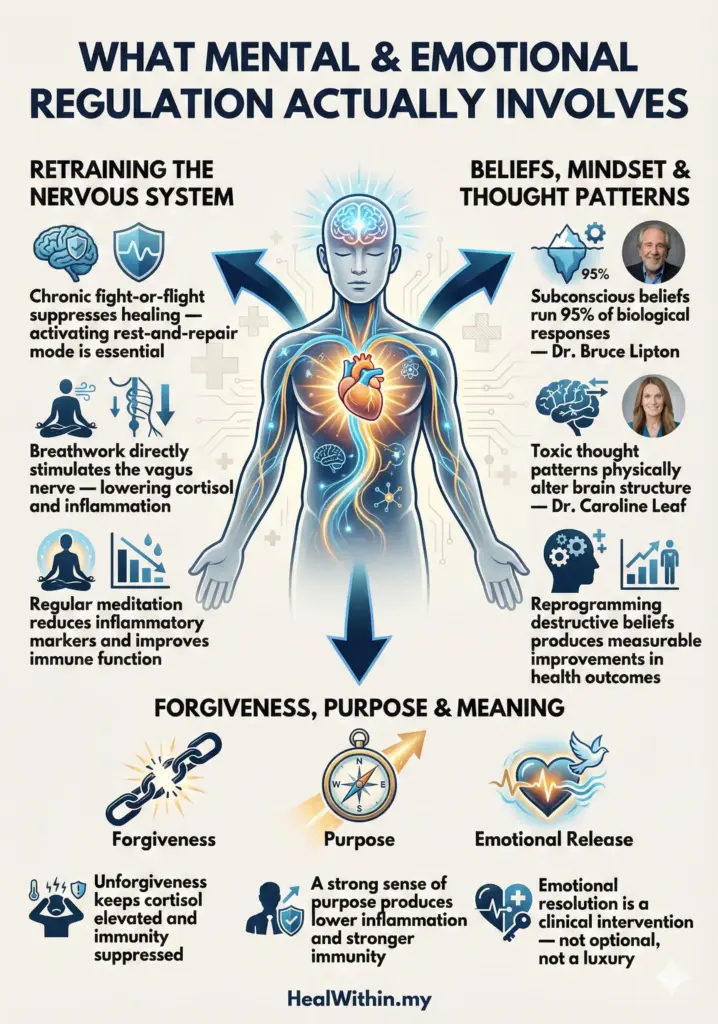
Understanding that the mind and emotions drive disease is one thing — but what does it actually mean to heal them? Mental and emotional regulation is not about positive thinking or simply “reducing stress.” It involves specific, deliberate practices that retrain the nervous system and resolve the root causes at their source.
RETRAINING THE NERVOUS SYSTEM
Most chronic disease patients have been living in a state of chronic fight-or-flight for so long that their nervous system no longer knows how to shift into rest-and-repair mode. Retraining it is not optional — it is a prerequisite for healing.
- The parasympathetic nervous system is where healing happens. When the body is locked in sympathetic overdrive — the stress response — cellular repair, immune regulation, and detoxification are all suppressed. Activating the parasympathetic state is what allows the body to begin truly healing.
- Breathwork is one of the most direct tools available. Slow, controlled diaphragmatic breathing has been shown to directly stimulate the vagus nerve, shift the nervous system out of stress activation, lower cortisol, and reduce systemic inflammation — all within minutes of practice.
- Mindfulness and meditation create measurable biological change. Regular mindfulness practice has been shown to reduce inflammatory markers, improve immune function, regulate cortisol, and even alter gene expression — making it a genuinely clinical tool, not merely a wellness trend.
ADDRESSING BELIEFS, MINDSET & THOUGHT PATTERNS
Chronic emotional states rarely arise from current circumstances alone. They are most often driven by deep-seated beliefs and habitual thought patterns that have been running beneath the surface for years — often decades.
- Subconscious beliefs shape your biological reality. Dr. Bruce Lipton’s research demonstrates that the subconscious mind runs approximately 95% of our behaviour and biological responses — meaning the beliefs you are not even consciously aware of are actively shaping your body’s internal environment.
- Destructive thought cycles must be actively reprogrammed. Dr. Caroline Leaf’s neuroscience research shows that toxic thought patterns physically alter brain structure and neurochemistry over time — and that deliberate cognitive reconditioning can reverse this damage and restore healthier neural pathways.
- Mindset is not separate from medicine — it is medicine. Dr. Joe Dispenza’s work on neuroplasticity and healing demonstrates that patients who actively engage in reprogramming their thoughts and beliefs achieve significantly better health outcomes than those who rely on physical treatment alone.
THE ROLE OF FORGIVENESS, PURPOSE & MEANING
Among the emotional root causes I encounter most consistently in patients with serious chronic disease, two stand out above all others — unforgiveness and a loss of purpose. Both have profound and measurable biological consequences.
- Unforgiveness is a documented physiological stressor. Holding onto resentment and unresolved grievance keeps the body in a chronic state of low-grade stress activation — elevating cortisol, promoting inflammation, and suppressing immunity. Releasing it is not just emotionally freeing; it is biologically necessary.
- A sense of purpose activates healing biology. Research has consistently shown that individuals with a strong sense of meaning and purpose exhibit lower inflammatory markers, stronger immune function, better hormonal regulation, and significantly improved long-term health outcomes.
- Emotional resolution is a clinical intervention, not a luxury. At Heal Within, guiding patients toward forgiveness, restored purpose, and emotional release is not ancillary to the treatment — it is part of treating the root cause.
How Does Heal Within Integrate Mental & Emotional Healing Into Treatment?
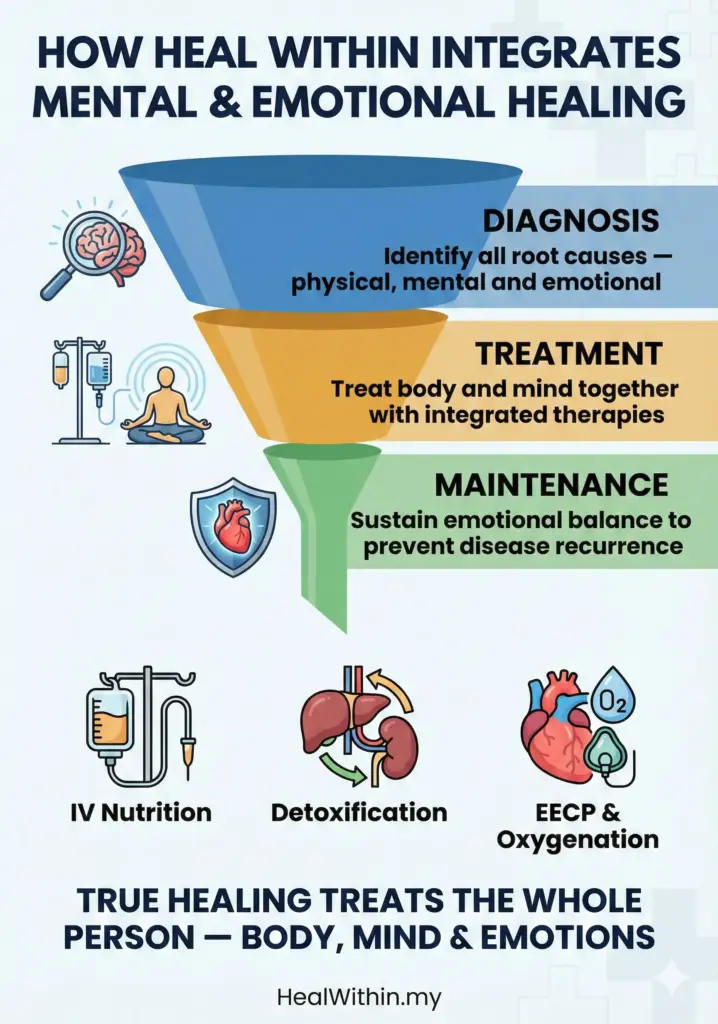
Knowing that mental and emotional health is central to chronic disease recovery is one thing — but how does this actually translate into a structured treatment protocol? At Heal Within, it is not left to chance or patient initiative. It is built into every phase of how we diagnose, treat, and maintain our patients’ health.
THE THREE-PHASE PROTOCOL AND WHERE THE MIND FITS IN
Our treatment protocol — Diagnosis, Treatment, and Maintenance — is designed to leave no root cause unaddressed. Mental and emotional health is assessed and treated across all three phases, not as an add-on, but as a core clinical priority.
- Diagnosis: identifying the emotional and mental root causes. During the diagnostic phase, I assess each patient’s chronic stress load, emotional history, sleep quality, and nervous system state alongside all physical root causes — because a treatment plan that ignores the emotional dimension is an incomplete one.
- Treatment: integrating therapies that address body and mind together. The treatment phase combines physical therapies with targeted guidance on nervous system regulation, belief and mindset work, and emotional resolution — ensuring the body’s healing capacity is not being undermined by an ongoing mental or emotional burden.
- Maintenance: sustaining mental and emotional regulation for long-term health. True recovery does not end when symptoms resolve. The maintenance phase equips patients with the tools and practices to sustain mental and emotional balance long-term — protecting the healing achieved and preventing disease recurrence.
THERAPIES AND MODALITIES THAT SUPPORT MIND-BODY HEALING
Several of the physical therapies we use at Heal Within carry significant benefits for mental and emotional health — creating a powerful synergy between body-level treatment and nervous system restoration.
- IV Nutrition therapy restores the neurochemical foundation of emotional health. Deficiencies in key nutrients — magnesium, B vitamins, zinc, amino acids — are among the most common and overlooked drivers of anxiety, depression, emotional dysregulation, and poor stress resilience. Restoring full-spectrum nutrition directly supports mental and emotional stability.
- Detoxification therapy reduces the toxic burden on the brain and nervous system. Heavy metals and environmental toxins are known neurotoxins that impair cognitive function, disrupt neurotransmitter balance, and amplify stress reactivity. Removing them creates a cleaner internal environment in which the mind and nervous system can begin to function normally again.
- EECP and oxygenation therapies calm the nervous system and support brain health. Improved circulation and oxygen delivery to the brain enhances neurological function, supports emotional regulation, and helps shift the nervous system out of chronic stress activation — reinforcing the mental and emotional healing work from the inside out.
TRUE RECOVERY IS WHOLE-PERSON RECOVERY
After years of treating chronic disease patients, one truth has become absolutely clear to me — the body cannot fully heal when the mind and emotions remain wounded. Real recovery demands that we treat the whole person, not just the parts that show up on a scan or a blood test.
- Heal Within is designed to leave nothing untreated. Our integrative and holistic approach is built on the principle that every root cause — physical, mental, and emotional — must be identified and addressed for true healing to occur. Anything less is incomplete medicine.
- The difference between managing disease and truly healing is root cause treatment. Symptom management keeps patients dependent on medication and medical intervention indefinitely. Root cause treatment — including the mental and emotional dimension — gives patients the genuine possibility of recovering their health and reclaiming their lives.
- True recovery begins when you decide to treat the whole cause. If you have been managing your chronic disease for years without ever addressing the mental and emotional root causes, I invite you to consider a different approach — one that treats not just the body you can see, but the inner environment that is either driving your disease or enabling your healing.
Summary and Conclusion
The evidence is clear, and my clinical experience confirms it daily — chronic disease is rarely a purely physical condition. In this article, I have walked you through why mental and emotional regulation is not a complementary add-on to chronic disease treatment, but a non-negotiable part of true root cause healing:
- The mind and body are one integrated network — what happens emotionally has direct, measurable biological consequences
- Chronic mental stress is a documented root cause that simultaneously drives hormonal imbalance, gut dysbiosis, immune suppression, poor oxygenation, and disrupted sleep
- Unresolved emotions do not disappear — they embed in the nervous system and manifest as physical disease over time
- Conventional medicine’s exclusive focus on physical symptoms leaves the mental and emotional root causes completely untouched — which is why so many patients never fully recover
- Mental and emotional regulation involves retraining the nervous system, reprogramming destructive beliefs and thought patterns, and resolving deep emotional burdens such as unforgiveness and loss of purpose
- At Heal Within, mental and emotional healing is integrated into every phase of our three-phase protocol — Diagnosis, Treatment, and Maintenance — as a core clinical priority, not an afterthought
I want to leave you with a question worth sitting with: how much of what your body is carrying today was first carried in your mind? The chronic disease you are living with did not appear without cause — and somewhere in that chain of causes, the mental and emotional dimension almost certainly plays a role.
True healing begins the moment you are willing to look at the whole picture — not just the physical symptoms, but the unresolved stress, the buried emotions, the beliefs you have never questioned, and the wounds you have never fully released. At Heal Within, that is exactly the kind of healing we are here to help you achieve.
If you’ve been struggling with chronic health issues that haven’t responded to conventional approaches, the state of your detoxification pathways may be the missing piece in your health puzzle.